有人能黑入我的手机吗?2026 年的迹象、风险与应对
有人能黑入我的手机吗?是的, 而且大多数受害者都没有察觉。了解手机被黑的 7 个警告信号、攻击者如何入侵,以及锁住他们的确切步骤。
TL;DR
是的,你的手机可能被黑, 最常见的方式是通过钓鱼链接、恶意应用、公共 Wi-Fi、SIM 换卡攻击或在数据泄露中暴露的重复密码。警告信号包括电量突然下降、出现陌生应用、意外扣款,以及你没有请求的 2FA 验证码。修复需要分层应对:从干净的设备更改账户密码、启用身份验证器应用、审查已安装应用,并在怀疑 SIM 换卡时联系运营商。
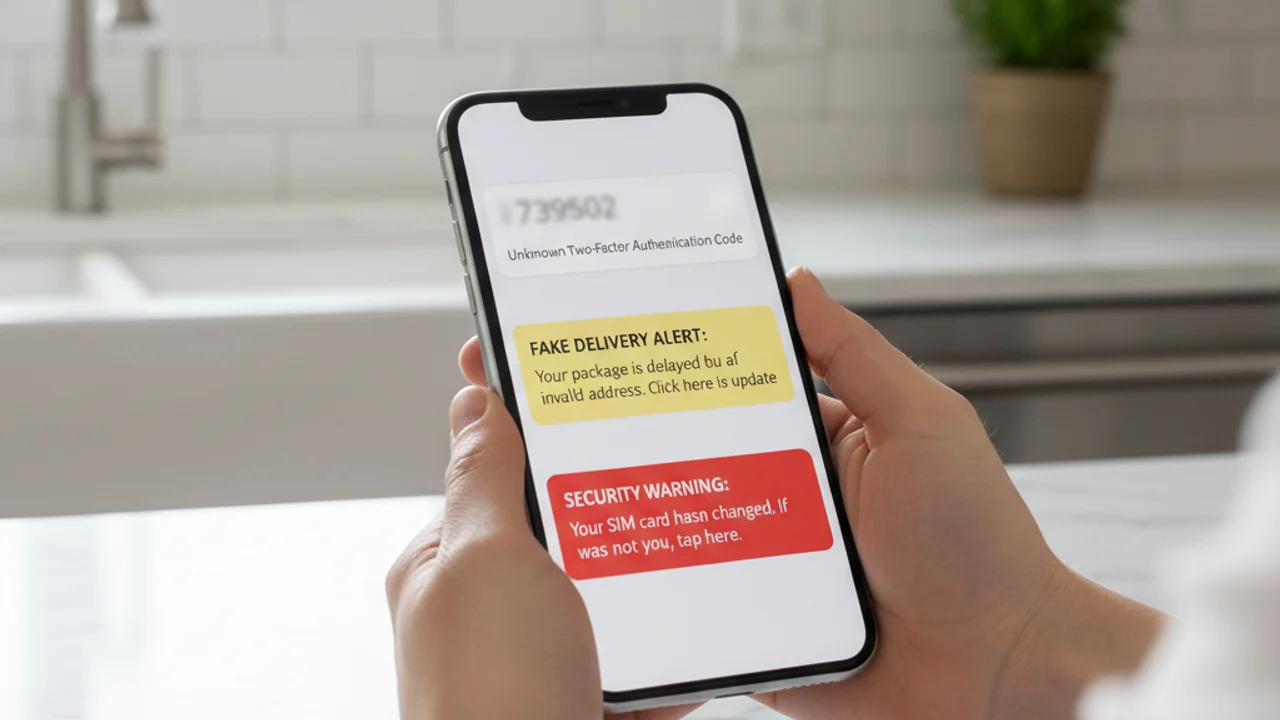
You glance at your phone and notice three text messages with two-factor codes you never asked for. Your battery, fully charged an hour ago, is at 41%. Your bank app is asking you to log in again. None of this is random. Someone is testing the locks on your digital life, and the answer to "can someone hack my phone" is uncomfortable: yes, and most victims do not notice until the money is already gone.
According to the FTC's 2024 Consumer Sentinel Network report, US consumers lost more than $1.03 billion to fraud and identity theft that began on or through a mobile device. The attackers do not need physical access to your phone. They need one moment of inattention, a tapped link, an installed app, a reused password, a phone call to your carrier, and the rest is leverage.
你的手机真的会被黑吗?
Yes. The word "hacked" covers a wide spectrum, and understanding which kind matters because the response is different. A modern phone running an up-to-date operating system is genuinely difficult to compromise through code alone, operating system exploits exist, but they are expensive, scarce, and reserved for high-value targets. The everyday "hack" most people experience is not a remote zero-day exploit. It is account takeover, SIM hijacking, spyware installed by someone with brief physical access, or a malicious app the victim was tricked into installing.
According to the FBI's 2024 Internet Crime Report, mobile-targeted attacks have grown every year for the last five years, with phishing and account takeover as the dominant categories. The threat is not that your iPhone or Android device is fundamentally insecure, it is that the human sitting behind it can be tricked, and the attacker only needs to win once.
The good news: the same human element that makes hacking possible also makes prevention possible. Most successful phone attacks rely on the victim taking a specific action, a tap, an install, a password entry. Recognize the pattern and the attack collapses.
2026 年有人如何黑入手机
There are five attack paths that account for the overwhelming majority of phone compromises in 2026. Knowing how each one works is the foundation of defending against all of them.
Phishing and smishing links. A text message claims to be from your bank, your carrier, a delivery service, or a tax authority. The link leads to a near-perfect clone of the real login page. You enter your credentials. The attacker now has them, plus any 2FA codes you forward. According to Proofpoint's 2024 State of the Phish report, smishing attempts increased by 318% year-over-year, and a meaningful percentage of recipients still tap.
Malicious apps. Sideloaded apps from unofficial stores, modified versions of popular games, fake "system update" tools, and even occasional bad actors that slip through official store reviews can carry spyware, stalkerware, or banking trojans. Once installed, these apps request broad permissions and quietly harvest credentials, screenshots, and SMS contents.
SIM-swap attacks. The attacker contacts your mobile carrier, impersonates you using personal data harvested from data breaches and social media, and convinces the carrier representative to port your phone number to a SIM card the attacker controls. Within minutes, every SMS-based 2FA code goes to them, not you. According to the FBI IC3, SIM-swap fraud caused over $48 million in reported US losses in 2024, and this category is consistently underreported because many victims initially blame the carrier.

Credential reuse from data breaches. Every year billions of email and password combinations are exposed in breaches. If you reuse the same password across multiple sites, an attacker who buys a leaked database can log into your email, then your cloud backup, then your iCloud or Google account, then your phone, all without ever touching the device.
Public Wi-Fi and rogue networks. A rogue access point in a coffee shop, airport, or hotel can intercept unencrypted traffic, inject malicious content into web pages, and harvest session tokens from logged-in apps. While most major apps now use HTTPS and certificate pinning, the threat persists for older apps, unencrypted email, and captive-portal phishing pages.
手机被黑的 7 个迹象
A single anomaly is rarely enough to confirm a compromise, phones are noisy and many symptoms have benign explanations. But two or more of the following appearing together within the same week is a strong signal:
收到可疑短信、链接或视频?点击前先用 truvizy.app 扫描。
Truvizy 如何帮你在攻击发生前发现它
The strongest defense against a phone hack is stopping the attack before you tap the link or install the app. Truvizy's AI-powered detection is built for exactly this moment of decision. When a suspicious text arrives, a "package delivery" alert, a "bank security" notice, a video of a celebrity offering an investment opportunity, a recruiter message pitching a too-good job, you can paste the link or upload the video to Truvizy at truvizy.app and get a verdict in seconds.
Truvizy's multi-layer analysis identifies the patterns common to mobile phishing campaigns: spoofed login domains, AI-generated content used to build false credibility, recycled phishing templates, and fraudulent app screenshots. Truvizy has flagged active SIM-swap recruitment videos, fake banking portals, and credential-harvesting QR codes across multiple campaigns. Run any link, image, or video you are uncertain about through Truvizy before acting on it. The verdict comes back faster than the attacker can react.
如果你的手机被黑了该怎么办
If you suspect a compromise, the order of operations matters. Follow these steps from a clean device, a laptop, a tablet, or a family member's phone you trust, not from the suspect phone itself:
1. Change your primary email password first. Your email is the recovery path for almost every other account. If the attacker has it, every other reset attempt is compromised. Use a password manager to generate a long, unique replacement.
2. Switch from SMS 2FA to an authenticator app. SMS codes can be intercepted by SIM-swap attackers and by spyware on a compromised phone. Use Google Authenticator, Authy, or a hardware security key for any account that supports it. According to the CISA Multi-Factor Authentication guidance , app-based or hardware MFA is dramatically more resistant to phishing than SMS.
3. Call your carrier and request a port-out PIN. This is a separate secret required before your number can be moved to a new SIM. Every major US carrier (Verizon, AT&T, T-Mobile) now offers this. If you suspect a SIM swap is already in progress, ask the carrier to lock the line immediately.
4. Audit installed apps. On both iOS and Android, review every installed app and uninstall anything you do not recognize. Pay special attention to apps with accessibility, device admin, or notification-listener permissions, these are the permissions stalkerware needs to operate.
5. Update the operating system. Install the latest OS update immediately. Many phone exploits used in real attacks have already been patched, victims are compromised because they did not update.
6. Report identity theft and check your credit. If financial accounts were touched, file a report at identitytheft.gov , the FTC's official portal generates a personalized recovery plan and can place a fraud alert on your credit. Report cybercrime to the FBI at ic3.gov .
7. Factory reset as a last resort. If unfamiliar apps reappear after deletion, or if the phone behaves erratically after the steps above, a full factory reset followed by reinstalling apps from the official store one at a time is the most reliable way to remove persistent malware.

Key Takeaways
- 2026 年大多数手机黑客攻击不是奇异的漏洞利用, 它们是钓鱼点击、侧载应用、SIM 换卡和重复使用的密码。识别模式即可阻止攻击。
- 注意两个或以上信号同时出现:未请求的 2FA 码、陌生应用、电量骤降、蜂窝信号丢失或意外账户活动。
- 正在进行的 SIM 换卡表现为蜂窝信号丢失而 Wi-Fi 正常, 立即从另一条线路联系运营商。
- 在点击、安装或回复前,始终通过 truvizy.app 上的 Truvizy 检查可疑链接、图片和视频。
Expert analysis note: Mobile attacks in 2026 increasingly chain together, a phishing text leads to a credential harvest, which enables a SIM swap, which unlocks every SMS-protected account in sequence. Defending against any single link in this chain breaks the whole attack. The single highest-leverage move any phone owner can make today is moving 2FA off SMS and onto an authenticator app or hardware key, combined with using Truvizy's AI-powered detection to verify suspicious content before engaging.
你在十分钟内收到三条短信,包含你没有尝试登录的账户的 2FA 验证码。随后,你的手机完全失去蜂窝信号,而 Wi-Fi 仍然连接。正确的反应是什么?
- 等一小时看信号是否恢复, 可能是基站问题
- 回复短信询问是谁发的
- 将其视为正在进行的 SIM 换卡攻击:从另一台设备给运营商打电话锁定线路并更改邮箱密码
- 重启手机以清除问题
Answer: 多个未请求的 2FA 码加上蜂窝信号突然丢失是 SIM 换卡攻击的经典模式。每一分钟都很重要。用另一台设备给运营商打电话,锁定线路,然后从主邮箱开始更改密码。
数据泄露应对:当你的信息暴露时该怎么办 — 使手机黑客攻击成为可能的凭据泄露, 以及如何在攻击者行动前锁定账户
Smishing:短信钓鱼如何运作以及如何阻止它 — 启动大多数手机入侵的短信, 它们的样子和如何识别
我的身份被盗了, 现在怎么办? — 身份盗窃受害者的完整恢复路线图,包括信用冻结和官方报告
FAQ
仅凭知道我的号码就能黑入我的手机吗?
仅靠号码不足以接管现代智能手机,但足以发动导致接管的攻击:钓鱼短信、向运营商发起 SIM 换卡请求、伪造的验证电话以及定向的账户恢复流程。根据 FBI IC3 2024 互联网犯罪报告,仅 SIM 换卡欺诈就给美国受害者造成超过 4800 万美元的报告损失。
我的手机被黑最常见的迹象是什么?
最可靠的迹象包括:未请求的 2FA 验证码、未触碰账户的密码重置邮件、未安装的陌生应用、闲置时电量骤降或过热、移动数据用量异常、运营商显示你的线路在你不认识的 SIM 卡上、朋友收到你未发送的消息。单一迹象可能无害, 两个或以上同时出现是强烈信号。
2026 年黑客实际上是如何入侵手机的?
2026 年四种主要入侵路径是:通过短信或消息应用投递的钓鱼链接(smishing)、在官方应用商店之外侧载的恶意应用、通过在数据泄露中重复使用的凭据进行账户接管,以及在运营商层面劫持你电话号码的 SIM 换卡攻击。根据 Verizon 2024 DBIR,人为因素涉及 68% 的违规事件。
Truvizy 能帮我检查可疑链接或视频是否是手机黑客骗局的一部分吗?
可以。Truvizy 在 truvizy.app 上的 AI 驱动分析可扫描可疑链接、视频和图像,识别移动钓鱼活动中常见的模式:仿冒的银行登录页、伪造的快递提醒、AI 语音克隆证据以及欺诈性应用截图。在中国,公安部网络安全保卫局(网安)是处理网络犯罪的官方机构。请在点击或安装前用 Truvizy 扫描微信、QQ 和短信中的任何可疑内容。
如果我认为手机被黑了,首先该做什么?
换到一台干净的设备, 你信任的笔记本电脑或家人的手机。从那里开始,先更改主邮箱密码,然后是银行账户,再是任何使用你号码进行恢复的账户。用身份验证器应用替代短信进行双因素验证。打电话给运营商锁定 SIM 卡并申请号码迁出 PIN 码。