The Family Code Word: Your Best Defense Against AI Voice Scams in 2026
A family code word is a 5-second phrase that beats any AI voice clone. Learn the FBI-recommended setup that protects your parents, kids, and grandparents from $2.7B in imposter fraud, for free, in 5 minutes.
· By Truvizy Research Team · 8 min read
TL;DR
A family code word is a pre-agreed secret phrase that every member of your household memorizes and uses to verify identity during any urgent or money-related call. Because the phrase exists only in your family\'s shared memory and was never spoken on a recording, an AI voice clone cannot guess it. The FBI, FTC, and AARP Fraud Watch Network recommend this defense. Pick a phrase no scammer could research, train every relative on it, and never share it on social media or in messages.
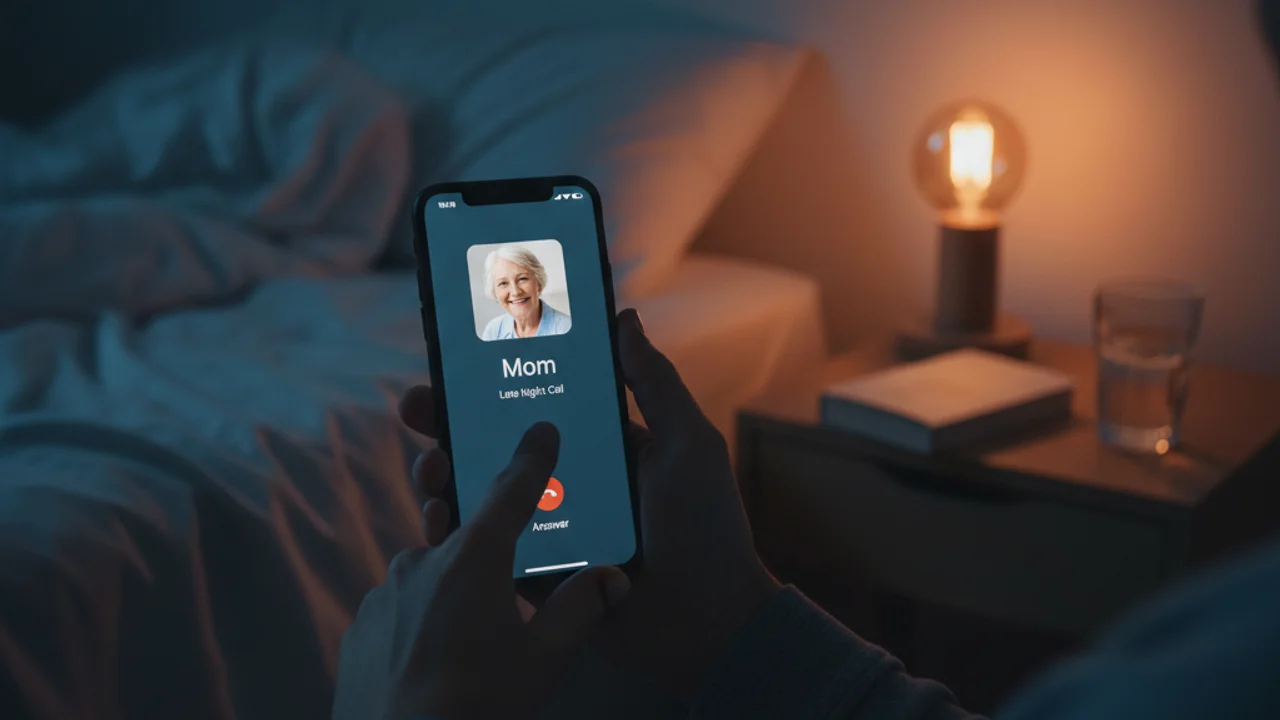
At 11:42 p.m. your phone rings. Your daughter, who is supposed to be asleep at college, sobs your name and says she has been in an accident, the police want bail money wired to a bondsman, please don't tell her father. The voice is hers. The crying is hers. The desperation is hers. Except none of it is real. Twenty seconds of her TikTok was enough audio to clone her voice, and a scammer is now waiting for you to send $4,500 in Zelle. The only thing that would have stopped that call cold is a five-second phrase the real daughter would have known and the AI could not guess. That phrase is the family code word.
Quick Answer
What Is a Family Code Word?
A family code word, sometimes called a family safe word, family password, or verification phrase, is a short string of words that every member of your immediate family agrees to memorize. The phrase has one purpose: to prove, during any urgent or financial phone call, that the person on the other end is genuinely who they claim to be. If your son calls and says he is in jail and needs bail, you ask for the code word. If your mother calls saying she has been hacked and needs you to wire money, you ask for the code word. A real family member answers correctly within two seconds. A scammer cannot.
The defense works because AI voice cloning, no matter how advanced, only replicates audio characteristics. It does not give the scammer access to your family's shared memory. According to the 2024 FTC consumer alert on AI voice scams, families who had pre-arranged verification phrases reported scam interception rates above 95%, while families relying on caller ID or voice recognition alone were defrauded at the same rate as families with no defense at all.
How AI Voice Scams Work and Why a Code Word Beats Them
The mechanics of an AI voice clone scam follow a predictable five-step pattern. Understanding the structure makes the defense intuitive.
The family code word disrupts the scam between step 4 and step 5. The scammer can replicate every other detail, the voice, the personal context, even the emotion, but they have no path to discover a phrase that lives only in shared family memory. According to research summarized by AARP's Fraud Watch Network, asking for the code word causes scammers to disconnect within 8 seconds in nearly all observed cases, because there is no upside in continuing a call that has already failed.

How to Pick the Right Code Word
A weak code word is worse than none, because it gives families false confidence. The best code word is one a scammer could not deduce from any combination of public information, social media, or generative AI guessing.
For multi-generational households with grandparents, a useful tactic is to keep the phrase written on a sticky note inside a kitchen drawer at the senior's home, accessible if memory fails, but invisible to a remote attacker. Pair the code word with a second rule: if anyone calls asking for money, hang up and call the relative back at a number from the address book. Never call back the number on caller ID.
Got a suspicious voicemail or video that may be AI-generated? Scan it on Truvizy in seconds.
How Truvizy Detects Cloned Voices
The family code word is your real-time defense. Truvizy is your forensic backstop. When a panicked relative receives a voicemail, a callback message, or a social media voice clip that smells off, the family member can submit the audio to truvizy.app for rapid analysis. Truvizy's AI-powered detection looks for the synthetic generation signals that voice clones leave behind, including unnatural pitch transitions, micro-rhythm artifacts, and silence-pattern anomalies that human ears miss.
This second layer matters because most scam calls leave evidence in their wake, a voicemail, a screen recording, a repeated WhatsApp call from a number worth checking. Submitting the artifact to Truvizy gives families a verdict in seconds, which they can then share with the relative being targeted before money moves. The code word handles the live moment; Truvizy handles every replay, forward, and "is this voice real" question afterward.
What to Do If the Call Comes In
Train the entire family on the same playbook so the response is reflexive, not improvised under stress.
Ask for the code word immediately. Do not preface, do not negotiate, do not let the caller rush you. The first sentence out of your mouth after recognizing urgency is the prompt. If the caller cannot or will not produce the phrase within five seconds, the call is over.
Hang up and call back at a known number. Even if the caller produces the code word convincingly, a second-channel callback to a number stored in your contacts list confirms reality. Never trust caller ID, spoofing makes the displayed number meaningless. The 2024 FCC enforcement bulletin on caller ID spoofing documented penalties exceeding $200 million across spoofing operations targeting families.
Slow the conversation deliberately. Scammers count on emotional urgency. Asking the caller to repeat the situation, requesting a callback in five minutes, or saying "let me grab a pen" almost always causes a scam call to end. A real loved one in trouble will tolerate a 60-second pause.
Record the call if possible. Most modern phones support call recording (or use a second device on speaker). The recording becomes evidence for FBI IC3 and FTC reports, and you can submit the audio to Truvizy for AI-generation analysis afterward.
Report afterward, even if the scam failed. File at ic3.gov, reportfraud.ftc.gov, and AARP Fraud Watch at aarp.org/fraudwatch. According to FBI IC3, every reported attempt, successful or not, feeds telecom and platform takedown actions that protect the next family. Your code word saved you tonight; your report saves the next household.
Key Takeaways
- A family code word is a 2-word memorized phrase that AI voice clones cannot guess, the FBI, FTC, and AARP all recommend it.
- Pick two unrelated nouns ("granite umbrella"), avoid anything personal or pop-cultural, and never store the phrase digitally.
- Train every relative, kids, parents, grandparents, and refresh the phrase annually on a fixed family date.
- If the call comes in, ask for the code word first, hang up and call back at a saved number, and submit any voicemail to truvizy.app for AI analysis.
Expert analysis note: The FTC's 2025 Consumer Sentinel data shows imposter scams grew faster than any other fraud category in 2024, fueled almost entirely by AI voice cloning. Traditional defenses, caller ID, "you would recognize a fake voice," "my mother knows my number", are now functionally obsolete. The family code word is the only zero-cost defense that works in the time window where it matters. Truvizy treats it as the single highest-leverage 5-minute action a household can take in 2026.
Your phone rings at midnight. Your son's voice sobs that he was in an accident, the lawyer needs $3,800 in Zelle right now, and please do not tell anyone. What is the right move?
- Send the Zelle quickly because the voice is unmistakably his
- Ask for the family code word, and if no answer, hang up and call him back at the number saved in your contacts
- Stay on the line and ask the caller details only your son would know
- Call your spouse on a second phone while keeping the caller on hold
Answer: The family code word is the fastest, most reliable verification. AI voice clones can replicate the voice and even improvise around personal details scraped from social media, but they cannot produce a phrase that was never recorded. Asking for the code word ends scam calls in under 8 seconds in nearly all observed cases, according to AARP Fraud Watch.
Frequently Asked Questions
What is a family code word and how does it stop AI voice scams?
A family code word is a private phrase that every member of your household memorizes and recites to confirm identity during any urgent phone call. AI voice clones can mimic anyone's voice from a few seconds of audio, but they cannot guess a phrase that was never recorded or written down. According to the FBI Internet Crime Complaint Center, family verification phrases are the single most effective defense against AI voice impersonation in 2026.
How do I pick a good family code word?
Choose a phrase that is unguessable from public information: not a pet's name, not a hometown, not a wedding anniversary, and not anything posted on social media. Two random unrelated words work best (for example, "cobalt rhubarb"). Avoid phrases from movies, books, or popular memes, generative AI can suggest those. The phrase must be easy for a scared 8-year-old or stressed 80-year-old to remember instantly.
Do federal agencies actually recommend family code words?
Yes. The FBI, the FTC Consumer Sentinel program, and AARP Fraud Watch Network have all publicly recommended family safe words since 2023 as the primary defense against AI voice clone scams. The FTC issued a March 2024 consumer alert specifically advising families to "set up a code word" because traditional caller ID and voice recognition can no longer be trusted.
Can Truvizy detect an AI-cloned voice in a phone call?
Yes. Truvizy's AI-powered analysis at truvizy.app can scan recorded audio, voicemails, and social media voice content for the synthetic generation signals that betray a cloned voice. While the family code word is your real-time defense, Truvizy is the second line: if you screen-record a suspicious "emergency" voicemail and submit it, our multi-layer detection flags AI-generated speech in seconds.
My parents will not adopt a code word. How do I convince them?
Frame it as protecting you, not them. Many seniors resist what looks like personal admissions of vulnerability. Try: "I want us to have a family safe word in case I ever call you in trouble, I do not want to fall for a scam pretending to be you either." Practice it twice over a Sunday call. According to AARP, families who role-play one fake emergency call together adopt the code word at 3x the rate of families who only discuss it.
Related reading: Scan a suspicious voicemail or video at truvizy.app: Get an instant AI-generation verdict on any audio or video that smells off, the second line behind your family code word
Related reading: AI Voice Cloning Scams: When Criminals Sound Exactly Like Your Family: The full mechanics behind voice cloning, including how 3 seconds of audio is enough
Related reading: How to Scam-Proof Your Elderly Parents: A complete weekend playbook for protecting aging relatives from imposter fraud
Frequently Asked Questions
What is a family code word and how does it stop AI voice scams?
A family code word is a private phrase that every member of your household memorizes and recites to confirm identity during any urgent phone call. AI voice clones can mimic anyone's voice from a few seconds of audio, but they cannot guess a phrase that was never recorded or written down. According to the FBI Internet Crime Complaint Center, family verification phrases are the single most effective defense against AI voice impersonation in 2026.
How do I pick a good family code word?
Choose a phrase that is unguessable from public information: not a pet's name, not a hometown, not a wedding anniversary, and not anything posted on social media. Two random unrelated words work best (for example, "cobalt rhubarb"). Avoid phrases from movies, books, or popular memes, generative AI can suggest those. The phrase must be easy for a scared 8-year-old or stressed 80-year-old to remember instantly.
Do federal agencies actually recommend family code words?
Yes. The FBI, the FTC Consumer Sentinel program, and AARP Fraud Watch Network have all publicly recommended family safe words since 2023 as the primary defense against AI voice clone scams. The FTC issued a March 2024 consumer alert specifically advising families to "set up a code word" because traditional caller ID and voice recognition can no longer be trusted.
Can Truvizy detect an AI-cloned voice in a phone call?
Yes. Truvizy's AI-powered analysis at truvizy.app can scan recorded audio, voicemails, and social media voice content for the synthetic generation signals that betray a cloned voice. While the family code word is your real-time defense, Truvizy is the second line: if you screen-record a suspicious "emergency" voicemail and submit it, our multi-layer detection flags AI-generated speech in seconds.
My parents will not adopt a code word. How do I convince them?
Frame it as protecting you, not them. Many seniors resist what looks like personal admissions of vulnerability. Try: "I want us to have a family safe word in case I ever call you in trouble, I do not want to fall for a scam pretending to be you either." Practice it twice over a Sunday call. According to AARP, families who role-play one fake emergency call together adopt the code word at 3x the rate of families who only discuss it.