AI Chatbot Romance Scam 2026: How a Fake Partner Runs Thousands of Conversations at Once
AI chatbots now run romance scams at scale, one operator, thousands of "partners." Learn the 2026 tells that a lover is a bot and how to verify before you pay.
TL;DR
An AI chatbot romance scam uses a large language model to run convincing, emotionally intelligent conversations at scale, letting one operator sustain thousands of fake relationships at once before steering victims to a fake investment or a cash request. Security researchers documented a 2025 ring running over 5,000 simultaneous romance chats, with per-victim losses often above $50,000. The bot replies instantly at all hours, deflects live video, mirrors your feelings, and always leads to money. Ask for an unscripted live video call, and scan any suspicious profile or clip with Truvizy before you send a cent.
He messaged you good morning before you were even awake, remembered the name of your dog, and somehow always says exactly the right thing at exactly the right moment. He is patient, attentive, and available at 3 a.m. He is also not a person. In 2026, the most dangerous partner online is not a lonely catfish typing from a bedroom, it is an AI chatbot romance scam: a large language model running your entire love story on autopilot while a single operator does the same to thousands of other victims at the same time.
The economics are what changed. A human scammer can juggle maybe a dozen victims through the exhausting weeks of a romance con. An AI chatbot can juggle thousands, never sleeping, never breaking character, never getting a name wrong. Security researchers at Sophos documented a 2025 pig-butchering operation using AI chatbots to keep more than 5,000 romance conversations alive at once. Meanwhile the losses keep climbing: according to the FTC, Americans lost more than $12.5 billion to fraud in 2025, with AI-enabled automation named as a rising accelerant.
Quick Answer
What Is an AI Chatbot Romance Scam? (And Why 2026 Changed the Math)
An AI chatbot romance scam is a confidence fraud in which the "partner" you are falling for is powered, wholly or partly, by a large language model. The bot creates a fake profile, opens conversations, and then sustains a warm, responsive relationship over days or weeks. It remembers your details, matches your emotional tone, and escalates intimacy on a schedule, all without a human typing most of the messages. When the moment to extract money arrives, a human operator often steps in to close.
What makes 2026 different is scale and quality. Earlier romance scams were bottlenecked by human labor: every victim needed a real person to write to them. Modern language models removed that ceiling. The same technology that powers helpful assistants can be pointed at fraud, generating flawless, context-aware messages in any language, around the clock, for a near-zero marginal cost per victim. This is the automated cousin of the tactics in our guide to AI girlfriend and boyfriend scams, scaled up to industrial volume.
How One Operator Runs Thousands of "Relationships" With AI
Behind the loving messages is an assembly line. A scam operation, often run from an organized fraud compound, sets up hundreds or thousands of fake profiles seeded with AI-generated or stolen photos. Each profile is wired to a chatbot that handles the daily conversation: the good-morning texts, the sympathetic replies, the slow build of trust. One operator supervises a dashboard of conversations, stepping in only when a victim is warmed up enough to be asked for money.
This is why the relationship feels so effortless and so relentless. The bot never has a bad day, never forgets what you told it, and never goes quiet because it is busy with its own life. It can carry on the emotional grooming phase of a pig-butchering crypto scam across thousands of targets simultaneously, patiently fattening each one up before the financial slaughter. The intimacy is real to you. To the operation, you are one row in a spreadsheet.

The 7 Tells That Your Online Partner Is a Chatbot, Not a Person
No single sign is proof, but two or more together mean you should stop and verify before you feel anything more, and long before you send anything.
- <strong>Always on, always instant.</strong> Replies arrive within seconds at any hour, day or night, with no gaps for sleep, work, or life.
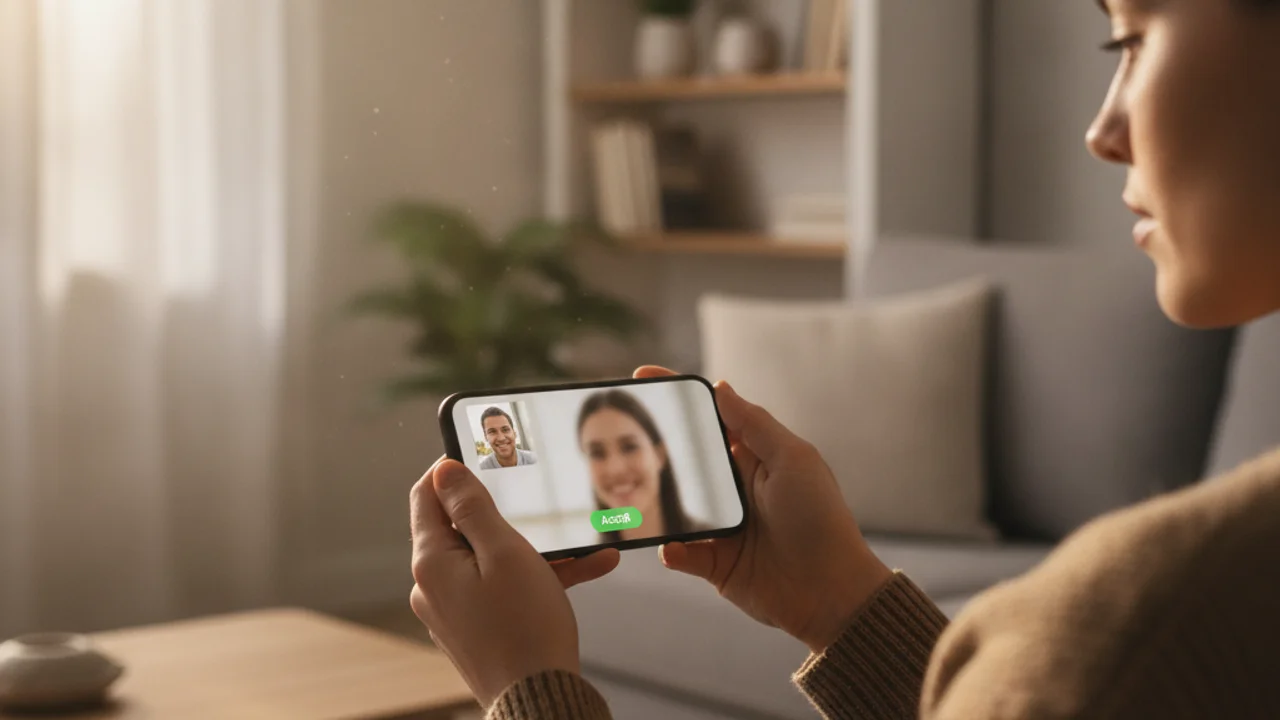
- <strong>Refuses live, unscheduled video.</strong> Endless excuses for a spontaneous video call: broken camera, poor signal, shyness, a demanding job overseas.
- <strong>Emotion that mirrors you too perfectly.</strong> The partner always agrees, always understands, and reflects your feelings back with uncanny smoothness.
- <strong>Vague on specifics, rich on feelings.</strong> Warm paragraphs about love and destiny, but evasive, generic, or slightly off answers to concrete questions.
- <strong>Fast intimacy and "love bombing."</strong> Declarations of love within days or weeks, well before any real-world meeting has happened.
- <strong>Odd repetition or reset.</strong> Occasionally repeats a phrase, forgets a thread you just discussed, or answers a question you did not ask, a scripting seam.
- <strong>Every road leads to money.</strong> No matter where the conversation starts, it drifts back toward an investment app, a crypto platform, or a sudden financial emergency.
Not sure the person you met online is real? Scan their profile photo or a suspicious video on Truvizy before you get in deeper.
Where the Chatbot Always Leads: The Investment App and the Cash Request
The emotional story is a delivery mechanism, and it delivers to one of two doors. The first is a fake investment. After weeks of closeness, your partner casually mentions a crypto or trading platform that has made them "financial freedom," and offers to guide you. The app looks real, your early test deposit shows fake gains, and you are encouraged to invest more. When you try to withdraw, there are taxes, fees, and freezes, and eventually the account and the partner vanish. This is the classic pig-butchering endgame, now run at chatbot scale.
The second door is a direct cash request wrapped in urgency: a medical emergency, a stuck shipment, a customs fee, a plane ticket so you can finally meet. Whichever door it is, the pattern is identical to the human-run catfishing playbook, only faster and cheaper to run. According to the FBI Internet Crime Complaint Center, romance and confidence fraud consistently rank among the costliest categories of online crime, and AARP's February 2026 survey found that over half of romance-scam victims (55%) never reported the loss to anyone, which keeps the true toll hidden and the operations profitable.
How Truvizy Detects AI Chatbot Romance Scams
The hardest part of this scam is that the text feels genuinely human, so the give-away often lives in the images and clips instead. That is where Truvizy helps. When a profile photo, a "proof of life" selfie, or a short video feels off, you can pass it to Truvizy's AI-powered detection instead of trusting your hope. Truvizy's multi-layer analysis weighs the media and the message against known scam and synthetic-content patterns and returns a clear verdict, so you get an outside opinion before your heart overrules your caution.
That check matters most before money moves. A chatbot partner is engineered to make you feel certain, and certainty is exactly what a scam needs. Submit the suspicious photo, video, or message at truvizy.app, and Truvizy tells you whether you are looking at manufactured or manipulated media while you can still walk away with your savings intact. In a year when one operator can run thousands of fake romances at once, a two-minute verification is the cheapest insurance you will ever buy.
How to Verify Someone Is Real Before You Send Money
You do not need to become a detective. You need one honest test and the discipline to act on the answer.
Demand a live, unscheduled video call. Not a pre-recorded clip, not a scheduled performance, a spontaneous call on an app you choose. A real person can usually manage it. A chatbot, and the operation behind it, will produce a wall of excuses. Persistent refusal is your answer.
Verify the images and never mix love with money. Reverse image search their photos, and scan any suspicious picture or video with Truvizy. Treat any request to invest or send cash from someone you have not met in person as a scam by default, no matter how deep the feelings run.
Report it and talk to someone. File with the FTC at reportfraud.ftc.gov and the FBI at ic3.gov, which feed the databases investigators use. Tell a friend or family member early, because scammers rely on isolation and shame to keep you quiet. If you already sent money, contact your bank or the crypto platform immediately and report it fast.
Key Takeaways
- AI chatbot romance scams use large language models to run thousands of fake relationships at once, so the effortless, always-available partner may be automated, not devoted.
- The strongest tell is a refusal of live, unscheduled video paired with instant replies at all hours and a conversation that always drifts toward money.
- The endgame is a fake investment app or an urgent cash request; treat any money ask from someone you have never met in person as a scam by default.
- Ask for a spontaneous video call, verify photos and clips with Truvizy before you send a cent, and report to the FTC and FBI fast if you already paid.
Expert analysis note: AI chatbot romance scams represent a structural shift in confidence fraud, because language models removed the human-labor ceiling that once limited how many victims a single operation could court at the same time. With per-victim losses frequently exceeding $50,000 and majority underreporting, the real scale is almost certainly larger than official figures show. Truvizy's role is preventive: verify the media and the messages before emotion and urgency close the deal, because once funds reach a fraudulent investment app or an overseas account, recovery is rare.
Your online partner of six weeks replies within seconds at all hours, always dodges spontaneous video calls, and has just recommended a crypto app that is 'guaranteed' to make you money together. What is the safest move?
- Make a small test deposit in the app to see if it really works
- Insist on a live, unscheduled video call and refuse to invest or send money until you have met in person
- Ask a few more personal questions to be sure they are real, then invest a little
- Trust them, since they have never asked for cash directly
Answer: Instant replies at all hours plus persistent refusal of live video plus a push toward an investment app is the exact signature of an AI chatbot romance scam. Do not deposit anything. Demand a spontaneous video call, verify their photos on Truvizy, and treat any money request from someone you have not met in person as fraud.
Frequently Asked Questions
How can I tell if I am talking to an AI chatbot instead of a real person?
Ask for a live, unscripted video call and watch for endless excuses to avoid it. A chatbot replies instantly around the clock, never gets tired or busy, mirrors your emotions a little too perfectly, and repeats slightly off-topic answers when you change the subject fast. It will dodge specific personal questions with vague warmth. If the relationship only ever deepens over text and always circles back to money, treat it as a bot until a real video call proves otherwise.
Why does my online partner always reply instantly but refuse a live video call?
Instant replies at every hour are a sign of automation, not devotion. A large language model never sleeps, so one operator can keep thousands of "partners" texting at once. Live video is the weak point, because a real-time face cannot be faked as easily as text, so the bot invents broken cameras, bad signal, shyness, or a demanding job. Persistent refusal to appear live on an unscheduled call is one of the strongest tells that you are chatting with a machine.
Can an AI chatbot really fake a romantic relationship?
Yes, and convincingly. Modern language models generate warm, context-aware, emotionally intelligent messages that remember your details and adapt to your mood. McAfee found that 1 in 3 adults admit they could fall for an AI chatbot posing as a romantic interest. The bot is designed to build trust and dependency over weeks, then hand off to a human only when it is time to close the deal and take your money.
How do AI romance scams make money from victims?
The conversation almost always ends in one of two ways: a fake investment app or a direct cash request. The bot spends weeks building intimacy, then mentions a crypto platform with "guaranteed" returns or a sudden emergency, a medical bill, a stuck package, a customs fee. According to the FBI, romance and confidence fraud losses run into the billions each year, and AI-run pig-butchering schemes report average per-victim losses above $50,000.
What should I do if I think my online partner is an AI scam bot?
Stop sending money immediately and do not invest a cent more. Ask for a live video call on an app of your choosing and note the excuses. Reverse image search their photos and scan any suspicious profile picture, video, or message with Truvizy at truvizy.app. Report it to the FTC at reportfraud.ftc.gov and the FBI at ic3.gov, and tell someone you trust. Feeling embarrassed is normal, but reporting fast improves any chance of recovery.
Related reading: AI Girlfriend Scams: When Chatbots Steal More Than Your Heart — How AI companion personas are weaponized to manipulate and defraud
Related reading: Pig Butchering Scams: The Long Con That Drains Your Savings — The investment endgame that most AI romance scams are built to reach
Related reading: Chatbot Scams: How AI Conversations Are Used to Defraud You — The broader landscape of malicious AI chatbots and how to stay safe
Frequently Asked Questions
How can I tell if I am talking to an AI chatbot instead of a real person?
Ask for a live, unscripted video call and watch for endless excuses to avoid it. A chatbot replies instantly around the clock, never gets tired or busy, mirrors your emotions a little too perfectly, and repeats slightly off-topic answers when you change the subject fast. It will dodge specific personal questions with vague warmth. If the relationship only ever deepens over text and always circles back to money, treat it as a bot until a real video call proves otherwise.
Why does my online partner always reply instantly but refuse a live video call?
Instant replies at every hour are a sign of automation, not devotion. A large language model never sleeps, so one operator can keep thousands of "partners" texting at once. Live video is the weak point, because a real-time face cannot be faked as easily as text, so the bot invents broken cameras, bad signal, shyness, or a demanding job. Persistent refusal to appear live on an unscheduled call is one of the strongest tells that you are chatting with a machine.
Can an AI chatbot really fake a romantic relationship?
Yes, and convincingly. Modern language models generate warm, context-aware, emotionally intelligent messages that remember your details and adapt to your mood. McAfee found that 1 in 3 adults admit they could fall for an AI chatbot posing as a romantic interest. The bot is designed to build trust and dependency over weeks, then hand off to a human only when it is time to close the deal and take your money.
How do AI romance scams make money from victims?
The conversation almost always ends in one of two ways: a fake investment app or a direct cash request. The bot spends weeks building intimacy, then mentions a crypto platform with "guaranteed" returns or a sudden emergency, a medical bill, a stuck package, a customs fee. According to the FBI, romance and confidence fraud losses run into the billions each year, and AI-run pig-butchering schemes report average per-victim losses above $50,000.
What should I do if I think my online partner is an AI scam bot?
Stop sending money immediately and do not invest a cent more. Ask for a live video call on an app of your choosing and note the excuses. Reverse image search their photos and scan any suspicious profile picture, video, or message with Truvizy at truvizy.app. Report it to the FTC at reportfraud.ftc.gov and the FBI at ic3.gov, and tell someone you trust. Feeling embarrassed is normal, but reporting fast improves any chance of recovery.