Crypto Recovery Scams: The Scam After the Scam
Think someone can recover your lost cryptocurrency? Before you pay any recovery specialist, read this. Crypto recovery scams hit fraud victims a second time, costing them even more money.
TL;DR
Crypto recovery scams target people who have already lost money to cryptocurrency fraud. Scammers pose as recovery specialists, lawyers, or government agents, promise to retrieve lost funds for an upfront fee, then disappear. No legitimate service can guarantee crypto recovery, and any specialist demanding payment before results is running a second scam against the same victim.
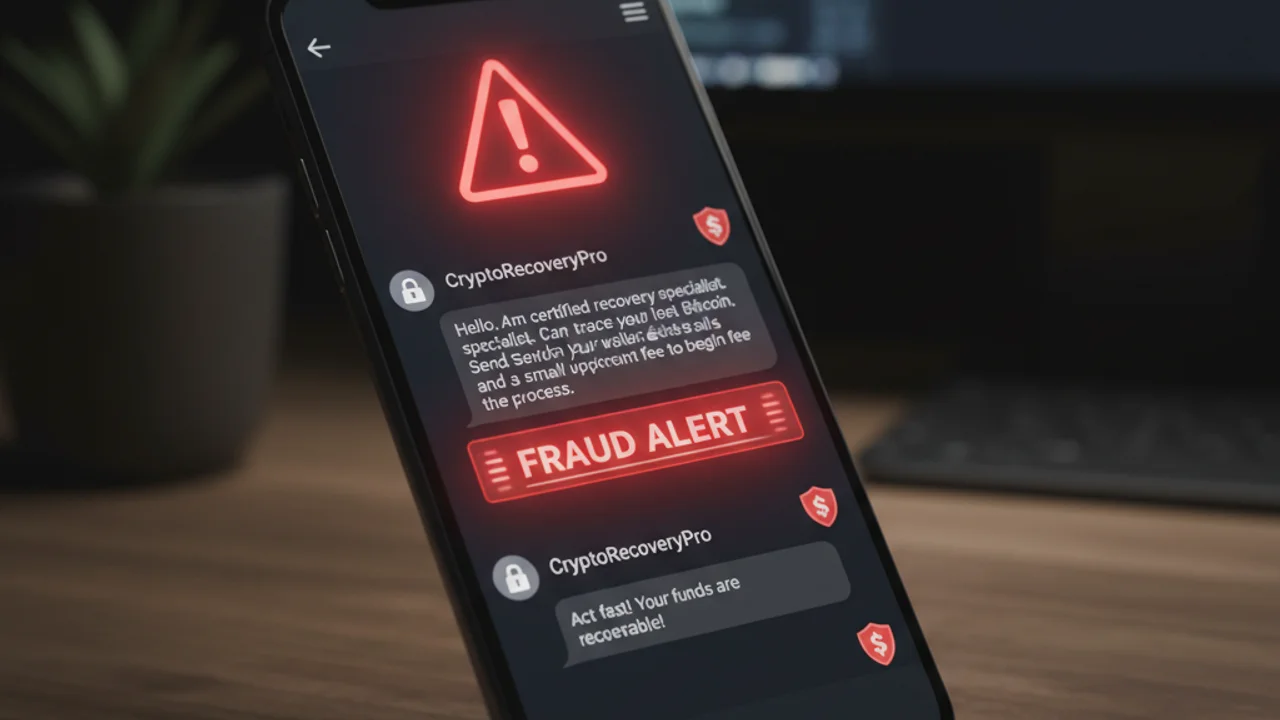
You lost $12,000 to a fake crypto trading platform. Three days later, a "recovery specialist" contacts you with a direct message. They claim to have found your name in a victim database and say they can trace your funds using blockchain forensics for a $500 upfront fee. This is not rescue. This is the second attack, and it is run by the same criminal network that stole from you the first time.
According to the FTC's 2025 Consumer Sentinel Network report, cryptocurrency-related fraud was the most complained-about investment category for the fourth consecutive year. What the headline numbers do not capture is how many of those victims were struck twice: once by the original fraud, and again by the recovery scam that followed. The Global Anti-Scam Alliance estimates that 78% of crypto fraud victims who searched online for recovery help encountered at least one fraudulent recovery service. These operations are not opportunistic. They are systematic.
What Is a Crypto Recovery Scam?
A crypto recovery scam, also called "recovery fraud," "reload fraud," or "fraud recovery fraud," is a second-layer attack specifically targeting people who have already lost money to cryptocurrency fraud. The attacker identifies victims through public social media posts, crypto fraud forums, legal complaint portals, or by purchasing victim lists from the original scammers. This is not coincidence: criminal networks frequently sell their victim data to recovery scam operators as a revenue stream, meaning the same network profits from you twice.
The crypto recovery scammer poses as one of several trusted archetypes: a blockchain forensic specialist with technical tools to "trace on-chain transactions," a lawyer with legal authority to pursue civil recovery, or an official from a government restitution program. The promise is always the same. They can get your money back. The price for this promise is always an upfront fee, typically requested in cryptocurrency or wire transfer, neither of which can be recalled after payment.
According to the FBI's 2025 Internet Crime Report, cryptocurrency investment fraud was the costliest cybercrime category in the United States for the third consecutive year, generating $6.57 billion in reported losses. Recovery fraud represents a significant portion of repeat victimization within that figure, a second extraction from people already financially and emotionally devastated by their original loss.
How Crypto Recovery Scams Work
Understanding the mechanics of a crypto recovery scam is the most reliable defense against falling for one. The operation follows a predictable five-step pattern:
Step 1: Target identification. The scammer searches public posts in forums like r/CryptoScams, r/Scams, and r/CryptoCurrency, where fraud victims describe their losses in detail. They also monitor Trustpilot complaints, BBB filings, and civil court records. Most commonly, they purchase victim lists directly from the criminal group that ran the original fraud, complete with names, loss amounts, platform names, and contact details.
Step 2: Credibility-building contact. The first message demonstrates specific knowledge of your loss, the exact platform name, the approximate amount, sometimes even the dates. This information, purchased with the victim list, creates the convincing impression that the "specialist" has already been investigating your case. The scammer shares fabricated credentials: a professional website, fake legal documents, invented regulatory registrations, and testimonial videos from alleged past clients.
Step 3: Fee escalation. Recovery requires an upfront payment, framed as a "legal filing fee," "blockchain forensic analysis charge," "tax clearance payment," or "government authorization fee." Each payment unlocks a new obstacle requiring another fee. Scammers who practice fee escalation maintain contact for months, inventing complications that consistently require additional payments to resolve.
Step 4: Disappearance. After extracting maximum fees, the scammer vanishes. Communications stop, websites go offline, and phone numbers go dead. Some operations maintain partial contact indefinitely, leaving victims hoping that one more payment will finally unlock their funds.
Red Flags to Spot Crypto Recovery Scams
Every crypto recovery scam shares identifiable warning signs. Recognizing even one of these is sufficient reason to disengage immediately:
Received a message from a recovery specialist? Scan their website or video before engaging.
How Truvizy Detects Recovery Scam Communications
Crypto recovery scams rely heavily on fabricated social proof, including fake testimonial videos, forged credential documents, and synthetic news articles designed to establish credibility with emotionally vulnerable victims. Truvizy's AI-powered detection is specifically effective against this pattern.
When a purported recovery specialist sends you a promotional video, a testimonial from a "previous client," or a link to their website, Truvizy's multi-layer analysis can identify patterns consistent with fraudulent content. This includes AI-generated faces in testimonial videos, recycled stock footage repurposed as recovery success stories, inconsistent document metadata, and synthetic media characteristics common to fabricated credentials. Truvizy has identified multiple active crypto recovery scam operations through this type of promotional material analysis, detecting the same video content reused across dozens of fraudulent recovery "firms" operating under different names.
Visit truvizy.app and scan any video, image, or link you receive from a recovery service before you respond, share any information, or send any payment. Truvizy's analysis takes seconds and can save you from a second devastating financial loss.
What to Do If You Have Been Targeted
If you have been contacted by a suspected crypto recovery scammer, or have already made a payment, take these steps immediately:
Stop all payments. No amount of pressure, escalating urgency, or apparent credibility should prompt another payment. Recovery scammers are expert at maintaining psychological hooks that keep victims paying for months. Cut contact completely.
Report to the FTC. File a complaint at ftc.gov/complaint . The FTC's Consumer Sentinel Network shares data with over 3,000 law enforcement agencies, and reports contribute to case-building against organized recovery fraud operations.
Report to the FBI's IC3. Submit a complaint at ic3.gov . The FBI has a dedicated cryptocurrency fraud team and coordinates with international partners on cross-border operations.
Contact your bank immediately. If you sent funds via wire transfer, contact your bank's fraud department within 24 hours. International wires have a narrow recall window. While crypto transactions cannot be recalled, bank wire fraud departments can sometimes freeze or redirect outgoing transfers if contacted quickly enough.
Warn others. Post about the specific recovery scam in r/CryptoScams, r/Scams, and Trustpilot. Recovery fraud operations depend on new victims not finding warnings. Your report directly protects the next person they target with the same pitch.
Seek legitimate help only through verifiable channels. Real recovery assistance, where it exists, comes from licensed attorneys (verify at your state bar association), certified fraud examiners, or official law enforcement agencies. Never pay upfront fees to any service you cannot independently verify through official government or bar association databases.

Key Takeaways
- No legitimate recovery service contacts fraud victims unsolicited or guarantees crypto recovery. Both are the defining features of recovery fraud, not legitimate help.
- Any upfront fee demand, regardless of how it is framed (legal fee, forensic charge, government authorization), is a scam. Real contingency-based services take a percentage of recovered funds only.
- Recovery scammers often purchase victim lists from the original scammers, so your vulnerability was sold as a commodity by the same criminals who defrauded you the first time.
- Report to ftc.gov/complaint and ic3.gov immediately, then warn others on public forums to prevent the same operation from victimizing the next person.
Expert analysis note: Crypto recovery fraud is one of the fastest-growing sub-sectors of investment scam activity globally. Criminal networks now routinely integrate recovery scam operations directly into their initial fraud pipelines, treating victims as recurring revenue sources long after the original theft. The technical irreversibility of blockchain transactions means that no third-party service can guarantee fund recovery without active law enforcement authority, and any such claim is a categorical warning sign. Truvizy's detection capabilities are specifically calibrated to the synthetic media and fabricated credential patterns these operations rely on to establish credibility with vulnerable victims.
Related reading: Pig Butchering Scams: The Long-Con Crypto Fraud — How the original crypto investment scam works, and why its victims are prime recovery scam targets
Related reading: How to Get Your Money Back After Being Scammed — Legitimate steps and realistic expectations for scam fund recovery
Related reading: Bitcoin Giveaway Scams: Too Good to Be True — How fake crypto giveaways work and how to spot them instantly
Frequently Asked Questions
Can cryptocurrency ever be recovered after a scam?
Cryptocurrency recovery is possible in rare cases, typically when law enforcement freezes the receiving wallet before funds are moved, or when the receiving exchange cooperates with a court order. These outcomes require active law enforcement involvement, happen in a minority of cases, and take months to years. No private recovery service can guarantee results without law enforcement authority backing the process.
How do crypto recovery scammers find their victims?
Recovery scammers identify victims through social media posts complaining about lost crypto, public complaint forums like Reddit and Trustpilot, legal complaint portals, and most commonly, purchased victim lists sold by the original scammers. Criminal networks frequently integrate recovery scam operations into their initial fraud pipeline, treating each victim as a recurring revenue source after the first theft.
What are the signs of a legitimate crypto recovery service?
Legitimate recovery assistance comes from law enforcement agencies, attorneys verifiable through state bar registrations, or certified fraud examiners. Red flags include unsolicited contact, guaranteed recovery promises, upfront fees in any form, unverifiable credentials, pressure tactics, and requests for wallet access or remote device control. A real attorney working on contingency takes a percentage of recovered funds, never payment before results.
Can Truvizy detect crypto recovery scam websites and videos?
Yes. Truvizy's AI-powered multi-layer analysis identifies the fabricated social proof that recovery scams rely on, including manipulated testimonials, AI-generated faces in testimonial videos, recycled stock footage repurposed as recovery success stories, and documents with inconsistent metadata. If you receive any communication from a purported recovery service, scan it at truvizy.app before engaging or sending money.
What should I do if I already paid a crypto recovery scammer?
Stop all further payments immediately, regardless of pressure or threats. Report to the FTC at ftc.gov/complaint and the FBI at ic3.gov. If you paid via bank transfer, contact your bank's fraud department within 24 hours for a potential recall attempt. Document every communication. If you paid in crypto, contact the receiving exchange if identifiable. Exchanges sometimes cooperate with law enforcement freezes on flagged wallets.