Father's Day Gift Scams 2026: How Fake Storefronts Steal Your Money Before June 21
Father's Day gift scams spike every June with fake storefronts and 80% off deals. Learn the 7 red flags and how to verify a deal before you pay in 2026.
TL;DR
Father's Day gift scams are fake online storefronts and social media ads that promote steep discounts on watches, coolers, toolkits, and whisky sets, then ship counterfeits or nothing at all. Shopping scams are now the most reported social media scam type, and social media scam losses reached $2.1 billion in 2025. The defense is simple: slow down, verify the seller before you pay, and scan any suspicious deal link or ad video with Truvizy first.
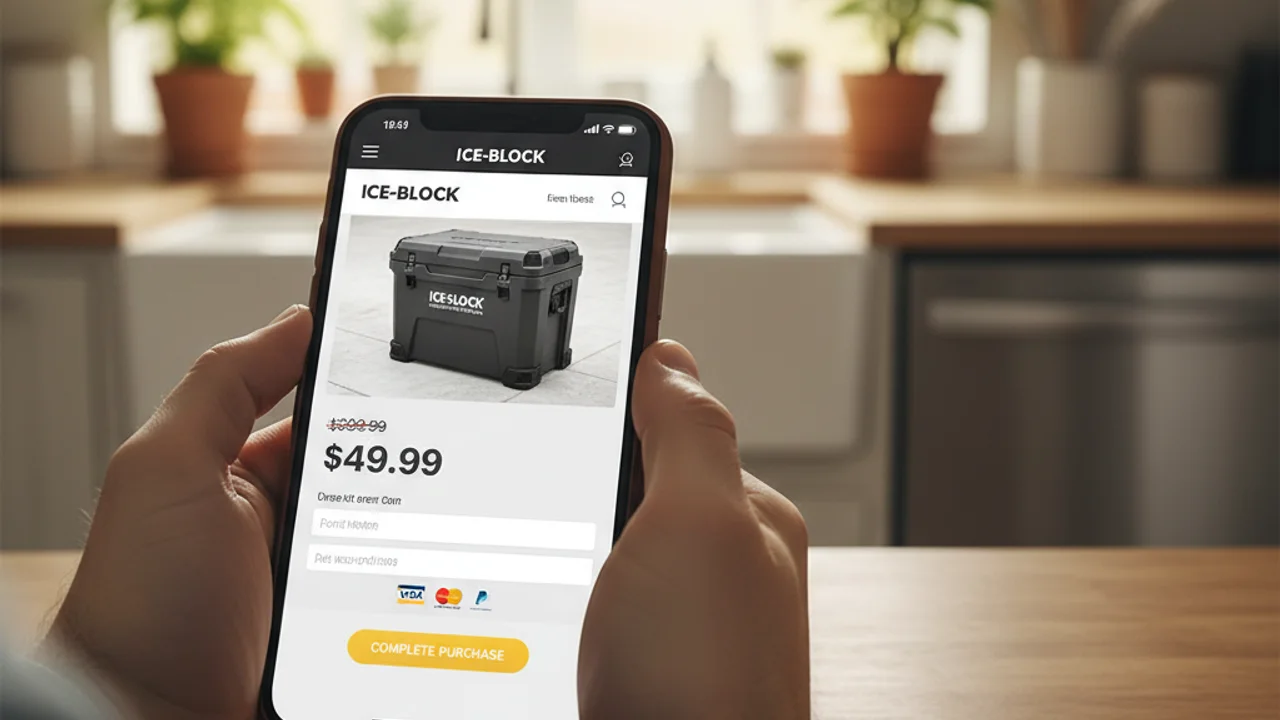
It is June 19, two days before Father's Day, and you still have not bought a gift. An Instagram ad scrolls past: a premium Yeti-style cooler, normally $400, marked down to $39 with free shipping and a countdown timer that ends tonight. The storefront looks polished, the reviews glow, and checkout accepts Apple Pay. You order. The cooler never arrives, the support email bounces, and your card statement shows a charge from a company you have never heard of. This is a Father's Day gift scam, and every June a wave of fake storefronts appears to catch last-minute shoppers exactly like you.
Seasonal gift holidays are a gift to fraudsters too. Shoppers are rushed, emotional, and hunting for a deal, which is the exact mindset scammers engineer their fake stores to exploit. According to the FTC's April 2026 data release, people lost $2.1 billion to social media scams in 2025, eight times the 2020 figure, and shopping fraud is the single most reported category. Father's Day, with a record $24 billion in projected US spending, sits right in the crosshairs.
Quick Answer
What Are Father's Day Gift Scams?
A Father's Day gift scam is any fraud that exploits the late-spring shopping rush around the holiday to take your money without delivering a real product. Most follow one of two shapes: a fake storefront that mimics a legitimate brand or retailer, or a social media ad that funnels you to a checkout page built to harvest payments and card data. The product categories rotate with the occasion. For Father's Day, that means dads' favorites: watches, grilling gear, power tools, bourbon and whisky sets, coolers, and personalized leather goods.
The timing is deliberate. US consumers were projected to spend a record $24 billion on Father's Day in 2025, up from $22.4 billion the year before, according to the National Retail Federation's survey with Prosper Insights. Scammers ride that wave because the conditions favor them: a hard deadline, a shopper who left it late, and a gift that is supposed to feel a little premium. A counterfeit watch at a fraction of retail looks like a steal rather than a warning sign.
How Father's Day Gift Scams Work
The operation usually starts weeks before the holiday. A scammer registers a fresh domain, clones the look of a real brand or builds a generic but slick storefront, and loads it with product photos lifted from genuine sellers. They then buy social media ads, often on TikTok, Instagram, and Facebook, targeting people who have shown interest in gifts, gadgets, or outdoor gear. Increasingly, the ad video itself is AI-generated: a synthetic demo of a product the seller does not actually stock.
Once you reach the checkout, the scam splits into a few outcomes. Some sites simply take your money and disappear, never shipping anything. Others ship a cheap counterfeit or a token item, like a keychain instead of a cooler, to create a fake tracking number that defeats lazy dispute systems. The most dangerous versions are pure data harvests: the checkout exists only to capture your card number, billing address, and CVV, which are then sold or reused. Payment method is the tell. Legitimate stores take credit cards; fake ones steer you toward Zelle, Cash App, crypto, or bank transfer because those payments are hard to reverse.
The 7 Father's Day Scam Products to Watch
These seven categories drive the bulk of Father's Day storefront fraud each June. If you see one of them at an implausible discount through a social ad, slow down before you buy.
- <strong>Luxury watch dupes.</strong> Real-looking listings for Rolex, Omega, or Tag Heuer at 80 to 90 percent off. You receive a counterfeit, or nothing.
- <strong>Yeti-style coolers and drinkware.</strong> A flagship cooler at $39 is the season's signature bait. Premium brands do not discount this deep through a single ad.
- <strong>Power tool kits.</strong> DeWalt, Milwaukee, or Makita combo kits at a fraction of retail, often shipped as empty boxes or cheap clones.
- <strong>Whisky and bourbon decanter sets.</strong> Hard-to-find bottles and engraved glassware sets that arrive as plastic, or never arrive at all.
- <strong>Personalized leather goods.</strong> Custom wallets and belts that require your monogram and address up front, then ghost you after payment.
- <strong>Smart grills and BBQ gear.</strong> Pellet grills and accessory bundles advertised far below market, a classic non-delivery setup.
- <strong>Brand-name sunglasses and tech.</strong> Ray-Ban, Bose, and AirPods clones pushed through lookalike storefronts timed to the holiday.
Red Flags to Spot a Father's Day Gift Scam
Any single signal below warrants a pause. Two or more together means you are almost certainly looking at a Father's Day gift scam.
- <strong>Discounts that defy logic.</strong> A premium brand at 70 to 90 percent off, only through this one ad or link.
- <strong>A brand-new or off-brand domain.</strong> The store name does not match the brand, or the site launched weeks ago. A quick WHOIS lookup reveals the domain age.
- <strong>Pressure and countdown timers.</strong> "Ends tonight," "only 3 left," and urgency banners designed to stop you from checking.
- <strong>Pay outside the card rails.</strong> Requests for Zelle, Cash App, crypto, wire, or gift cards instead of a credit card.
- <strong>No real contact details.</strong> Only a web form, a free email address, and no verifiable phone number or physical address.
- <strong>Reviews that feel manufactured.</strong> Dozens of five-star reviews posted in the same week, all generic, with no critical voices.
Spotted a deal that feels too good? Scan the ad video or storefront link on Truvizy before you pay.
How Truvizy Detects Father's Day Storefront Scams
Truvizy's AI-powered detection works on the artifacts that surround a Father's Day gift scam, not the purchase itself. When a storefront runs an AI-generated demo of a cooler it does not stock, Truvizy's multi-layer analysis flags the synthetic generation signals in the video. When an ad reuses product photos lifted from the genuine brand, that mismatch becomes a signal. When a checkout link points to a domain tied to known fraud patterns, Truvizy can surface that before you ever reach the payment step.
The point is timing. By the time you are typing your card number into a checkout, the decision is already made. Verification has to happen earlier, on the ad, the screenshot, the link, the seller video. Submit any of those at truvizy.app and you get a clear verdict in seconds, while there is still time to walk away. Truvizy is built for exactly this seasonal surge, when polished fakes outnumber the real deals.
What to Do If You Paid a Fake Storefront
Act fast. Recovery odds drop sharply after the first 24 to 48 hours, and the steps you take in that window matter most.
Contact your card issuer and dispute the charge immediately. If you paid by credit card, federal chargeback rights are your strongest protection. Call the number on the back of your card, report the merchant as fraudulent, and request a new card number to stop further charges. Debit card disputes are weaker but still worth filing in writing.
If you paid by Zelle, Cash App, or wire, report it now. These transfers are designed to be irreversible, but contacting the provider and your bank within minutes occasionally allows a freeze. Document everything, including the ad, the order confirmation, and any messages.
Report the scam to the FTC at reportfraud.ftc.gov. Your report feeds the Consumer Sentinel database used by investigators and helps regulators map seasonal fraud spikes. If the ad ran on a platform, also report the listing inside the app so it can be pulled before more shoppers are caught.
Watch for follow-on fraud. If you entered card or personal details, monitor your statements, consider a credit freeze, and be wary of a "refund specialist" who contacts you afterward. Recovery scams that target recent victims are common, as covered in our guide to getting your money back after a scam.

Key Takeaways
- Fake storefronts and social ads spike every June around the holiday, pushing watches, coolers, toolkits, and whisky sets at impossible discounts.
- A premium brand at 70 to 90 percent off, sold only through one ad or link, is the signature pattern of a seasonal gift scam.
- Pay with a credit card for chargeback protection, and never send Zelle, Cash App, crypto, or gift cards to an unknown seller.
- Verify the seller and scan the ad or link with Truvizy before you pay, and if you were caught, dispute the charge and report to the FTC within 24 hours.
Expert analysis note: Seasonal shopping fraud is now the highest-volume scam category the FTC tracks, and social ads have become its primary delivery channel, accounting for the majority of reported purchase-scam losses. The Father's Day spike is predictable, repeatable, and increasingly AI-assisted, with synthetic product videos lowering the cost of a convincing fake to near zero. Truvizy's role in this stack is preventive: verify the artifact before the checkout, because once the payment clears a fraudulent storefront, the money is rarely recoverable.
A TikTok ad shows a $400 cooler marked down to $39, ending tonight, checkout only accepts Zelle and Cash App, and the store domain is two weeks old. What is the right move?
- Buy it fast before the countdown timer runs out, since the deal is clearly limited
- Pay a smaller test amount first to see if the item ships before ordering more
- Skip it, search the brand directly, and scan the ad and link with Truvizy before paying anyone
- Message the seller and ask them to prove the cooler is real before you pay
Answer: A premium brand at 90 percent off, a brand-new domain, a countdown timer, and payment only by Zelle or Cash App are four red flags stacked together. Real brands take credit cards and do not sell flagship products this cheap through a single ad. Walk away, buy from the official site, and verify any suspicious link first.
Frequently Asked Questions
How do I know if a Father's Day sale is a scam?
Check how long the storefront has existed, whether the discount is implausibly steep (70 to 90 percent off a premium brand), and whether the only contact is a web form. According to the FTC, shopping scams are the most reported social media scam type. A brand-new domain pushing an Instagram or TikTok ad for an 80 percent off luxury cooler is the classic Father's Day scam pattern.
How can I tell if a watch or whisky site is fake?
Search the exact store name plus the word "scam" or "review," look up the domain age with a free WHOIS lookup, and confirm the company has a real physical address and phone number. Fake watch and whisky sites usually copy product photos from the genuine brand, list prices far below retail, and accept only Zelle, Cash App, crypto, or bank transfer rather than a credit card.
Why is this Yeti cooler 80% off on a TikTok ad?
Because it is almost certainly not a real Yeti. Premium brands rarely discount their flagship products 80 percent, and they do not sell exclusively through a single social ad. The video is bait. You will either receive a cheap counterfeit, a tiny unrelated item to game tracking systems, or nothing at all. Reverse image search the ad and scan the link with Truvizy before paying.
Should I buy a Father's Day gift from a TikTok or Instagram ad?
Only after you verify the seller independently. The FTC reports that more than 40 percent of people who lost money to a social media scam in 2025 were trying to buy something they saw in an ad. If you like a product in an ad, search for the brand directly, buy from its official site or a known retailer, and pay with a credit card that offers chargeback protection.
Can Truvizy detect Father's Day storefront scams?
Yes. Truvizy's AI-powered analysis at truvizy.app scans the ad videos, screenshots, and storefront links that drive Father's Day gift scams. It flags AI-generated product demos, cloned brand imagery, and known fraud patterns so you get a clear verdict in seconds, before you enter your card details or send a payment.
Related reading: Is This Website Legit? 7 Free Ways to Check Any URL — The fastest checks to confirm a storefront is real before you enter your card details
Related reading: Zelle and Venmo Scams: Why Your Bank Will Not Refund You — Why scammers push you off credit cards, and how to protect irreversible payments
Related reading: Holiday Shopping Scams: How to Shop Safely Online — The seasonal storefront and social-ad patterns that repeat across every gift holiday
Frequently Asked Questions
How do I know if a Father's Day sale is a scam?
Check how long the storefront has existed, whether the discount is implausibly steep (70 to 90 percent off a premium brand), and whether the only contact is a web form. According to the FTC, shopping scams are the most reported social media scam type. A brand-new domain pushing an Instagram or TikTok ad for an 80 percent off luxury cooler is the classic Father's Day scam pattern.
How can I tell if a watch or whisky site is fake?
Search the exact store name plus the word "scam" or "review," look up the domain age with a free WHOIS lookup, and confirm the company has a real physical address and phone number. Fake watch and whisky sites usually copy product photos from the genuine brand, list prices far below retail, and accept only Zelle, Cash App, crypto, or bank transfer rather than a credit card.
Why is this Yeti cooler 80% off on a TikTok ad?
Because it is almost certainly not a real Yeti. Premium brands rarely discount their flagship products 80 percent, and they do not sell exclusively through a single social ad. The video is bait. You will either receive a cheap counterfeit, a tiny unrelated item to game tracking systems, or nothing at all. Reverse image search the ad and scan the link with Truvizy before paying.
Should I buy a Father's Day gift from a TikTok or Instagram ad?
Only after you verify the seller independently. The FTC reports that more than 40 percent of people who lost money to a social media scam in 2025 were trying to buy something they saw in an ad. If you like a product in an ad, search for the brand directly, buy from its official site or a known retailer, and pay with a credit card that offers chargeback protection.
Can Truvizy detect Father's Day storefront scams?
Yes. Truvizy's AI-powered analysis at truvizy.app scans the ad videos, screenshots, and storefront links that drive Father's Day gift scams. It flags AI-generated product demos, cloned brand imagery, and known fraud patterns so you get a clear verdict in seconds, before you enter your card details or send a payment.