LinkedIn Job Scams: How Fake Recruiters Steal Your Identity
LinkedIn job scams use fake recruiters to steal your identity, money, and personal data. Learn the red flags of a fake recruiter, how the scam works, and how to verify any job offer before you reply.
TL;DR
LinkedIn job scams use fake recruiter profiles and cloned company pages to lure job seekers with too-good-to-be-true offers. The goal is rarely a real job. Scammers harvest your Social Security number, bank details, and ID documents during a fake onboarding, or charge you upfront for equipment and training. No legitimate recruiter asks for payment or sensitive personal data before a verified, signed offer.
A recruiter from a company you recognize sends you a LinkedIn message. The role is remote, the pay is well above market, and they say your profile is "a perfect fit." Within an hour you are in a chat-based interview, and by the end of the day you have a signed-looking offer letter asking only for your Social Security number, a bank account for direct deposit, and a photo of your driver license to "set up payroll." There is no job. You have just walked into one of the most effective LinkedIn job scams operating in 2026.
According to the FTC's 2025 Consumer Sentinel Network report, job and employment-agency scams cost Americans roughly $501 million in 2024, nearly triple the level reported in 2020. LinkedIn sits at the center of this surge for a simple reason: it concentrates millions of active job seekers who already expect cold outreach from recruiters, so a fraudulent message blends in with legitimate ones. The platform's own transparency reporting shows it removes tens of millions of fake accounts each reporting period, yet enough slip through to make fake-recruiter fraud a daily threat.
What Are LinkedIn Job Scams?
A LinkedIn job scam is a fraud that uses a fake recruiter profile, a cloned company page, or a hijacked real account to dangle a job offer the victim will never actually receive. The offer is the bait. The payload is everything an employer would normally be entitled to ask for: your legal name, date of birth, Social Security or national ID number, banking information for direct deposit, and scanned copies of government identity documents.
These scams thrive on LinkedIn specifically because the platform is built around professional trust. A profile with a corporate logo, a plausible job title, and a few hundred connections reads as legitimate at a glance. Scammers either spin up new fake profiles using AI-generated headshots and stolen work histories, or they compromise real accounts and message that person's network from a profile that genuinely belongs to a recruiter the victim might know.
The damage extends well beyond a wasted application. Because the information collected is the exact dataset used to open financial accounts, a single successful LinkedIn job scam can lead directly to synthetic identity theft, fraudulent loans, and tax-refund fraud filed in the victim's name months later. This overlaps heavily with the tactics covered in our guide on deepfake job interviews , where scammers add a live fake face to the same script.
How LinkedIn Job Scams Work
Understanding the sequence is the most reliable way to stop a LinkedIn job scam before it costs you. Almost every version follows the same five-step pattern:
Step 1: Unsolicited outreach. The scammer messages you first, usually referencing your current role and praising your background. The pitch emphasizes remote work, flexible hours, and pay that is noticeably above market for the role described.
Step 2: A fast, low-friction interview. Rather than a video call with a real person, the "interview" happens over LinkedIn chat, WhatsApp, Telegram, or Microsoft Teams with a hastily created account. Questions are generic, and an offer arrives suspiciously quickly, sometimes within hours.
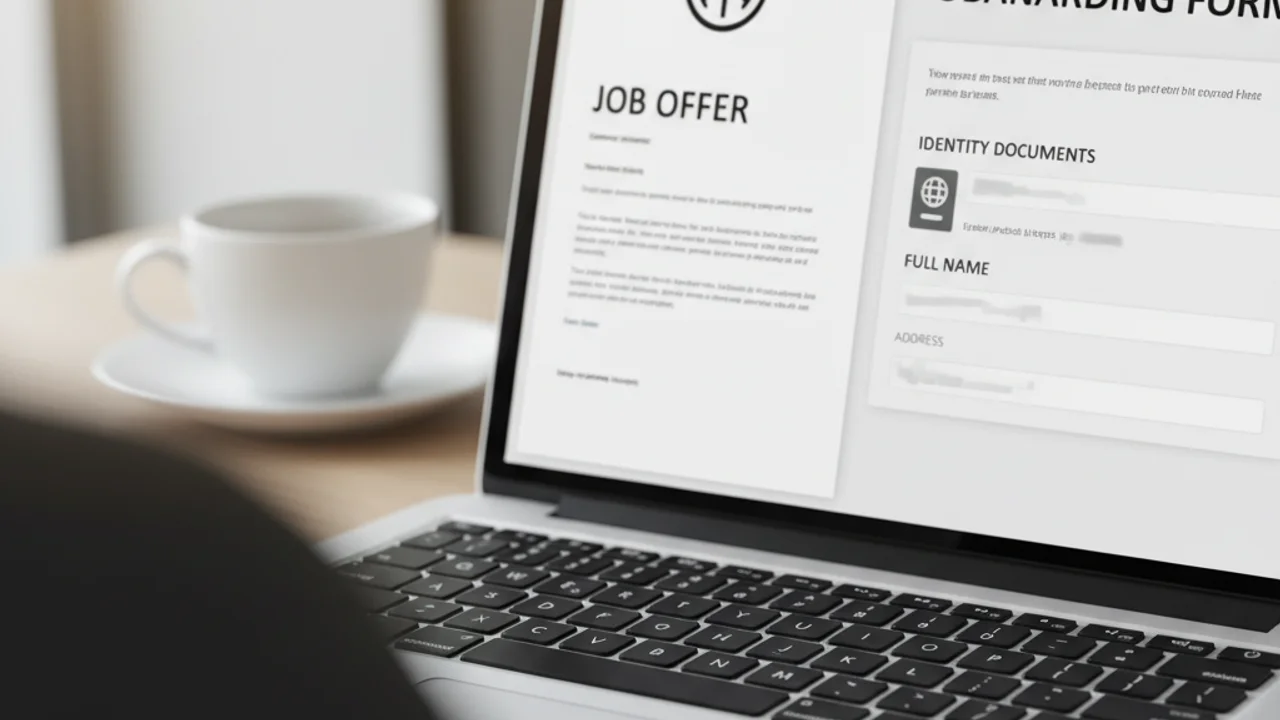
Step 3: The onboarding data grab. A professional-looking offer letter and "new hire" forms request your Social Security number, bank account and routing number, date of birth, and copies of your passport or driver license, all before any verifiable employment contract exists.
Step 4: The money hook. Many versions add a financial step: an upfront fee for a laptop, software, or "certification," or a mailed check you are told to deposit and partly wire back to a vendor. The check bounces days later, leaving you liable for the full amount.
Step 5: Disappearance or escalation. Once they have your documents or money, the scammer goes silent, or escalates by enrolling you as a money mule, asking you to receive and forward payments that are actually stolen funds.
Red Flags to Spot LinkedIn Job Scams
Every LinkedIn job scam leaks identifiable warning signs. Recognizing even one is reason enough to stop and verify before you share anything:
Got a suspicious recruiter message or offer letter? Scan the profile, document, or video before you reply.
How Truvizy Detects LinkedIn Job Scams
LinkedIn job scams depend on fabricated assets to look real: AI-generated recruiter headshots, cloned company logos, doctored offer letters, and profile photos recycled across dozens of fake accounts. Truvizy's AI-powered, multi-layer analysis is built to catch exactly this kind of synthetic and manipulated content.
When a recruiter sends you a profile screenshot, an offer-letter PDF, a "team intro" video, or a company logo image, Truvizy's detection can flag the patterns common to fraudulent material. This includes faces with the telltale artifacts of AI generation, images reused from other accounts or stock libraries, documents with inconsistent metadata, and synthetic-media characteristics in video introductions. Truvizy's analysis surfaces these signals in seconds, before you hand over a single document.
Visit truvizy.app and scan any image, video, or link from a recruiter before you respond, share personal information, or deposit any check. A few seconds of verification with Truvizy is far cheaper than recovering a stolen identity.
What to Do If You Encounter a LinkedIn Job Scam
If you suspect a recruiter or offer is fraudulent, or you have already shared information, act quickly and in this order:
Stop communicating and do not pay. End the conversation, decline any request for fees, and do not deposit any check they sent. No amount of urgency justifies another step.
Report the profile to LinkedIn. Use the "Report" option on the recruiter's profile and the job post. LinkedIn removes confirmed fake accounts and uses reports to detect the networks behind them.
Report to the FTC. File at reportfraud.ftc.gov . Your report feeds the Consumer Sentinel Network, which is shared with thousands of law enforcement agencies.
Report to the FBI's IC3. Submit a complaint at ic3.gov , especially if money or a fraudulent check was involved.
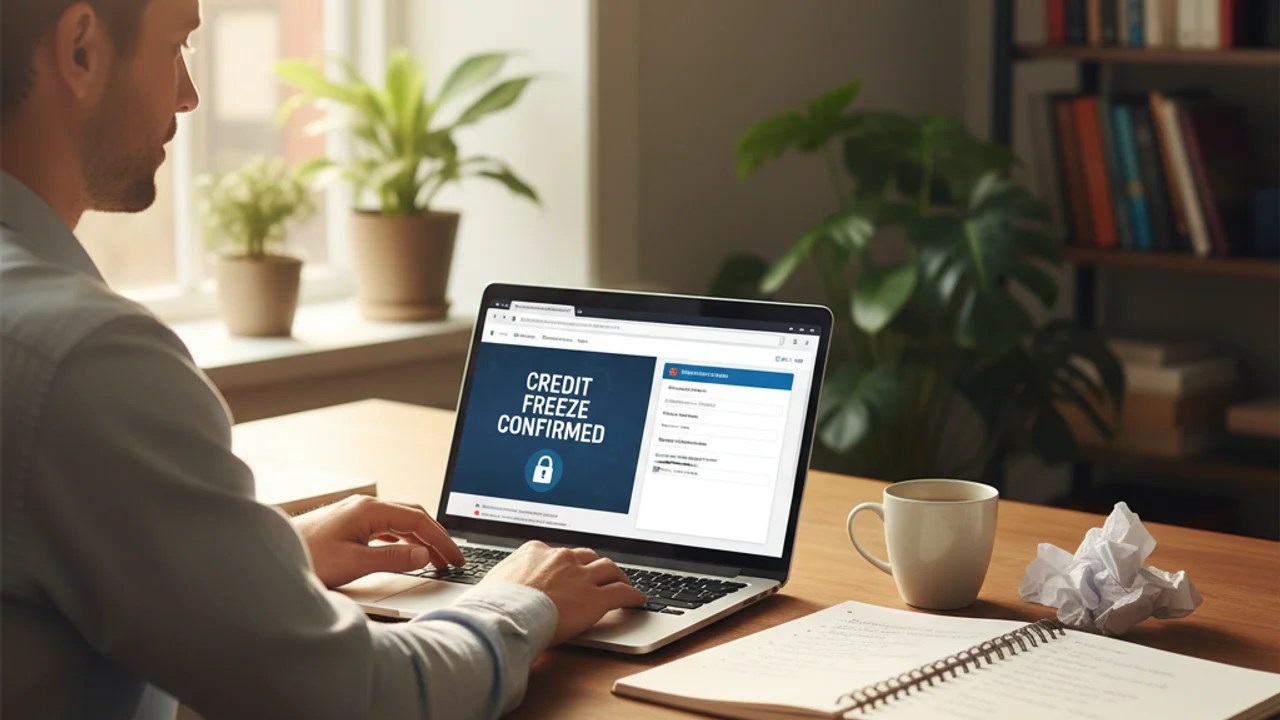
Protect your identity if you shared documents. If you gave out your Social Security number or bank details, place a free fraud alert or credit freeze with the three major credit bureaus, and monitor your accounts. Our identity theft prevention guide walks through every step.
Contact your bank if a check was involved. If you deposited a scam check or wired money, call your bank's fraud department immediately. Fast action sometimes allows a wire to be frozen before it clears.
Key Takeaways
- A LinkedIn job offer that asks for your SSN, bank details, or ID documents before a signed, verified contract is a scam, not an onboarding step.
- No legitimate employer charges you for training, equipment, or background checks. Any upfront fee request is employment fraud.
- The check-overpayment trick leaves you liable: a fraudulent check is reversed days after your bank credits it, and the money you wired back is gone for good.
- Verify recruiters and offers independently through the official company website, report fakes to LinkedIn and ic3.gov, and scan suspicious profiles or documents with Truvizy first.
Expert analysis note: Fake-recruiter fraud has become one of the most industrialized branches of social-media scamming, blending identity theft, advance-fee fraud, and money-mule recruitment into a single funnel. Generative AI has erased the old visual tells, producing convincing recruiter headshots, polished offer letters, and even live video personas at scale. Because the data harvested mirrors a legitimate hiring process exactly, victims often feel no alarm until fraudulent accounts appear in their name. Truvizy's detection is calibrated to the synthetic media and fabricated-credential patterns these operations depend on to pass the professional-trust test that LinkedIn was built on.
Related reading: Scan a Suspicious Recruiter or Offer with Truvizy — Check a recruiter profile photo, offer-letter PDF, or intro video for AI-generated and manipulated content in seconds
Related reading: Social Media Impersonation: How Fake Accounts Target You — How cloned and impersonated profiles operate across platforms, and how to verify who you are really talking to
Related reading: Deepfake Job Candidates and Interviews — How scammers add a live fake face to the same fake-hiring script, and how to spot it
Frequently Asked Questions
How do I know if a LinkedIn recruiter is real or fake?
Check the recruiter profile for a real connection history, a complete work record, and mutual connections you can verify independently. Cross-check the company by going directly to its official website rather than a link they send. A real recruiter never asks for your Social Security number, bank details, or an upfront payment before a signed, verified offer.
Why would a scammer create a fake job offer on LinkedIn?
The job is the bait, not the goal. Fake recruiters use it to collect the personal data you would normally hand an employer: full name, date of birth, Social Security or national ID number, bank account for "direct deposit," and copies of your passport or driver license. That package is enough to open accounts in your name or sell on the dark web for identity theft.
Can a LinkedIn job scam steal my money directly?
Yes. Common variants include charging "training" or "equipment" fees, sending a fake check and asking you to wire part of it back (a check-overpayment scam), or onboarding you into a money-mule role where you move stolen funds. Each pathway either takes your money directly or makes you legally liable for laundering someone else's.
Can Truvizy detect LinkedIn job scams?
Yes. Truvizy's AI-powered analysis flags the fabricated assets these scams rely on, including AI-generated recruiter headshots, cloned company logos, doctored offer letters, and recycled profile photos reused across multiple fake accounts. Paste a suspicious profile screenshot, offer-letter PDF, or recruiter video into truvizy.app before you reply or share any document.
How common are job scams in 2026?
According to the FTC's 2025 Consumer Sentinel report, job and employment-agency scams cost Americans roughly $501 million in 2024, almost three times the 2020 figure. LinkedIn is a primary hunting ground because it concentrates active job seekers who already expect unsolicited recruiter outreach, which makes a fraudulent message feel normal.