Identity Theft Prevention: 15 Steps to Protect Your Personal Information
Discover 15 actionable steps to prevent identity theft, from securing your accounts and monitoring your credit to protecting your Social Security number and digital footprint.
· By Truvizy Research Team · 8 min read
TL;DR
Identity theft affects millions of people each year, but most incidents are preventable. By implementing strong password practices, monitoring your credit, securing personal documents, and using modern protection tools, you can dramatically reduce your risk of becoming a victim.
Identity theft remains one of the fastest-growing crimes globally, affecting millions of people every year and causing financial losses measured in the tens of billions. In 2025, reported identity theft cases reached record levels, and the trend shows no sign of slowing as criminals develop increasingly sophisticated methods for stealing personal information and exploiting it for financial gain. The good news is that the vast majority of identity theft is preventable with consistent, practical security habits.
What makes identity theft particularly insidious is its delayed impact. Unlike a stolen wallet, which you notice immediately, identity theft can go undetected for months or years. Criminals may sit on stolen information, waiting for the optimal time to exploit it. They may use it incrementally, opening small credit accounts or filing tax returns long before you notice anything wrong. By the time you discover the theft, the damage can be extensive and the recovery process painfully slow. Prevention is not just better than cure; it is exponentially easier.
The Identity Theft Landscape in 2026
The ways identity thieves operate have evolved dramatically in recent years. Data breaches at major corporations dump millions of personal records onto criminal marketplaces at once. Phishing attacks powered by AI generate convincing impersonations of banks, employers, and government agencies. Social media oversharing provides criminals with the personal details they need to answer security questions and verify identities. And AI-powered content generation enables personalized scam messages that are far more convincing than the generic phishing emails of the past.
Synthetic identity fraud, where criminals combine real and fabricated information to create entirely new identities, has become particularly challenging. A thief might combine a real Social Security number with a fake name and address, gradually building credit history before cashing out. This type of fraud is harder to detect because it does not trigger the traditional alerts associated with someone using your exact identity.
The following 15 steps address the most common attack vectors and provide practical protection against both traditional and emerging identity theft methods.
Secure Your Digital Accounts (Steps 1-5)
Step 1: Use unique, strong passwords for every account. Password reuse is one of the most exploited vulnerabilities. When a single service is breached, criminals test the stolen credentials against every other platform. A password manager generates and stores unique, complex passwords for each account, eliminating the need to remember them while ensuring every account has a distinct credential.
Step 2: Enable two-factor authentication everywhere. Two-factor authentication adds a second verification layer beyond your password, typically a code from an app, a hardware key, or biometric confirmation. Even if a criminal obtains your password, they cannot access your account without the second factor. Prioritize enabling it on email, banking, and social media accounts.
Step 3: Secure your primary email account above all else. Your email is the master key to your digital life. Password reset links, account verification emails, and security alerts all flow through it. If a criminal gains access to your email, they can compromise virtually every other account. Use your strongest password and most secure two-factor method on your email.
Step 4: Review account recovery options. Outdated phone numbers, old email addresses, and weak security questions in your account recovery settings create backdoors for attackers. Audit recovery settings on your most important accounts and remove any that are no longer current or secure.
Step 5: Monitor active sessions and connected apps. Most major platforms let you view active login sessions and third-party apps connected to your account. Review these regularly and revoke access from devices you do not recognize and apps you no longer use. Each connected app is a potential vulnerability.
Worried about a suspicious email or message? Scan it with Truvizy to check for phishing.

Protect Your Personal Information (Steps 6-10)
Step 6: Guard your Social Security number aggressively. Your SSN is the single most valuable piece of information for identity thieves. Never carry your Social Security card in your wallet. Question any request for your SSN and provide it only when legally required. Be especially cautious of scams that target your Social Security number through phone calls, emails, and fraudulent websites.
Step 7: Minimize your digital footprint. Social media profiles, public records, and data broker sites collectively reveal an alarming amount of personal information. Review your social media privacy settings, limit the personal details visible in your profiles, and request removal from data broker sites that publish your information. The less information available about you online, the harder it is for criminals to impersonate you.
Step 8: Secure physical mail and documents. Mail theft remains a common identity theft vector. Use a locking mailbox or a PO box for sensitive correspondence. Opt for paperless statements when available. Shred any documents containing personal information before discarding them. Tax documents, medical records, and financial statements are particularly valuable to thieves.
Step 9: Be cautious on public Wi-Fi. Public Wi-Fi networks are inherently insecure. Avoid accessing banking, email, or any accounts containing sensitive information on public networks without a VPN. If you must use public Wi-Fi, ensure the sites you visit use HTTPS and consider using your phone's mobile data instead for sensitive transactions.
Step 10: Protect your devices. Keep operating systems and applications updated with the latest security patches. Use device encryption to protect data if your phone or laptop is lost or stolen. Enable remote wipe capability on mobile devices. Install reputable security software that protects against malware, keyloggers, and phishing attempts.
Which single action provides the strongest protection against identity theft?
- Changing your password every 90 days
- Freezing your credit at all three bureaus
- Avoiding all social media
- Using only cash for purchases
Answer: A credit freeze prevents anyone from opening new credit accounts in your name and is free at all three major bureaus. It is the single most powerful preventive measure available.
Monitor and Respond Proactively (Steps 11-15)
Step 11: Freeze your credit. A credit freeze prevents anyone, including you, from opening new credit accounts until the freeze is lifted. This is one of the most powerful preventive measures available and is free to implement at all three major credit bureaus. Temporarily lift the freeze when you need to apply for credit, then reinstate it.
Step 12: Monitor your credit reports regularly. Review your credit reports from Equifax, Experian, and TransUnion at least once per year. Stagger your reviews quarterly so you are checking one bureau every four months. Look for accounts you did not open, inquiries you did not authorize, and personal information that is incorrect.
Step 13: Set up financial alerts. Configure transaction alerts on all your bank accounts and credit cards. Set alerts for transactions above a low threshold so you are immediately aware of any unauthorized activity. Many banks also offer alerts for changes to account information, new card issuances, and international transactions.
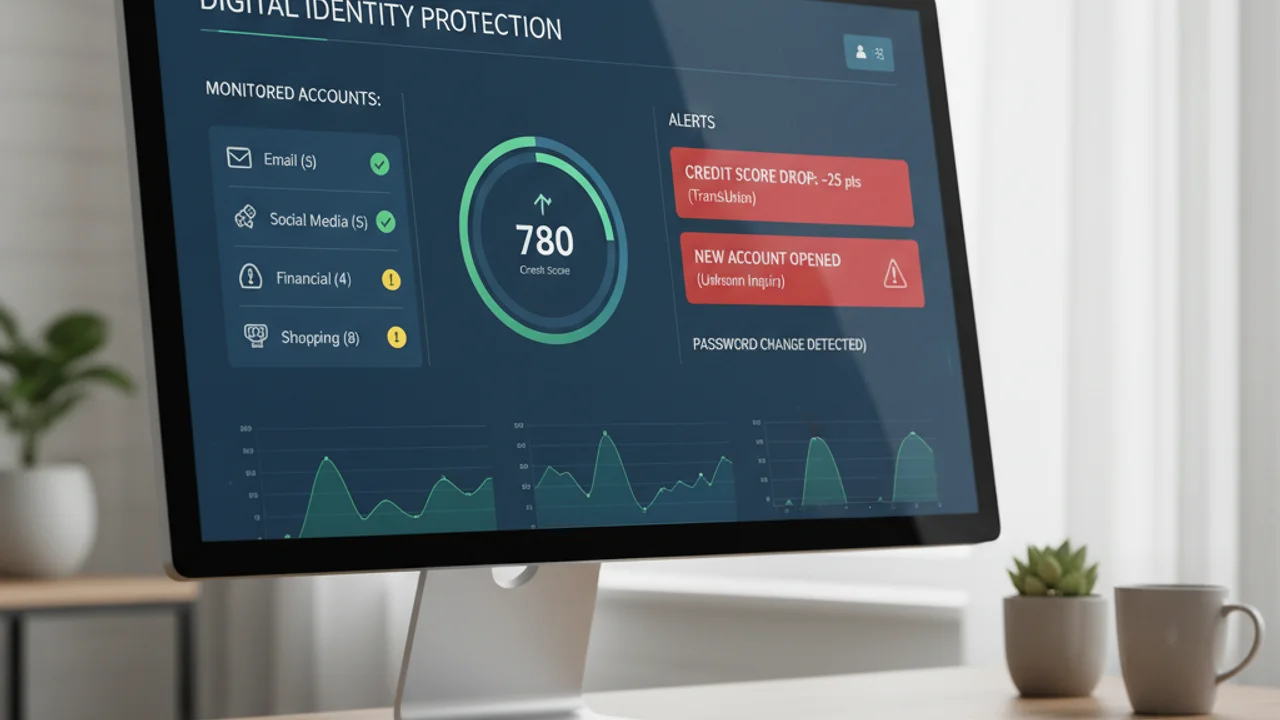
Step 14: Use identity monitoring services. Identity monitoring services scan criminal marketplaces, data breach databases, and public records for your personal information. While they cannot prevent theft, they provide early warning when your data appears in compromised contexts, allowing you to take action before significant damage occurs. Check if your information is already exposed with tools that scan the dark web for your identity.
Step 15: Create an identity theft response plan. Know what to do before it happens. Document the steps you would take, the numbers you would call, and the accounts you would freeze. Having a plan reduces panic and response time if theft is detected. Keep copies of important documents in a secure location so you can prove your identity during recovery.
Use Truvizy's scanning tool to verify suspicious emails, messages, and websites that request personal information. Catching phishing attempts before you respond is one of the most effective ways to keep your personal data out of criminal hands.
Special Considerations for Vulnerable Groups
Certain groups face elevated identity theft risks and require additional precautions. Children are prime targets because their Social Security numbers have clean credit histories that may go unmonitored for years. Freeze your children's credit files proactively, and be cautious about sharing their personal information with schools, medical providers, and activity programs.
Elderly adults are disproportionately targeted by phone scams, phishing attacks, and impersonation schemes. Help older family members set up two-factor authentication, review their accounts regularly, and establish a verification protocol for any requests for personal information or money.
Recent data breach victims are at heightened risk. If you receive a breach notification, take it seriously even if you do not think the breached service had sensitive information. Changing passwords, monitoring accounts, and considering a credit freeze are all appropriate responses. Our guide on responding to data breaches walks through the specific steps to take.
Protect your entire family from identity theft with AI-powered scanning and monitoring.
Building Long-Term Protection Habits
Identity theft prevention is not a one-time project but an ongoing practice. The most effective approach is building security habits that become automatic over time. Schedule quarterly credit reviews on your calendar. Update passwords when prompted by your password manager. Review account settings and connected apps annually. Stay informed about new scam techniques through trusted security resources.
Invest in protection tools that automate the monitoring and verification tasks that are hardest to maintain manually. The combination of good habits and technology creates a robust defense that adapts as threats evolve.
Key Takeaways
- Use unique passwords with a password manager and enable two-factor authentication everywhere.
- Freeze your credit at all three bureaus, it is free and blocks new fraudulent accounts.
- Monitor credit reports quarterly and set up financial transaction alerts.
- Guard your SSN aggressively and minimize your digital footprint.
Identity theft prevention may feel overwhelming when considered all at once, but each step independently reduces your risk. Start with the highest-impact measures: unique passwords, two-factor authentication, and a credit freeze. Then gradually implement the remaining steps. Every layer of protection you add makes you a harder target, and criminals consistently prefer the path of least resistance.
Related reading: Data Breach Response Guide: What to do immediately when your data is exposed
Related reading: Password Security in 2026: Modern strategies that actually protect your accounts
Related reading: Social Engineering Attacks: How scammers manipulate you into trusting them
Frequently Asked Questions
What is the most common type of identity theft?
Financial identity theft, where criminals use stolen personal information to open credit accounts, make purchases, or access bank accounts, remains the most common type. Government document and tax fraud identity theft are also significant concerns.
How do criminals get my personal information?
Common methods include data breaches at companies you have accounts with, phishing emails and texts, social media harvesting, physical mail theft, skimming devices at ATMs, and purchasing stolen data from criminal marketplaces.
How often should I check my credit report?
Review your credit report from each of the three major bureaus at least once per year, staggered quarterly. Consider more frequent monitoring through a credit monitoring service, especially after any data breach notification.
Does a credit freeze prevent all identity theft?
No. A credit freeze prevents new credit accounts from being opened in your name but does not protect against all forms of identity theft, such as tax refund fraud, medical identity theft, or unauthorized charges on existing accounts.
Can children be victims of identity theft?
Yes, and it is disturbingly common. Children are attractive targets because their credit files are typically clean and theft may go undetected for years until the child applies for credit. Freezing a minor child credit file is an effective preventive measure.