Military Romance Scams: Why Scammers Pretend to Be Soldiers
Understand why scammers impersonate military personnel in romance scams, the specific tactics they use, and how to verify whether a service member you met online is real.
· By Truvizy Research Team · 8 min read
TL;DR
Military romance scams exploit the trust and respect people have for service members. Scammers create fake profiles using stolen photos of real soldiers, invent deployment stories to explain why they cannot meet or video call, and request money for fake military expenses like leave papers or satellite phones. The U.S. military never charges service members for leave, communications, or travel home, any request for these costs is a guaranteed scam.
The profile shows a man in uniform, strong jaw, kind eyes, an American flag in the background. His bio mentions serving overseas, missing home, and looking for someone real in a world full of fakes. He messages you first, and the conversation is warm, respectful, and peppered with just enough vulnerability to feel genuine. He talks about the loneliness of deployment, the sacrifices of service, and how meeting you has given him something to look forward to. Everything about this person radiates honor, duty, and sincerity. And every single word of it is a lie.
Military romance scams are one of the most psychologically sophisticated forms of online fraud. They weaponize the deep respect most people feel for the armed forces, using fabricated military identities to build trust, explain away suspicious behavior, and justify financial requests. The Department of Defense receives thousands of reports each month from people who have been deceived by fake military profiles, and the actual number of victims is likely many times higher.
Why the Military Persona Works So Well
The military identity solves every problem a romance scammer faces. The most obvious challenge, meeting in person, is immediately explained by deployment. The second biggest challenge, video calls, is addressed by claiming security restrictions on base or in the field. Financial requests are justified by a bureaucratic military system that supposedly requires payments for leave paperwork, communication equipment, or travel arrangements.
Beyond the practical advantages, the military persona triggers powerful emotional responses. Service members are broadly respected and trusted. The idea of a lonely soldier far from home, risking their life while longing for connection, appeals to people's sense of patriotism, compassion, and romantic idealism. Victims often describe feeling that supporting the scammer financially was a form of supporting the troops.
The visual impact of the uniform does much of the persuasion work before the scammer even sends a message. For a broader look at how image manipulation fuels fraud, see our guide on detecting AI-generated content.
How Military Romance Scams Operate
The operation begins with stolen identities. Scammers harvest photos from the social media profiles of real service members, Instagram posts, LinkedIn profiles, even Department of Defense websites. A single set of stolen photos can fuel dozens of fake profiles across different dating sites and social media platforms. The real soldiers whose photos are used often have no idea until someone contacts them to ask about the relationship.
The scammer constructs a detailed backstory built around common military experiences. They will typically claim to be a high-ranking officer, colonel, general, or special forces, because these ranks imply authority and trustworthiness. They study military terminology just enough to sound convincing to civilians, though they rarely have the depth of knowledge to fool someone with actual military experience.
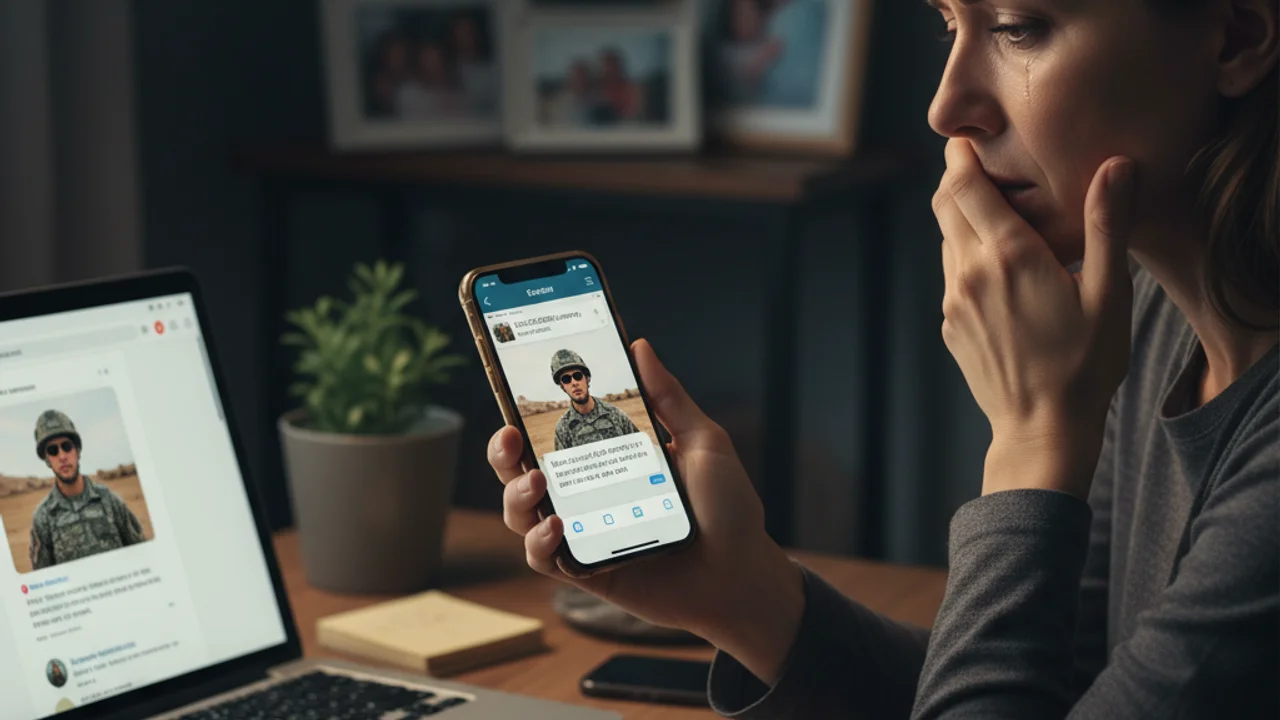
Communication follows a carefully managed pattern. Messages arrive at times consistent with a different time zone, creating the illusion of someone stationed overseas. The scammer shares dramatic stories about combat, humanitarian missions, or classified operations, stories designed to create both admiration and emotional dependency. They may send additional photos, always of the same stolen person, in different settings to maintain the illusion.
The grooming phase in military romance scams tends to be longer than in other romance scams. The military cover story allows the scammer to maintain the relationship at a distance for months, building deeper emotional bonds before making financial requests. This patience pays off in larger eventual payouts, military romance scam victims report average losses that are significantly higher than other romance fraud categories.
Think a military photo might be stolen or AI-generated? Verify it in seconds.
The Most Common Military Scam Stories
While the details vary, military romance scammers rely on a surprisingly consistent set of narratives. Recognizing these stories can help you identify a scam before financial damage occurs.
The leave request. The scammer claims they need money to file for leave, buy a plane ticket home, or pay for "leave papers." In reality, the U.S. military processes leave at no cost to the service member, provides transportation for return trips, and handles all paperwork internally. No soldier will ever need to pay out-of-pocket, or ask someone else to pay, for leave.
The communication emergency. The scammer says they need money for a satellite phone, internet access, or a special phone line to call home. The military provides communication resources to deployed personnel. While access may be limited, it is always free. A request for money to buy communication equipment is a scam.
The medical emergency. The scammer or a family member supposedly has a medical crisis that military insurance does not cover. Military healthcare (TRICARE) covers service members and their dependents comprehensively. Claims of medical expenses that require outside financial assistance are fabricated.
The retirement or discharge fee. The scammer claims they need to pay fees to retire or be discharged from service so they can come home and be with the victim. The military does not charge fees for retirement or discharge processing. This is entirely fictitious.
The box or package. A supposedly valuable package, containing personal belongings, money, or even gold, needs to be shipped home, but shipping or customs fees are required. This story often escalates, with repeated additional fees and complications that require more money at each stage.
A person you met online claims to be a deployed U.S. Army colonel. They ask you to send $2,000 for 'leave processing papers' so they can fly home to meet you. What should you do?
- Send the money, leave papers are expensive and the military makes soldiers pay
- Ask for their commanding officer\
- ,
- ,
Answer: The U.S. military handles all leave processing at no cost to service members. Any claim that a soldier needs money for leave papers, travel, or communication is a guaranteed scam.
Real Military vs. Fake: How to Tell the Difference
Several verification approaches can help determine whether someone claiming to be in the military is genuine. Start with their knowledge. Ask about their Military Occupational Specialty (MOS), their unit designation, and their base or installation. Real service members can answer these questions easily and specifically. Scammers will give vague answers or change the subject.
Examine their photos carefully. Look for inconsistencies in uniforms, wrong name tapes, mismatched rank insignia, or medals that do not correspond to their claimed rank or branch. Use reverse image search to check if the photos appear elsewhere online. Tools like Truvizy's media scanner can detect AI-generated or manipulated images that might escape a basic image search.
Pay attention to their email address. Active-duty service members have.mil email addresses. While they can use personal email, a claim to be high-ranking military while only communicating through Gmail or Yahoo is suspicious. Similarly, real service members do not typically meet people on social media and then immediately profess romantic feelings.
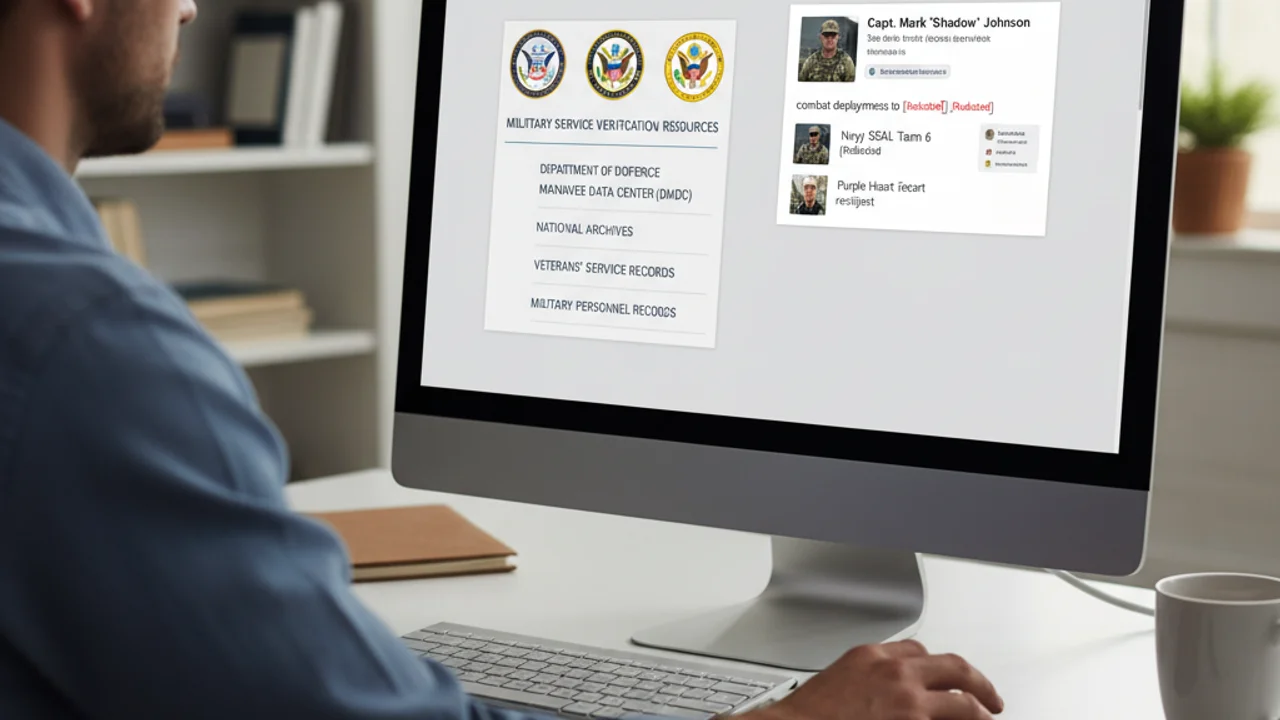
Consider the rank they claim. Scammers frequently claim to be generals or colonels because these ranks sound impressive. In reality, generals represent less than 0.1% of the military, and most are married. The chance of a general independently browsing dating apps is extremely low. Lower-ranking claims are more plausible but still require the same verification steps.
Related reading: 12 Red Flags of a Romance Scam: Complete guide to recognizing romance fraud warning signs
The Money Requests: What to Watch For
The financial exploitation phase follows predictable patterns. Initial requests are small and framed as embarrassing necessities, help with a phone bill, a small loan until payday. These test the victim's willingness to send money and establish a precedent.
As the relationship deepens, requests grow larger and more urgent. Medical emergencies, leave processing fees, shipping costs for personal items, and travel expenses for the long-awaited visit all require immediate financial help. Each request is accompanied by emotional pressure, expressions of love, promises of a future together, and assurances that the money will be repaid when they return home.
The payment methods requested are always difficult to trace or reverse: wire transfers, gift cards, cryptocurrency, or money transfer apps. A legitimate service member with a financial need would have access to military emergency assistance programs, military banks, and established financial relationships, they would not need to ask someone they have never met in person to wire money internationally.
As outlined in our comprehensive romance scam red flags guide, any request for money from someone you have not met in person should be treated as a definitive red flag, regardless of the justification.
Protecting Yourself and Others
The single most important rule is straightforward: the U.S. military provides for its service members. No soldier, sailor, airman, or marine will ever need to ask an online romantic interest for money to cover expenses related to their service. Leave, communication, medical care, travel, and processing fees are all covered. Any request for money that is framed around these costs is a scam, without exception.
If you suspect you are communicating with a fake military profile, you can take several verification steps. Request a video call, real service members have access to video communication, even in deployed environments. Ask for a.mil email address. Contact the specific military branch's public affairs office with the person's name and claimed unit for informal verification.
Report confirmed or suspected military impersonation to the platform where the interaction occurred, to the FTC, and to the Army Criminal Investigation Division (CID), which actively investigates military identity fraud. Your report helps protect other potential victims and contributes to investigations that can eventually shut down scam operations.
Key Takeaways
- The U.S. military never charges service members for leave, communication, travel, or processing fees.
- Request a video call and a.mil email address to verify any military claim.
- Scammers favor high-ranking titles like general or colonel, these ranks are extremely rare on dating apps.
- Report military impersonation to the platform, FTC, and Army CID to protect others.
Don't let a fake uniform fool you, get AI-powered protection against romance scams.
For broader protection against all forms of online deception, Truvizy's AI-powered scanning plans can analyze photos, videos, and profiles to detect signs of manipulation that the human eye might miss. In an era where stolen photos, AI-generated faces, and synthetic voices make deception easier than ever, having technological verification on your side is not a luxury, it is a necessity.
If you know someone who may be in a military romance scam, approach the conversation with compassion rather than judgment. Our article on how to verify someone is real provides practical tools and techniques that can help reveal the truth gently. The emotional impact of discovering a romance scam is significant, and victims deserve support, not blame.
Related reading: Social Media Impersonation Scams: How scammers steal identities to build fake personas online
Related reading: Identity Theft Prevention Guide: Protect your personal information from being exploited by fraudsters
Frequently Asked Questions
Do soldiers actually use dating apps while deployed?
Some service members do use dating apps during deployment, but they have access to free communication tools (email, phone calls, video chat) provided by the military. They would never need to ask someone they met online to pay for communication equipment or internet access.
Can I verify if someone is really in the military?
You cannot directly verify active-duty status through public databases. However, you can ask specific questions about their unit, base, and MOS (Military Occupational Specialty). Real service members can answer these easily. You can also contact the military branch's public affairs office for assistance.
Why do scammers specifically impersonate military personnel?
The military persona provides a perfect cover story: it explains why they cannot meet in person (deployment), why they cannot video call (security restrictions), and why they need money (military bureaucracy). The uniform also triggers trust and patriotic sympathy in many victims.
Does the military charge soldiers for leave or travel home?
No. The U.S. military provides leave, travel arrangements, and communication tools at no cost to service members. Any claim that a soldier needs money for leave papers, a satellite phone, travel home, or to "get out of deployment" is a scam.
What should I do if I suspect a military romance scam?
Stop sending money immediately. Report the fake profile to the platform where you connected. Report the scam to the FTC at reportfraud.ftc.gov and the FBI at ic3.gov. You can also report military impersonation to the Army Criminal Investigation Division at cid.army.mil.