Robocall Scams: How to Stop Them and What to Do If You Answer
Discover how robocall scams work in 2026, why they are harder to block than ever, and practical steps to protect yourself from automated phone fraud.
· By Truvizy Research Team · 8 min read
TL;DR
Robocalls have evolved from obvious spam into sophisticated AI-driven attacks that clone real voices and spoof legitimate numbers. In 2026, Americans receive an estimated 4.5 billion robocalls per month. The best defense is a combination of call-blocking technology, a strict "never engage" policy, and verification tools that can identify scam patterns before you lose money.
The phone rings. The caller ID shows a local number, maybe even one that looks familiar. You pick up. A brief pause, then a voice that sounds remarkably human tells you that your Social Security number has been compromised and that you need to "press 1 to speak with a federal agent." This is a robocall scam, and in 2026, they are more prevalent, more convincing, and more dangerous than at any point in history.
Americans receive an estimated 4.5 billion robocalls every month. That is roughly 14 calls per person, per month, though some people report receiving dozens per day. The calls come from spoofed numbers, AI-generated voices, and automated systems that can process millions of potential victims simultaneously. The financial toll is staggering: the FTC estimates that phone scams cost Americans over $39 billion annually, with robocalls serving as the primary delivery mechanism for the majority of those losses.
The Robocall Landscape in 2026
The robocall problem has transformed dramatically over the past few years. While the total volume of calls has slightly decreased thanks to carrier-level STIR/SHAKEN authentication, the calls that do get through are far more sophisticated and far more likely to result in financial loss. The blunt-force approach of blasting millions of generic recorded messages has given way to targeted, intelligent, and adaptive attacks.
International call centers, primarily operating out of Southeast Asia and West Africa, have industrialized the process. They employ hundreds of operators who take over once the automated system identifies a responsive target. The initial robocall serves as a filter, it costs almost nothing to send, and the few people who engage are immediately transferred to a live scammer who executes the actual fraud.
The economics make the problem nearly impossible to solve through enforcement alone. A robocall operation can make a million calls for under $100 using VoIP technology. Even if only 0.01% of recipients fall for the scam, that is still 100 victims per million calls. With average losses of several thousand dollars per victim, the return on investment for scammers is astronomical.
Think you received a scam call? Verify suspicious numbers and messages instantly.
How Modern Robocall Scams Work
Understanding the technical infrastructure behind robocalls reveals why they are so difficult to stop. Modern operations use Voice over Internet Protocol to make calls through the internet rather than traditional phone lines. This allows them to place calls from anywhere in the world while displaying any caller ID they choose, a technique known as spoofing.
The STIR/SHAKEN framework, which major carriers implemented to combat spoofing, has helped but has not solved the problem. Scammers have adapted by routing calls through smaller carriers that have weaker authentication, using legitimate-looking business numbers, or exploiting gaps in the international phone network where STIR/SHAKEN does not apply.
The call flow typically follows a carefully designed script. An automated message creates urgency, your account has been compromised, a warrant has been issued, your benefits are about to expire. Victims who stay on the line are connected to a human operator who escalates the pressure. The operator may pretend to be from the IRS, Social Security Administration, Amazon, or your bank. They will ask you to "verify" personal details, purchase gift cards, or transfer money to a "secure account." Every element of the script is optimized through testing and iteration, much like a legitimate marketing funnel.
For more on how scammers are using technology to make their attacks more convincing, see our analysis of smishing text scams, which operate on similar principles but through a different channel.
The Most Dangerous Types of Robocall Scams
Government impersonation scams remain the most financially devastating category. Callers claim to be from the IRS, Social Security Administration, or law enforcement. They threaten arrest, benefit suspension, or legal action unless the victim immediately pays a fine or "resolves" an issue. These scams disproportionately target elderly victims and can result in losses of tens of thousands of dollars.
Tech support scams begin with a robocall or a pop-up notification claiming your computer has been infected. The victim is directed to call a number where a "technician" gains remote access to their computer. Once connected, the scammer can steal passwords, install malware, and drain bank accounts, all while the victim believes they are receiving legitimate technical assistance.
Grandparent scams are particularly cruel. A caller claims to be a grandchild or a grandchild's lawyer, describing an emergency, an accident, an arrest, a medical crisis, and begs for immediate financial help. The emotional manipulation makes these scams devastatingly effective, with victims sending thousands via wire transfer before realizing the call was fake.
Insurance and warranty scams use automated calls about expiring car warranties, health insurance enrollment, or Medicare benefits to harvest personal information. While each individual call may seem low-stakes, the data collected enables identity theft and future targeted attacks.
What should you do if a caller claiming to be from the IRS says you'll be arrested unless you pay immediately?
- Pay immediately to avoid arrest
- Give them your SSN so they can look up your account
- Hang up, the IRS never threatens arrest over the phone
- Ask them to call back later
Answer: The IRS will never threaten arrest over the phone, demand immediate payment, or ask for payment via gift cards. Hang up and contact the IRS directly if you have concerns.
AI Voice Cloning: The New Frontier
Perhaps the most alarming development in robocall fraud is the integration of AI voice cloning technology. With as little as three seconds of audio, easily obtained from social media posts, voicemail greetings, or previous phone conversations, scammers can now generate a synthetic clone of anyone's voice that is nearly indistinguishable from the real person.
This technology has supercharged the grandparent scam. Instead of a stranger claiming to be your grandchild, the voice on the phone actually sounds like your grandchild. The emotional impact is immediate and overwhelming. Victims report being absolutely certain they were speaking with their loved one, even in retrospect.
Voice cloning is also being used in business email compromise attacks adapted for phone calls. Executives receive calls that sound exactly like their CEO, instructing them to make urgent wire transfers. Several companies have already lost millions to these attacks. The convergence of robocall infrastructure and AI voice synthesis represents a qualitative leap in the threat landscape, one that our article on synthetic media dangers explores in greater depth.

How to Stop Robocalls
No single solution eliminates robocalls entirely, but a layered defense significantly reduces your exposure. Start with your carrier's built-in tools. All major US carriers now offer free call-labeling services that identify likely spam calls. AT&T's ActiveArmor, T-Mobile's Scam Shield, and Verizon's Call Filter all use network-level data to intercept known scam patterns.
Third-party call-blocking apps provide an additional layer. These apps maintain extensive databases of known scam numbers and use community reporting to identify new threats in real time. Many also offer the ability to send unknown callers directly to voicemail, where legitimate callers can leave a message while scammers are filtered out.
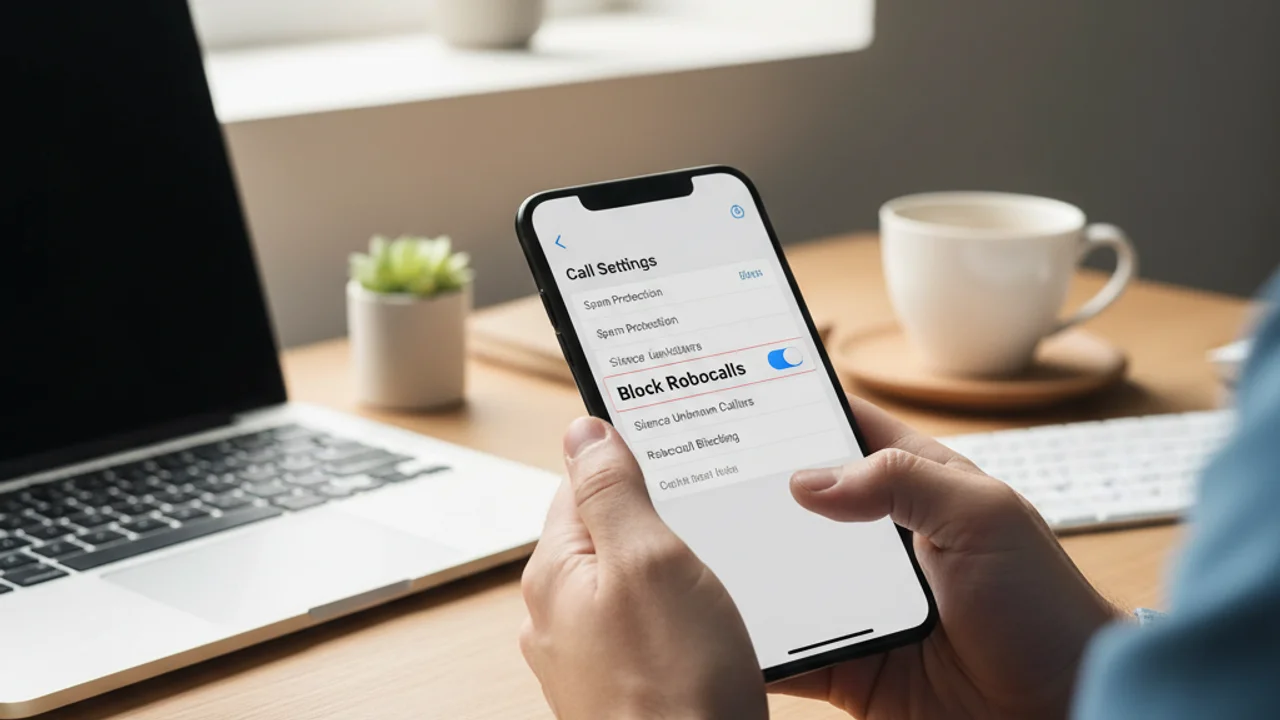
Adjust your phone settings to work in your favor. Both iOS and Android offer a "silence unknown callers" feature that sends calls from numbers not in your contacts directly to voicemail. This single setting eliminates the vast majority of robocall interactions. Enable it and check your voicemail periodically for legitimate calls you may have missed.
Register your number with the National Do Not Call Registry at donotcall.gov. While this will not stop illegal robocallers, it does reduce legitimate telemarketing calls, making it easier to identify the scam calls that remain. And consider using Truvizy's scanning tools to verify suspicious callers and messages before engaging with them.
Don't let robocalls catch you off guard, get AI-powered protection for your whole family.
What to Do If You Answer a Scam Call
If you realize you are on a scam call, hang up immediately. Do not press any buttons, do not say "yes" or "no," and do not engage with the caller. Every second you stay on the line provides the scammer with more information and more opportunity to manipulate you.
If you have already provided information, take immediate damage-control steps. Change passwords for any accounts you mentioned or that the caller referenced. Contact your bank or financial institution to alert them. Place a fraud alert on your credit report by contacting any one of the three major bureaus, Equifax, Experian, or TransUnion. The alert automatically propagates to the other two.
If you sent money, contact the payment provider immediately. Wire transfers may be recoverable if reported within the first 24 hours. Gift card payments are generally not recoverable, but reporting them to the gift card issuer helps track and disrupt scam operations. Cryptocurrency payments are almost never recoverable.
Report the call to the FTC at reportfraud.ftc.gov and to your state attorney general's office. These reports contribute to law enforcement databases that enable prosecution of large-scale operations. The more reports they receive, the more effectively they can target the most prolific offenders.
Key Takeaways
- Never provide personal information to unsolicited callers, even if the caller ID looks legitimate.
- Use carrier-level call screening plus a third-party blocking app for layered defense.
- Establish a family code word to defeat AI voice cloning attacks.
- If you engage with a scam call, immediately change passwords, alert your bank, and freeze your credit.
The Future of Call Protection
The battle against robocalls is fundamentally an arms race. As defenses improve, attackers adapt. The next frontier of protection lies in AI-powered call analysis that can detect synthetic voices, identify scam scripts in real time, and verify caller identity at the network level.
Several promising technologies are in development. Network-level AI that analyzes call patterns across millions of connections can identify scam campaigns within minutes of their launch, potentially blocking them before most victims are even contacted. On-device AI that monitors call audio in real time can flag synthetic voices and known scam scripts, alerting the user before they provide sensitive information.
As we discussed in our analysis of how AI is making scams more dangerous, the same technology that enables advanced scams also powers the most effective defenses. The challenge is ensuring that protective AI technology is widely accessible, not just available to those who can afford premium security services.
For now, your best defense is awareness and discipline. Assume any unsolicited call is a potential scam until proven otherwise. Never provide personal information to incoming callers. Verify identities independently. And invest in tools that put AI-powered protection on your side. Truvizy's protection plans offer exactly this kind of intelligent threat detection, because in 2026, the phone in your pocket is both your greatest vulnerability and your most powerful shield. Which it becomes depends entirely on how you use it.
Related reading: How to Detect Phishing Emails: Recognize the warning signs of phishing attacks in your inbox
Related reading: Identity Theft Prevention: 15 Steps: Protect your personal information from criminals
Related reading: How to Report an Online Scam: Platform-by-platform guide to reporting fraud
Frequently Asked Questions
Why do I keep getting robocalls even after blocking numbers?
Robocallers use spoofed numbers, generating a new fake caller ID for every call. Blocking individual numbers is ineffective because the same scam operation can appear to call from thousands of different numbers. Use a carrier-level or app-based spam filter instead.
Is it safe to answer unknown calls?
Generally, it is best to let unknown calls go to voicemail. Legitimate callers will leave a message. Answering confirms your number is active, which can lead to more spam calls. If you must answer, never provide personal information.
Can robocalls install malware on my phone?
Simply answering a robocall cannot install malware. However, scammers may direct you to websites or convince you to download apps that contain malware. Never follow instructions from an unsolicited call to visit a website or install software.
Do "Do Not Call" lists actually work?
The National Do Not Call Registry reduces legitimate telemarketing calls but has no effect on illegal robocallers, who ignore the list entirely. It is still worth registering, but do not rely on it as your sole defense.
How do scammers get my phone number?
Phone numbers are harvested from data breaches, purchased from data brokers, scraped from social media and public records, or simply generated randomly by auto-dialers that cycle through number sequences.