Smishing: Why That Text From 'Your Bank' Is Probably a Scam
Learn how smishing (SMS phishing) scams work, why fake bank texts are so convincing, and how to protect yourself from text message fraud in 2026.
· By Truvizy Research Team · 8 min read
TL;DR
Smishing scams use fake text messages that impersonate banks, delivery services, and government agencies to steal your personal information. These attacks have surged over 300% since 2023, and modern AI-generated messages are nearly indistinguishable from real alerts. Always verify suspicious texts by contacting your bank directly through their official app or phone number.
Your phone buzzes. A text message from what appears to be your bank warns you about suspicious activity on your account. There is a link to "verify your identity" and the message urges you to act immediately. Your heart rate spikes. You almost tap the link, but something feels off. That instinct could save you thousands of dollars, because what you are looking at is almost certainly a smishing scam.
Smishing, a combination of "SMS" and "phishing", has become one of the fastest-growing forms of cybercrime in the world. According to the FBI's Internet Crime Complaint Center, Americans lost over $470 million to text message scams in 2025 alone. And the problem is accelerating. With AI-powered tools now capable of generating flawless, personalized messages at scale, the old advice of "look for typos" simply does not cut it anymore.
What Is Smishing and Why Is It So Effective?
Smishing is a social engineering attack delivered through text messages. Unlike email phishing, which many people have learned to treat with suspicion, text messages carry an inherent sense of urgency and legitimacy. We are conditioned to respond to texts quickly. Most people open a text message within three minutes of receiving it, a response rate that email phishers can only dream of.
The effectiveness of smishing lies in its exploitation of trust and urgency. When a message appears to come from your bank, a shipping carrier, or a government agency, the psychological pressure to respond is enormous. Scammers know this and deliberately craft messages that trigger fear responses: unauthorized transactions, suspended accounts, missed deliveries, and unpaid taxes are all common lures designed to override your rational thinking.
What makes smishing particularly dangerous in 2026 is the sophistication of the attacks. Scammers now use number spoofing technology to make texts appear in the same conversation thread as your legitimate bank messages. They purchase leaked data from breaches to personalize messages with your name, partial account numbers, and recent transaction details. The days of spotting scams by their poor grammar are long gone.
Anatomy of a Smishing Attack
Understanding how a smishing attack unfolds can help you recognize one when it targets you. The typical attack follows a predictable pattern, even when the surface-level details vary.
First, the attacker selects a target pool. This might be a purchased list of phone numbers, a dataset from a recent breach, or simply a mass blast to sequential numbers in a particular area code. They then craft the bait message, choosing an impersonation target, a major bank, a delivery service, or a government body, and writing a message that creates urgency. The message always contains either a link to a fake website or a phone number to call.
When the victim clicks the link, they land on a website that looks virtually identical to the real institution's site. These fake sites are often built using cloned templates of actual bank login pages, complete with logos, color schemes, and even working navigation elements. The victim enters their credentials, which are captured instantly by the attacker. In more sophisticated attacks, the fake site will relay the credentials to the real bank in real time, allowing the attacker to bypass two-factor authentication by prompting the victim to enter the one-time code they just received.
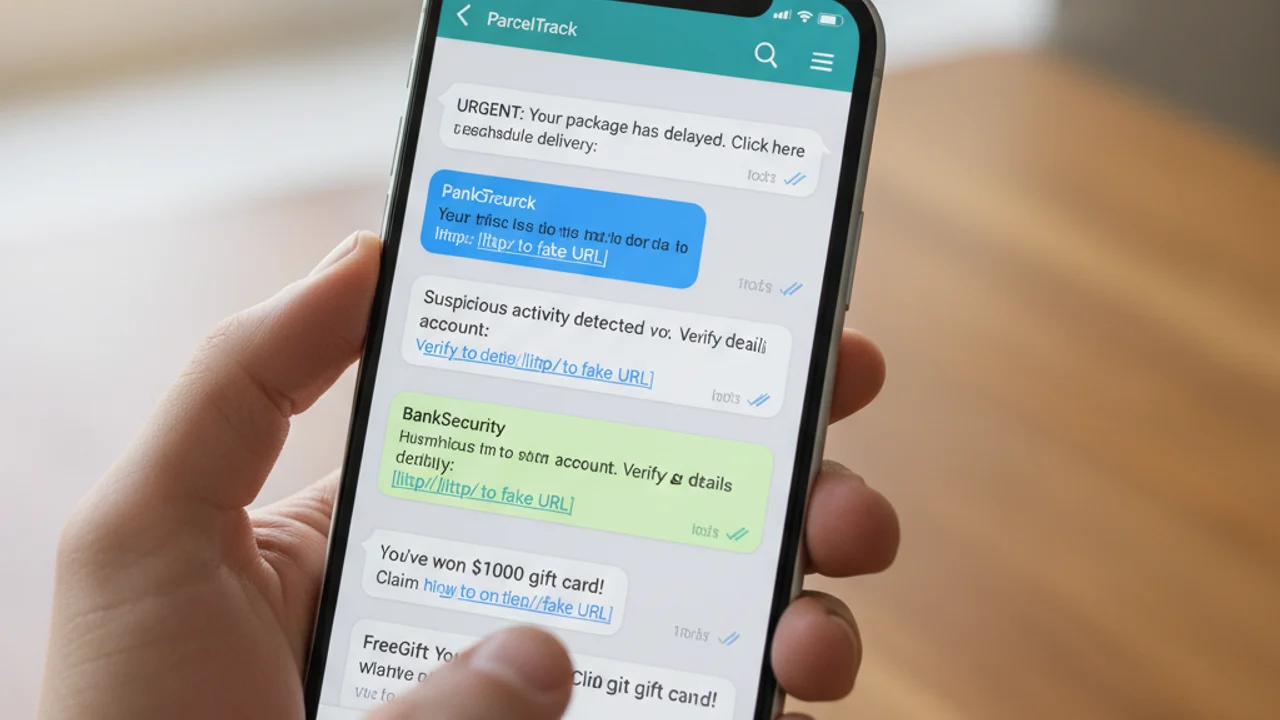
The entire process, from initial text to drained account, can take less than five minutes. That speed is part of the strategy. Scammers want you to act before you have time to think. If you have ever received a suspicious text and wondered whether it was real, tools like Truvizy's scan tool can help you analyze suspicious messages and links before you interact with them.
Received a suspicious text with a link? Scan it with Truvizy before tapping to detect phishing indicators instantly.
The Most Common Smishing Scenarios in 2026
While the specific scripts change constantly, most smishing attacks fall into a handful of proven categories. Recognizing these patterns is your first line of defense.
Bank and financial alerts remain the most profitable smishing category. Messages claim there has been unauthorized activity on your account, that your card has been locked, or that you need to verify a large transaction. These work because the fear of losing money overrides caution. The messages often include the last four digits of a card number, which can be sourced from any number of data breaches, to add false credibility.
Delivery notification scams surged during the pandemic and have not slowed down. Fake texts from "UPS," "FedEx," or "USPS" claim a package cannot be delivered and provide a link to reschedule. Since most people order packages regularly, these messages frequently coincide with actual expected deliveries, making them especially convincing.
Government impersonation scams target people's fear of authority. Fake messages from the IRS, Social Security Administration, or state tax agencies threaten penalties, claim refunds are waiting, or warn of account suspensions. These attacks spike during tax season but continue year-round.
Toll and utility scams represent a newer and rapidly growing category. Victims receive texts claiming they have an unpaid toll, an overdue utility bill, or a parking ticket. The amounts are usually small, five to twenty dollars, making victims more likely to just pay without investigating. The real goal is to harvest credit card details. As we covered in our article on how AI is making scams more dangerous, these low-value attacks are now automated at massive scale using AI tools.
Why Smishing Is Getting Worse
Several converging trends are making smishing more dangerous than ever. The proliferation of data breaches means that attackers have access to unprecedented amounts of personal information. When a scammer can text you by name, reference your actual bank, and include partial account details, the message becomes nearly impossible to distinguish from a legitimate alert.
AI-powered message generation has eliminated what was once the most reliable indicator of a scam: poor language quality. Modern smishing messages are grammatically perfect, contextually appropriate, and stylistically consistent with the brands they impersonate. Some advanced operations even use AI to adapt message tone based on the target's demographic profile.
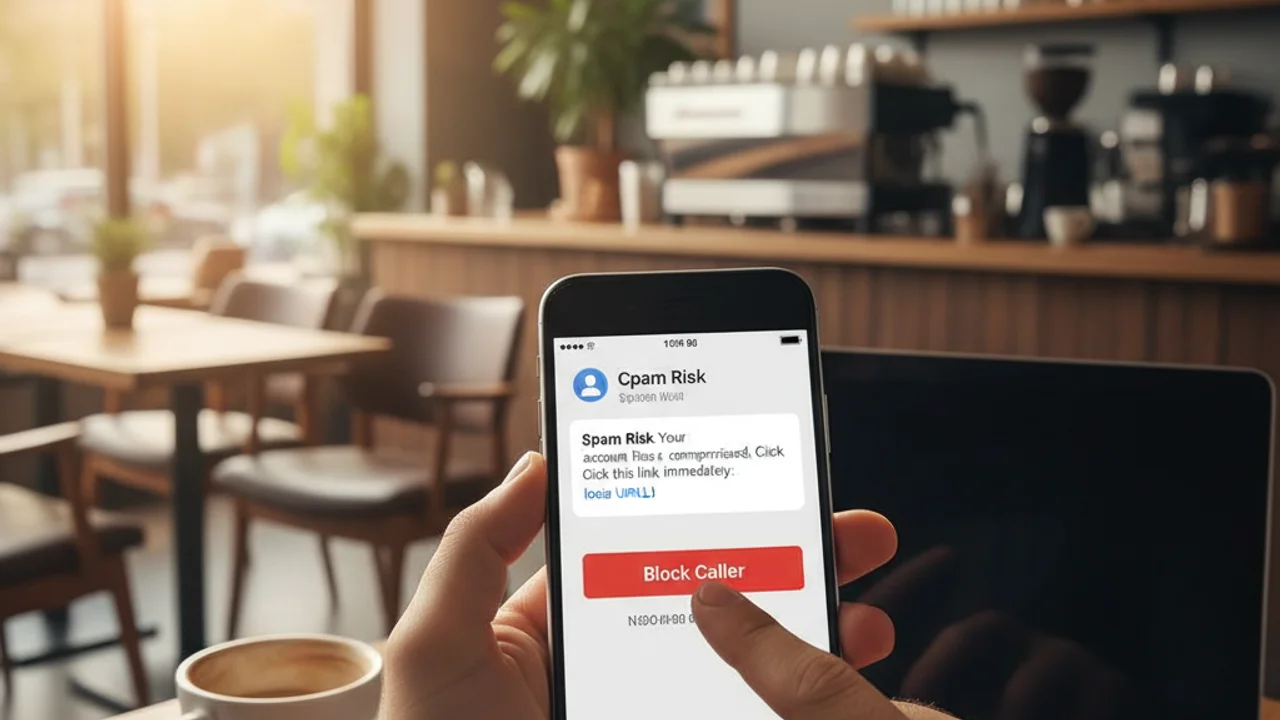
The shift to mobile-first banking has also expanded the attack surface. More people than ever manage their finances exclusively through their phones, which means a convincing bank text lands directly in the context where financial decisions are made. And unlike desktop email, mobile text messages provide fewer visual cues about legitimacy, there is no way to hover over a link to preview its destination before tapping.
You receive a text that appears to be from your bank, in the same thread as previous real messages, warning about a suspicious charge. What should you do?
- Tap the link to check your account right away
- Reply STOP to opt out of scam texts
- Open your bank\
- ,
Answer: Always verify by going directly to the source, open your bank's official app or call the number on the back of your physical card. Scammers can spoof numbers to appear in the same thread as real bank messages. Never tap links in texts, and replying confirms your number is active.
How to Identify a Smishing Text
While smishing messages are increasingly sophisticated, there are still reliable indicators that can help you identify them. The key is to focus on behavioral patterns rather than surface-level appearance.
Urgency and threats are the biggest red flags. Legitimate institutions rarely threaten immediate consequences via text message. If a message tells you your account will be closed in 24 hours or that you will face legal action, treat it with extreme suspicion. Real banks give you time and multiple communication channels to resolve issues.
Unsolicited links should always raise alarms. Your bank will almost never send you a clickable link via text. They will direct you to log in through their official app or website. If a text contains a link, especially a shortened one, assume it is malicious until proven otherwise.
Requests for sensitive information are another clear indicator. No legitimate organization will ask you to confirm your password, Social Security number, or full account number via text message. This is true even if the request is framed as a "security verification."
For a deeper understanding of how to verify suspicious digital content of all kinds, check out our guide on how to tell if content was made by AI.
What to Do If You Receive a Suspicious Text
The most important rule is simple: never interact with the message directly. Do not click any links, do not call any numbers provided in the text, and do not reply, even to say "STOP." Replying confirms to the scammer that your number is active and monitored.
Instead, contact the institution directly using a phone number or website you find independently. Open your banking app, the one you downloaded from your official app store, not a link in a text, and check for alerts there. Call the number on the back of your physical card. These steps take an extra minute but can save you from catastrophic financial loss.
If you have already clicked a link or entered information, act immediately. Change the passwords for any accounts that may have been compromised. Call your bank's fraud department and explain what happened. Place a fraud alert on your credit file through one of the three major credit bureaus. Monitor your accounts daily for at least the next 90 days.
Report the smishing attempt by forwarding the text to 7726 (SPAM) and filing a report with the FTC at reportfraud.ftc.gov. These reports help carriers and law enforcement identify and shut down smishing operations.
Stay protected from smishing and text scams with Truvizy's AI-powered threat detection for suspicious links and messages.
Protecting Yourself Long-Term
Building lasting protection against smishing requires a combination of technology and habits. Start by enabling spam filters on your phone. Both iOS and Android now offer built-in spam detection that can catch many smishing attempts before they reach your inbox.
Use a password manager to generate unique, complex passwords for every account. This limits the damage if a single set of credentials is compromised. Enable two-factor authentication everywhere you can, preferably using an authenticator app rather than SMS codes, since smishing attacks specifically target SMS-based verification.
Be deliberate about your digital footprint. The less personal information available about you online, the harder it is for scammers to personalize their attacks. Review your privacy settings on social media, opt out of data broker databases, and be cautious about where you share your phone number.
Consider using a dedicated scam detection tool as part of your security routine. Truvizy's scanning plans provide AI-powered analysis of suspicious links, messages, and content that can identify scams before you fall for them. In a world where scammers use artificial intelligence to attack you, fighting back with AI-driven protection is not just smart, it is essential.
The threat of smishing is not going away. If anything, the combination of leaked personal data, advanced AI tools, and mobile-first lifestyles means these attacks will only become more frequent and more convincing. But by understanding how they work, recognizing the warning signs, and building protective habits, you can ensure that the next time your phone buzzes with a suspicious text, you will know exactly what to do: nothing. Delete it and move on.
Key Takeaways
- Never tap links in text messages from banks or delivery services. Always verify by opening the official app or calling the number on the back of your card.
- Scammers can spoof numbers to appear in the same conversation thread as real bank messages, appearance alone cannot confirm legitimacy.
- Use an authenticator app instead of SMS for two-factor authentication, since smishing attacks specifically target SMS-based verification codes.
- Forward suspicious texts to 7726 (SPAM) and report to the FTC to help shut down smishing operations.
Related reading: Phishing Email Detection: The email-based cousin of smishing, learn to spot phishing across all channels.
Related reading: Social Engineering Attacks: The psychological manipulation techniques that make smishing so effective.
Related reading: How Truvizy Detects Scams: Learn how AI-powered analysis identifies scam texts and phishing links.
Frequently Asked Questions
What is smishing?
Smishing is a form of phishing that uses SMS text messages to trick victims into revealing personal information, clicking malicious links, or downloading malware. The term combines "SMS" and "phishing."
Can scammers spoof my bank's phone number?
Yes. Scammers routinely spoof caller IDs and sender numbers to make texts appear as though they come from your actual bank. This is why you should never trust a message solely based on the number it appears to come from.
What should I do if I clicked a smishing link?
Immediately close the page without entering any information. Change your banking passwords from a separate device, enable two-factor authentication, and contact your bank to alert them. Monitor your accounts for unauthorized activity.
How do I report smishing texts?
Forward the suspicious text to 7726 (SPAM) in the US, which reports it to your carrier. You can also report it to the FTC at reportfraud.ftc.gov and to your bank's fraud department.
Are iPhones or Androids more vulnerable to smishing?
Both platforms are equally vulnerable to smishing because the attack targets the user, not the operating system. However, Android users face slightly higher risk from malware links since sideloading apps is easier on Android.