WhatsApp Scams in 2026: The 8 Most Dangerous Messages
Discover the 8 most dangerous WhatsApp scam messages targeting users in 2026, from fake family emergencies to crypto investment fraud. Learn how to spot them before you lose money.
TL;DR
WhatsApp scams in 2026 exploit the app\'s trusted, end-to-end encrypted environment to deliver fraud that feels personal. The 8 most dangerous message types include fake family emergencies, task-based job scams, crypto investment pitches, phishing links disguised as government alerts, and one-time code theft. Recognizing the pattern stops most attacks instantly.
Your phone buzzes. It is WhatsApp, a number you do not recognize. "Hi Mum, it's me. I dropped my phone and this is my new number. I'm in trouble and I need you to send money urgently, I'll explain later." The grammar is right. The tone sounds like your child. Your heart races. You almost send the money before you realize: you never confirmed who this actually was.
What Are WhatsApp Scams?
WhatsApp scams are fraudulent messages, calls, or media sent through Meta's messaging platform with the intent to deceive recipients into sending money, revealing personal information, or surrendering account access. With over 2 billion active users globally, WhatsApp offers scammers an enormous pool of targets, and several features that make fraud unusually effective.
End-to-end encryption, which protects legitimate users' privacy, also makes it harder for Meta to scan message content for fraud. The platform's association with personal, trusted relationships, family groups, friend chats, workplace threads, creates a baseline of trust that scammers aggressively exploit. A message arriving in WhatsApp carries an implicit credibility that the same message sent by email would not.
According to the FTC's 2025 Consumer Sentinel Network data, social media and messaging app fraud cost Americans $3.1 billion, with messaging platforms accounting for the fastest growth segment. WhatsApp, given its scale, sits at the center of this crisis.
How WhatsApp Scams Work: The Mechanics
Most WhatsApp scam campaigns follow a predictable architecture, even as the specific scripts evolve. Understanding the mechanics reveals why they are so effective, and exactly where to break the chain.
Step 1, Number acquisition. Scammers obtain phone numbers from data breaches, scraped social media profiles, or purchased lists. WhatsApp numbers are particularly valuable because they are tied to real identities and active social relationships.
Step 2, Trust establishment. The opening message is crafted to seem familiar, urgent, or authoritative. It might impersonate a family member, a government agency, a delivery service, or a recruiter. The goal is to engage before skepticism kicks in.
Step 3, Escalation. Once a response is received, the scammer escalates toward the actual fraud: a money transfer, a link to a phishing page, a request to share a verification code, or a "small fee" to unlock a job opportunity or prize.
Step 4, Extraction and disappearance. Once the money is sent or credentials captured, the scammer blocks the victim and moves to the next target. The entire interaction often takes less than 30 minutes from first message to completed fraud.
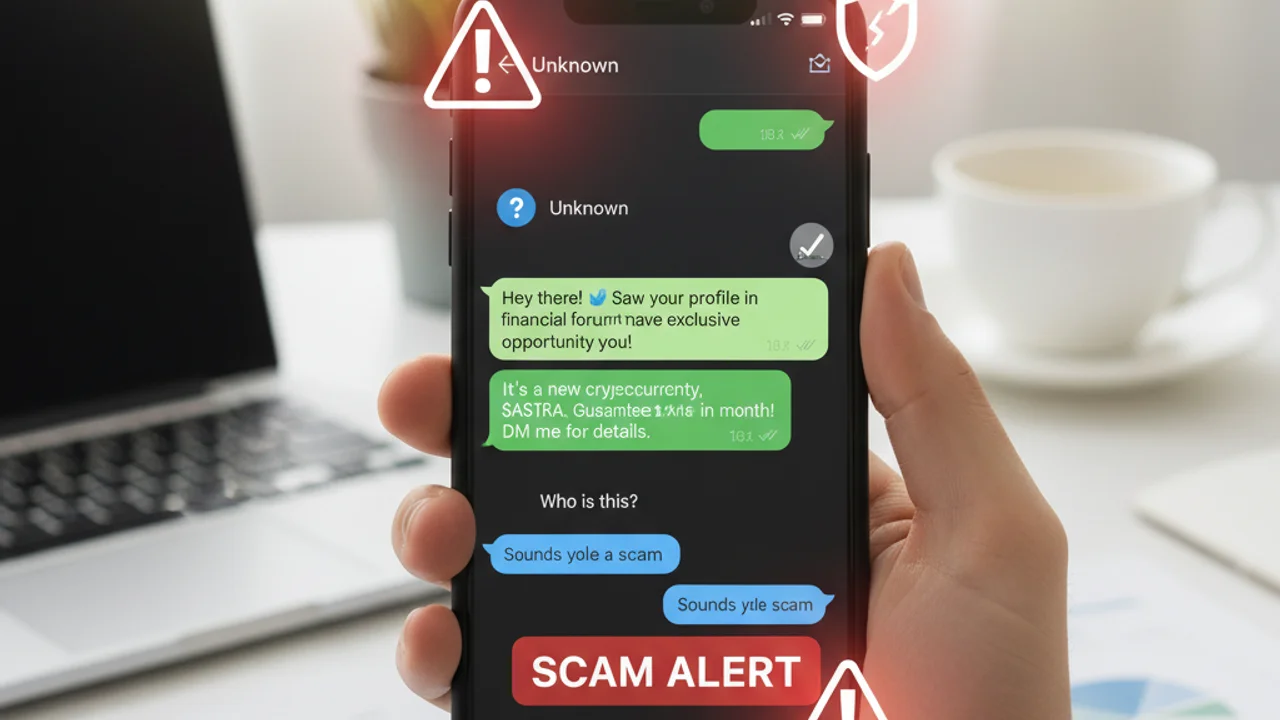
The 8 Most Dangerous WhatsApp Messages in 2026
These are the eight WhatsApp scam types with the highest fraud rates in 2026, based on FTC, FBI IC3, and Europol reporting:
1. The "Hi Mum / Hi Dad" Emergency Scam. An unknown number claims to be your child or another close family member who lost their phone. They need money transferred immediately for a bill, fine, or emergency. The emotional pressure is extreme. Red flag: they cannot verify any shared family detail under questioning, and they refuse a voice call.
2. Task-Based Job Fraud. You receive a message offering paid "micro-tasks", liking products online, rating videos, or completing simple assignments for $100-$500 per day. Early tasks pay out small amounts to build trust. Then you are asked to deposit funds to "unlock" higher-paying tasks, money you never recover. According to the FBI IC3, task scams were the single fastest-growing fraud category in 2025. Red flag: any job requiring you to deposit money before earning.
3. Cryptocurrency Investment Pitch. A stranger initiates friendly conversation, sometimes posing as a romantic interest, and steers it toward a "can't-miss" crypto platform they personally use. The platform shows fabricated profits. When you try to withdraw, you are told to pay fees or taxes first. This is the pig-butchering scam, now operating primarily through WhatsApp. Red flag: investment advice from someone you met through an unsolicited message.
4. Verification Code Theft. You receive a WhatsApp message from a contact claiming they accidentally sent a verification code to your number and asking you to forward it. The code is actually the two-factor authentication code for your own WhatsApp account, forwarding it gives the scammer full control of your account, which they then use to scam your entire contact list. Red flag: any request to forward a verification or one-time code.
5. Government or Authority Impersonation. A message claims to be from the IRS, Social Security Administration, HMRC, or local police. It states you owe a fine, your benefits are suspended, or a warrant has been issued. A link leads to a phishing page. Red flag: government agencies do not initiate contact through WhatsApp and never demand immediate payment via messaging app.
6. Delivery Phishing. A fake DHL, FedEx, USPS, or Amazon message claims your parcel is held and requires a small customs fee to release. The link leads to a card-skimming page. Red flag: legitimate carriers send delivery notifications through official apps or email, not WhatsApp.
7. Lottery and Prize Scams. A message congratulates you on winning a prize through a competition you do not recall entering. Claiming the prize requires paying a "processing fee" or sharing personal identification. Red flag: you cannot win a contest you never entered; all upfront fees for prize claiming are fraud.
8. Deepfake Voice Note Scams. An emerging threat in 2026: AI-cloned voice notes that sound exactly like someone you know, asking for money or sensitive information. According to Europol's 2025 Internet Organized Crime Threat Assessment, AI-generated audio fraud grew by 240% between 2024 and 2025. Red flag: even a convincing voice note is not proof of identity, call back on a number you saved independently.
Received a suspicious WhatsApp link or voice message? Scan it with Truvizy before you click or respond.
How Truvizy Detects WhatsApp Scam Content
Truvizy's AI-powered multi-layer analysis is designed for exactly the kind of mixed-media fraud that WhatsApp enables. When you receive a suspicious link, video, image, or voice note, Truvizy analyzes it for manipulation signals, phishing indicators, and fraud patterns, in seconds.
For links sent via WhatsApp, Truvizy checks the destination URL, the page content, and known phishing databases, catching lookalike domains and credential-harvesting pages before you enter any information. For video and audio content (including the AI voice note scams described above), Truvizy's detection engine identifies the signature patterns of synthetic media generation that cannot be heard or seen by the human eye or ear alone. Visit truvizy.app to scan any suspicious content before you engage.
Truvizy also helps you verify the authenticity of media forwarded in WhatsApp group chats, a common vector for scam videos impersonating celebrities or financial advisors. When a viral investment video lands in your family group, Truvizy can tell you within seconds whether it is authentic.
You receive a WhatsApp message from an unknown number: 'Hi Dad, I broke my phone and got a new number. I need to pay a bill urgently, can you send $400? I'll pay you back tonight.' What do you do?
- re in trouble", "Reply asking for more details before deciding", "Call your child
Answer: Calling the original saved number is the only reliable verification method. A selfie can be faked with AI-generated images, and texting back just engages the scammer further. If your child truly has a new number and emergency, they can answer a call on their original number or have someone near them confirm the situation.
What to Do If You Receive a Suspicious WhatsApp Message
Do not respond immediately. The most effective defense against WhatsApp scams is introducing a pause before any action. Urgency is always manufactured, real emergencies allow time for one phone call to verify.
Verify through an independent channel. If the message claims to be from a family member, call their original saved number. If it claims to be from a company or government agency, look up their official contact details through their website, not through any link or number provided in the message.
Never share verification codes. No legitimate person or organization will ever need you to forward a code sent to your device. This applies universally, not just to WhatsApp. Treat all verification code forwarding requests as confirmed fraud attempts.
Report and block. Press and hold the suspicious message in WhatsApp, tap "Report," and then block the sender. Reporting helps Meta identify fraud patterns and protect other users. In the US, also report the scam to the FTC at reportfraud.ftc.gov and file an IC3 complaint at ic3.gov if financial loss occurred.
Scan before clicking links. Before opening any link sent through WhatsApp, use Truvizy's free scanning tool to verify the destination is safe. This takes under 10 seconds and can prevent credential theft and malware installation.
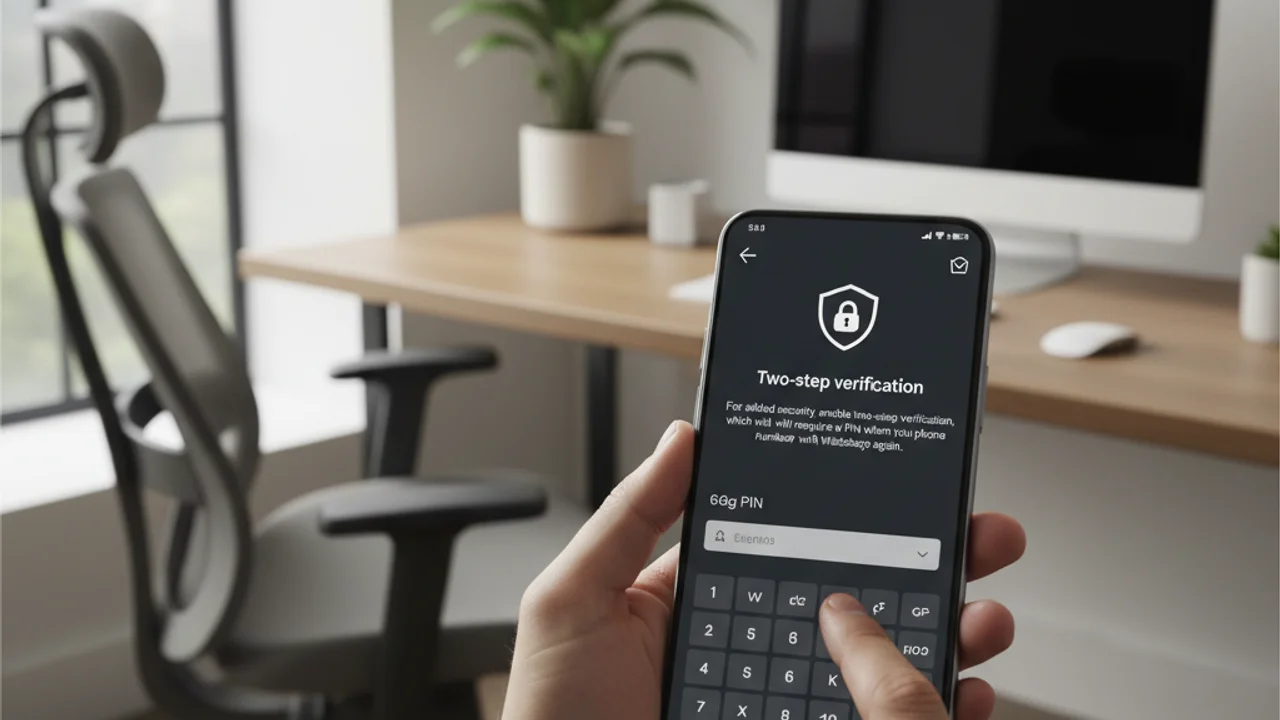
Secure your WhatsApp account. Enable two-step verification in WhatsApp Settings → Account → Two-step verification. This adds a PIN that scammers cannot bypass even if they obtain your phone number. According to WhatsApp's own guidance, this single setting blocks the verification code theft scam entirely.
Key Takeaways
- The "Hi Mum/Dad" emergency scam and task-based job fraud are the two highest-volume WhatsApp scams in 2026, always verify family emergencies by calling the original saved number.
- Never forward verification codes sent to your device, even if the requester claims to be a friend or contact, this hands full WhatsApp account control to scammers.
- Enable WhatsApp two-step verification immediately: Settings → Account → Two-step verification. It blocks the most common account takeover technique.
- Scan suspicious links and media with Truvizy before engaging, AI-generated voice notes and deepfake videos are increasingly used to impersonate people you trust.
Expert analysis note: WhatsApp has become the dominant channel for social-engineering fraud because it combines the intimacy of personal messaging with global reach and limited content moderation. The shift toward AI-cloned voice notes in 2026 marks a qualitative escalation, audio deepfakes remove the last reliable signal that remote communication fraud is occurring. Organizations and individuals who build verification habits now, independent channel confirmation, two-step authentication, and media authenticity scanning, will be substantially more resilient as these attacks continue to scale. Truvizy exists specifically to provide that verification layer where human judgment alone is no longer sufficient.
Related reading: Smishing: How to Spot Text Message Scams: The same tactics used in WhatsApp fraud are weaponized in SMS, here is the full breakdown
Related reading: Task Scams on Telegram: Why 'Easy Money' Jobs Are Always Fraud: Task-based fraud originated on Telegram and has migrated to WhatsApp, understand the full pattern
Related reading: AI Voice Cloning Scams: How They Work and How to Detect Them: The technology behind WhatsApp deepfake voice notes and how to spot a cloned voice
Frequently Asked Questions
What are the most common WhatsApp scams in 2026?
The most common WhatsApp scams in 2026 are: fake family emergency messages (the "Hi Mum/Dad" scam), task-based job fraud promising easy online income, crypto investment schemes pushed via romantic conversations, phishing links disguised as government or delivery notifications, and one-time password theft where scammers claim to have sent a verification code by mistake. All share the same goal: extracting money or account access.
How can I tell if a WhatsApp message is a scam?
Key red flags: the sender is an unsaved number claiming to be someone you know, the message creates urgency or emotional pressure, it asks you to share a verification code, it offers a job or investment opportunity you never sought out, or it contains a link asking you to log into an account. Legitimate contacts and organizations do not pressure you for immediate financial action over WhatsApp.
Can Truvizy detect WhatsApp scams?
Yes. Truvizy's AI-powered analysis can scan links shared in WhatsApp messages, analyze video and audio content for deepfake manipulation, and assess suspicious media sent to you before you engage. Visit truvizy.app to scan any suspicious content in seconds, it works on links, videos, voice notes, and images from any messaging platform.
What should I do if I already sent money to a WhatsApp scammer?
Act immediately: contact your bank or payment provider (Zelle, Cash App, PayPal) to report the transaction and request a freeze or reversal. Report the scam to the FTC at reportfraud.ftc.gov and to WhatsApp directly by pressing and holding the message, tapping Report. File a report with the FBI's IC3 at ic3.gov if the loss exceeds $1,000. Speed is critical, reversals are more likely within 24 hours.
Is it safe to respond to unknown WhatsApp numbers?
Responding is generally low-risk, but engaging beyond a brief reply significantly increases your exposure. Scammers use initial responses to confirm active numbers, build rapport, and escalate to fraud. Never click links, share verification codes, or discuss finances with unknown contacts. If the message seems like it could be a real person you know, verify by calling the number you have saved for them.