The Complete Guide to Protecting Yourself From Deepfakes
A comprehensive guide to deepfake protection in 2026. Learn prevention strategies, detection techniques, and what to do if you become a deepfake target.
· By Truvizy Research Team · 8 min read
TL;DR
Protecting yourself from deepfakes requires a layered approach: limit the high-quality video and audio of yourself available online, learn the visual and auditory signs of synthetic media, use AI-powered detection tools to verify suspicious content, and establish verification protocols with colleagues and family for high-stakes communications.

Deepfake technology has matured from a curiosity into a credible threat that affects everyone from corporate executives to private individuals. The synthetic media ecosystem in 2026 includes real-time face-swapping on video calls, voice cloning from just a few seconds of audio, and text-to-video generators capable of producing photorealistic footage from a text prompt. These capabilities are available to anyone with an internet connection and basic technical skills.
This guide provides a comprehensive, layered defense strategy. Rather than relying on any single technique, effective deepfake protection combines prevention, detection, verification, and response. Whether you are safeguarding yourself personally or building a policy for your organization, the strategies here will significantly reduce your exposure to deepfake-based fraud and manipulation.
The Deepfake Threat Landscape in 2026
Understanding the threat is the first step toward defending against it. Deepfakes are no longer limited to pre-recorded video. Real-time deepfakes can now be applied to live video calls, allowing scammers to impersonate a colleague, family member, or executive during what appears to be a normal conversation. Voice cloning technology has reached the point where a convincing vocal replica can be created from as little as three seconds of sample audio, making phone-based impersonation trivially easy.
The threat vectors break down into several categories: financial fraud through impersonation, reputational damage through fabricated content, political manipulation through synthetic statements, and personal harassment through non-consensual intimate content. Each of these categories requires slightly different defensive strategies, but they all share common underlying principles.
The criminal infrastructure supporting deepfake scams has also professionalized. Fraud-as-a- service operations sell ready-made deepfake templates, complete with targeting advice and landing page kits. Some operations specialize in celebrity impersonation campaigns that generate millions in fraudulent revenue before being shut down.
Reducing Your Attack Surface
Every deepfake starts with source material. The more high-quality video and audio of you that exists online, the easier it is for someone to create a convincing synthetic version of your likeness. While it is impractical for most people to remove all online presence, you can take meaningful steps to reduce your exposure.
Start by auditing your public-facing video content. Social media profiles set to "public" that contain numerous videos and photos provide a rich dataset for face-swapping models. Consider setting personal social media accounts to private, particularly on platforms like Instagram, TikTok, and Facebook where video content is abundant. When you do post publicly, be aware that high-resolution, well-lit, front-facing video is the most useful to deepfake creators.
For public figures and executives who cannot avoid being on camera, consider working with your communications team to implement content authentication measures. C2PA (Coalition for Content Provenance and Authenticity) standards allow digital signatures to be embedded in media at the point of creation, establishing a verifiable chain of custody that makes it easier to distinguish authentic content from synthetic copies.
Building Your Detection Skills
Training your eye to spot deepfakes is a valuable complement to technological solutions. The seven signs of deepfake video include unnatural eye movement, lighting inconsistencies, warped facial edges, audio-lip desynchronization, skin texture anomalies, uncoordinated head-body movement, and suspicious metadata. Practice looking for these signs whenever you encounter video content that seems unusual or that asks you to take action.
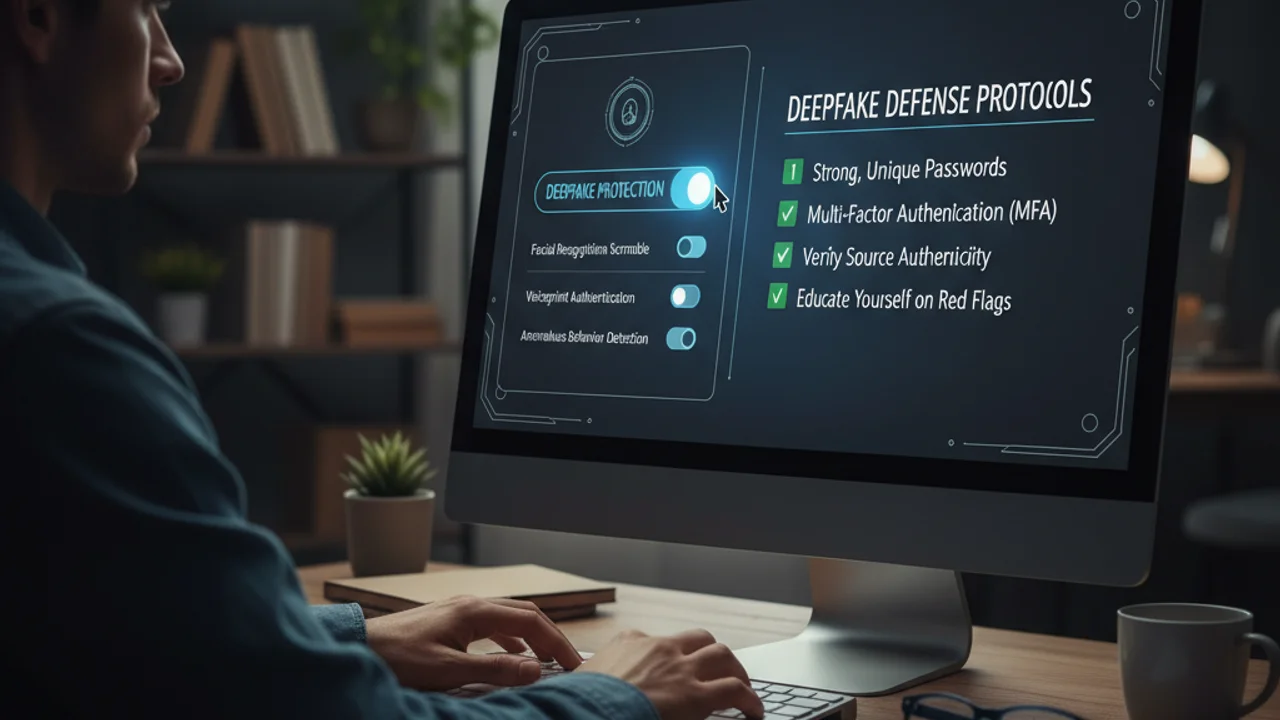
Audio deepfakes require a different detection approach. Listen for unnatural rhythm or cadence in speech, a flat tonal quality that lacks the normal emotional variation of human conversation, background noise that appears inconsistently, or a voice that sounds subtly "processed" as though it has been run through a filter. If a phone call from a supposed family member asking for money sounds even slightly off, hang up and call them back on a number you know to be theirs.
Think you spotted a deepfake? Scan it instantly with Truvizy
Establishing Verification Protocols
Technology alone cannot fully solve the deepfake problem. You also need human protocols that assume video and audio can be faked. The most effective approach is to establish pre-arranged verification methods with the people who matter most in your life and work.
For families, consider creating a family code word: a simple phrase that can be used to verify identity during phone or video calls. If your child calls asking for emergency money, you can ask for the code word. If they cannot provide it, the call may be fraudulent regardless of how real the voice sounds.
For businesses, implement multi-channel verification for any high-value request. If your CEO appears on a video call requesting an urgent wire transfer, company policy should require that the request be confirmed through a separate, independent communication channel such as a pre-established encrypted messaging thread, a phone call to a known direct number, or in-person confirmation. This simple policy would have prevented the high-profile $25 million Hong Kong deepfake fraud and countless similar incidents.
Your CEO appears on a Zoom call and urgently requests a large wire transfer. What is the safest response?
- Process the transfer immediately since you can see them on video
- Ask them to confirm via a separate channel like a known phone number
- Ask them a personal question to verify their identity
- Check if the video quality looks normal
Answer: Multi-channel verification is the gold standard. Real-time deepfakes can pass visual inspection, so always confirm high-value requests through a completely separate, trusted communication channel.
Leveraging AI-Powered Detection Tools
Human detection skills have inherent limitations. The most advanced deepfakes are specifically designed to pass human visual inspection. This is where AI-powered detection tools become essential. Modern detection platforms analyze content at a level of detail that is simply impossible for the human eye, examining frame-by-frame consistency, spectral analysis of audio, compression artifact patterns, and dozens of additional proprietary signals.
Truvizy's free scan tool provides instant analysis of suspicious videos. Paste a link from any major platform or upload a video file directly, and the platform performs a comprehensive multi-layer detection sweep in seconds. The result is a clear trust score accompanied by a detailed signal breakdown explaining exactly what was detected and why.
Make scanning a habit rather than a reaction. Do not wait until you are already emotionally invested in a video's content before checking its authenticity. The few seconds it takes to run a scan can save you from hours or weeks of dealing with the aftermath of a scam.
Protecting Your Organization
Organizations face deepfake threats on multiple fronts: executive impersonation for fraudulent video call instructions , brand impersonation for customer scams, and employee-targeted social engineering. A comprehensive organizational deepfake policy should include regular employee training on recognizing synthetic media, mandatory multi-channel verification for financial transactions above a defined threshold, designated response contacts for suspected deepfake incidents, and ongoing monitoring for brand impersonation across social media platforms.
For teams that need to verify content at scale, Truvizy's professional plans offer advanced forensic analysis with detailed reporting suitable for compliance and incident documentation. Integrating detection tools into your existing security workflow transforms deepfake defense from an ad-hoc reaction into a systematic, repeatable process.
Need team-level protection? See Truvizy's professional plans
Responding If You Are Targeted
If you discover a deepfake of yourself or your organization, act quickly but methodically. First, document everything: take screenshots and screen recordings before the content is removed, noting the URL, platform, posting account, and approximate view count. This evidence will be critical for platform reports, law enforcement complaints, and potential legal action.
Report the content to the hosting platform immediately using their deepfake or impersonation reporting pathways. Most major platforms now have specific categories for synthetic media reports and prioritize their review. Simultaneously, consider issuing a public statement through your verified channels alerting your audience that fake content is circulating.

The Future of Deepfake Defense
The deepfake arms race will continue to escalate, but defense is keeping pace. Content provenance standards like C2PA are being adopted by major camera manufacturers and social platforms, creating verifiable chains of authenticity for legitimate media. Detection AI continues to improve, with multi-modal analysis that cross-references visual, audio, and metadata signals becoming increasingly accurate.
Legislative frameworks are maturing as well. Multiple US states and EU member nations have enacted or are drafting laws that specifically criminalize malicious deepfake creation and distribution, particularly for fraud and election interference. While legislation alone cannot eliminate the threat, it provides important legal recourse for victims and raises the stakes for perpetrators.
Ultimately, the most effective protection combines personal awareness, organizational protocols, legal frameworks, and technological tools working in concert. No single layer is sufficient on its own, but together they create a defense that is difficult for even sophisticated deepfake operators to penetrate. Start building your defenses today. The threat is not going away, but your ability to withstand it can grow faster than the threat itself.
Key Takeaways
- Use a layered defense: prevention, detection, verification protocols, and response plans
- Reduce your attack surface by limiting public high-quality video and audio of yourself
- Establish family code words and business multi-channel verification for high-stakes requests
- Make AI-powered scanning a daily habit, human eyes alone cannot reliably detect modern deepfakes
Related reading: How to Spot a Deepfake Video: Master the 7 visual and audio tells that reveal synthetic media
Related reading: AI Content Detection Explained: How modern detection tools analyze video at a level impossible for the human eye
Related reading: How Truvizy Detects Scams: A behind-the-scenes look at multi-layer AI analysis for deepfake detection
Frequently Asked Questions
Can I prevent deepfakes of myself from being created?
You cannot completely prevent it, but you can reduce the risk by limiting high-quality video and audio of yourself that is publicly accessible. Private social media profiles, watermarked content, and reduced public video presence all make it harder for scammers to source material.
What is the most effective deepfake detection method?
AI-powered multi-signal analysis is the most effective method. These tools examine dozens of factors simultaneously, including frame-level consistency, audio synchronization, compression artifacts, and provenance metadata, achieving accuracy rates that far exceed human visual inspection alone.
Should businesses have a deepfake response plan?
Yes. Organizations should establish verification protocols for high-value requests, train employees to recognize deepfakes, have a crisis communication plan for brand impersonation incidents, and use detection tools to monitor for unauthorized synthetic content featuring their executives.
Are children at risk from deepfakes?
Children and teens are particularly vulnerable because they may not have developed the media literacy to question realistic-looking video content. Parents should educate children about synthetic media and consider limiting the amount of their children's images and video shared publicly online.