How to Spot a Deepfake Video in 2026: 7 Signs to Watch For
Learn the 7 telltale signs of deepfake videos in 2026. From unnatural eye movement to audio mismatches, discover how to protect yourself from AI-generated video fraud.
· By Truvizy Research Team · 8 min read
TL;DR
Deepfake videos have become alarmingly convincing, but they still leave telltale clues. Look for unnatural eye blinking, inconsistent lighting, warped edges around the face, audio-lip desync, and unusual skin texture. AI-powered detection tools can catch what the human eye misses.
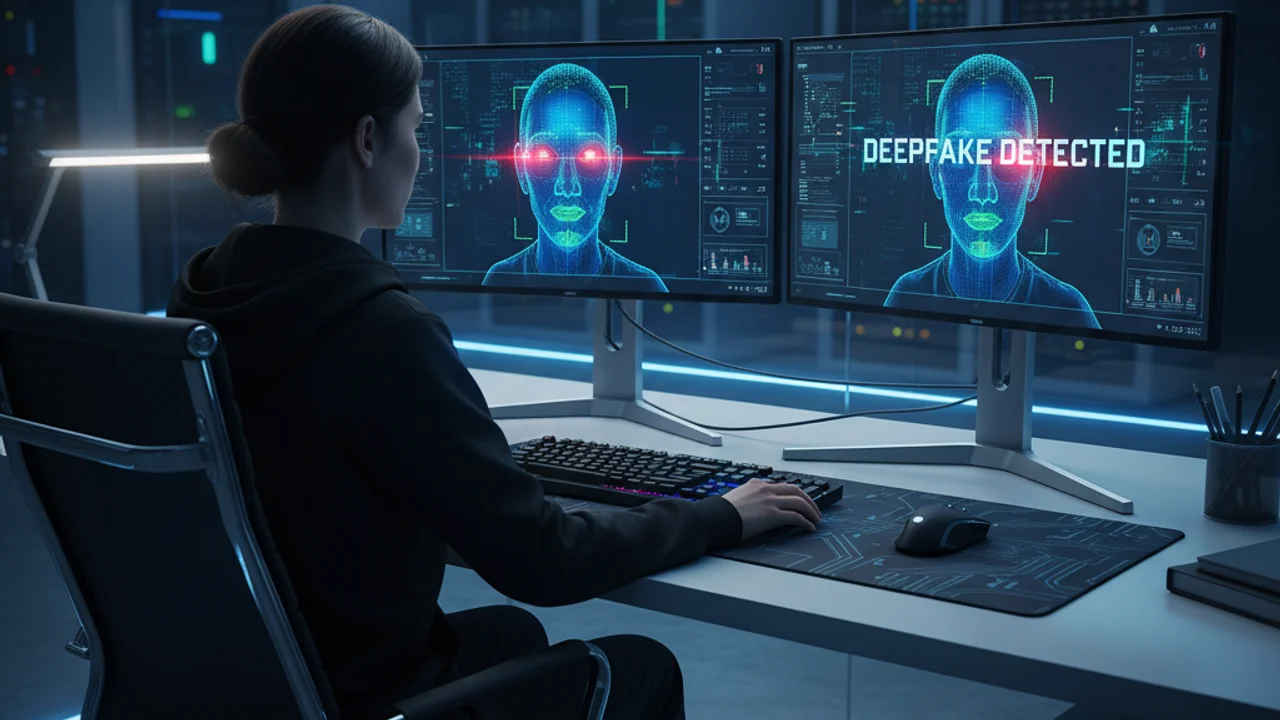
The year 2026 has brought deepfake technology to a new inflection point. What once required a Hollywood-grade effects studio and weeks of render time can now be produced on a consumer laptop in under an hour. Social media platforms including YouTube, TikTok, and Instagram are flooded with synthetic video content, and not all of it is harmless entertainment. Criminals are weaponizing deepfakes to impersonate executives, fabricate political statements, and run elaborate financial scams that have collectively cost victims hundreds of millions of dollars.
The good news? Deepfake technology, no matter how advanced, still leaves fingerprints. In this guide, we break down the seven most reliable signs that a video has been artificially generated or manipulated, along with practical steps you can take right now to protect yourself and the people you care about.
Key Takeaways
- Deepfakes leave telltale clues in eyes, lighting, edges, audio sync, skin texture, and movement.
- The human eye alone catches deepfakes only about 50% of the time, essentially a coin flip.
- AI-powered detection tools analyze dozens of signals simultaneously and achieve 95%+ accuracy.
- Always verify suspicious videos before sharing, especially those asking you to take action.
- Metadata and source context provide valuable clues even before visual analysis.
Why Deepfakes Matter More Than Ever in 2026
According to recent industry estimates, the volume of deepfake content online has roughly doubled every six months since 2024. That exponential growth has been fueled by open-source face-swapping models, increasingly accessible text-to-video generators, and real-time face-reenactment tools that can run during a live video call. The barrier to entry has essentially collapsed.
The consequences are real. Voters in several countries have encountered fabricated footage of candidates making inflammatory remarks just days before elections. And everyday people have had their likenesses stolen for celebrity-impersonation scam campaigns promoting fraudulent investment schemes.
Understanding how to identify these fakes is no longer optional. It is a fundamental digital literacy skill.
Sign 1: Unnatural Eye Movement and Blinking
Human eyes are extraordinarily complex, and they remain one of the hardest features for generative AI to replicate faithfully. In real footage, people blink asymmetrically, their pupils dilate in response to light changes, and their gaze naturally drifts as they think. Deepfakes frequently produce eyes that blink too uniformly, stare without variation, or exhibit a subtle glassy quality that trained observers can learn to recognize.
Pay close attention to the rate of blinking. Many deepfakes either suppress blinking entirely for several seconds or produce mechanical, perfectly symmetrical blinks that look subtly robotic. If the person in the video appears to go an unusually long time without blinking, or if every blink looks identical, that should raise an immediate red flag.
Sign 2: Inconsistent Lighting and Shadows
When a face is swapped onto a different body, the lighting conditions rarely match perfectly. Look for shadows that fall in different directions on the face versus the background, or highlights on the skin that do not correspond to the visible light sources in the scene. This is especially obvious in outdoor footage where sunlight creates strong directional shadows.
Another subtle indicator is specular reflection: the tiny bright spots in a person's eyes that reflect the ambient light. In authentic video, both eyes reflect the same light sources. In deepfakes, these reflections are often inconsistent, missing, or placed in positions that do not match the environment. This single check can be surprisingly effective.
Spotted something suspicious? Scan the video in seconds.
Sign 3: Warped or Blurred Facial Edges
The boundary where the synthetic face meets the original head and neck is a common weak point. Look carefully at the jawline, hairline, and ear boundaries. You may notice a faint blur, color mismatch, or wavering edge that shifts slightly from frame to frame. Pausing the video and scrubbing frame by frame often makes these artifacts much more visible.
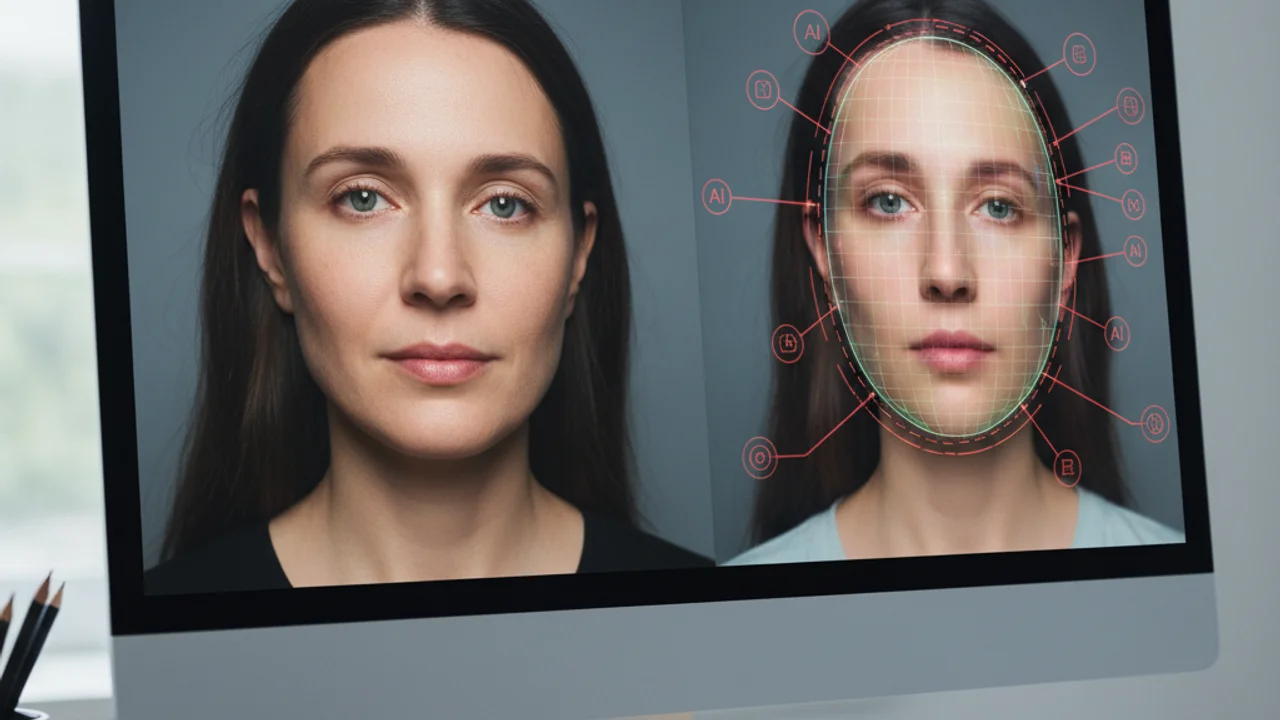
Accessories like earrings, glasses, and facial hair create additional challenges for deepfake algorithms. If you see jewelry that appears to clip through skin, glasses frames that warp unnaturally when the head turns, or a beard that seems to float above the chin, these are strong indicators of synthetic manipulation. The more occluding objects in the original frame, the harder it is for the algorithm to produce a clean result.
Sign 4: Audio-Lip Desynchronization
Audio-visual synchronization is one of the most powerful checks you can perform, and it requires no special tools. Simply watch the speaker's lips closely while listening to the audio. In many deepfakes, there is a subtle but perceptible lag between mouth movements and the corresponding sounds, particularly on consonants like "b," "m," and "p" that require full lip closure. If the lips seem to be moving slightly ahead of or behind the audio track, that is a significant warning sign.
This sign is especially relevant for deepfake video call scams where criminals use real-time face-swapping during Zoom or Microsoft Teams meetings. The additional processing latency of live deepfake generation often makes the desync more pronounced than in pre-recorded content.
Sign 5: Skin Texture Anomalies
High-resolution deepfakes can replicate general facial features convincingly, but skin texture at the pixel level often reveals the deception. Look for patches where the skin appears unnaturally smooth, almost like a wax figure, or areas where pores and fine wrinkles suddenly change resolution. This "uncanny valley" quality is most noticeable on the forehead, cheeks, and around the nose.
Another texture tell is age consistency. If the skin on the forehead looks twenty years younger than the skin on the neck, or if wrinkle patterns abruptly change at the jawline, the face and body likely come from different sources. Zooming in to full resolution and comparing skin quality across different facial regions can reveal mismatches invisible at normal viewing distance.
Don't leave your safety to chance, get comprehensive protection.
Sign 6: Inconsistent Head and Body Movement
Real human movement is remarkably fluid and coordinated. When you turn your head, your shoulders follow naturally, your posture shifts, and dozens of micro-movements cascade through your body. Many deepfakes convincingly animate the face but fail to coordinate that movement with the body beneath it. Watch for a head that seems to float independently of the torso, or for shoulders that remain unnaturally still while the face moves expressively.
Hand gestures near the face are another stress test. If the person raises a hand to touch their chin or push back their hair, observe whether the fingers interact realistically with the facial surface. Deepfakes often struggle with occlusion, producing fingers that merge into the face, disappear momentarily, or cause visible artifacts along the boundary.
Sign 7: Metadata and Context Clues
Before you even analyze the visual content, check the context around the video. Was it posted by a verified account? Does the account have a credible posting history, or was it created recently? Is the content being shared with urgency or emotional pressure to act immediately, such as a limited-time investment opportunity or a shocking political revelation? Scammers deliberately create urgency to short-circuit critical thinking.
If you can access the video file itself, metadata analysis can be revealing. Authentic smartphone video typically contains EXIF data including camera model, GPS coordinates, and recording timestamps. AI-generated videos often lack this metadata entirely or contain generic placeholder values. The absence of expected metadata is not proof of a deepfake, but it is a useful additional signal when combined with visual analysis.
For a comprehensive approach to evaluating suspicious content, read our complete guide to protecting yourself from deepfakes .
Related reading: Complete Deepfake Protection Guide: Learn layered defense strategies against all types of deepfake threats
Using AI Detection Tools to Stay Safe
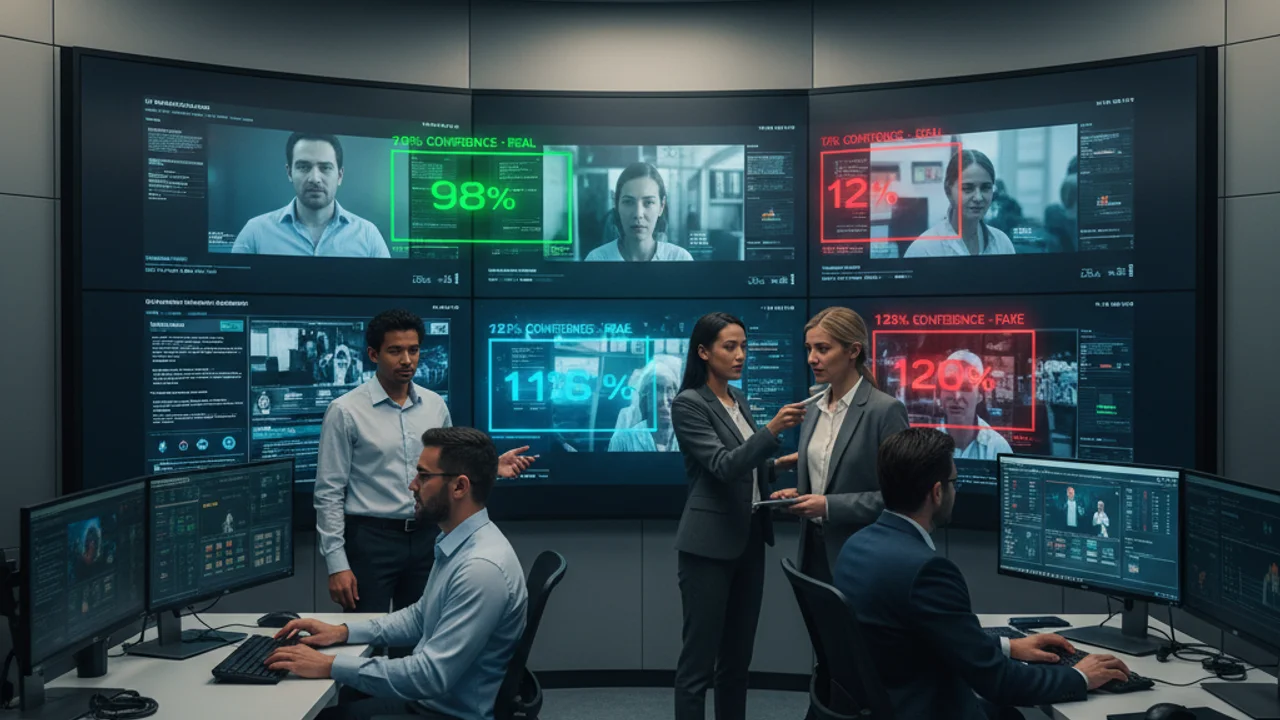
While the seven signs above will help you catch many deepfakes manually, the most sophisticated fakes increasingly require AI-powered analysis to detect. Modern detection tools use multi-layer analysis that examines dozens of signals simultaneously: facial consistency across frames, micro-expressions, audio-visual alignment, compression artifacts, and provenance metadata. This kind of holistic analysis catches manipulations that would be invisible to even the most trained human observer.
Truvizy's free scan tool lets you analyze any suspicious video in seconds. Simply paste a link from YouTube, TikTok, Instagram, or upload a file directly. The platform runs a comprehensive multi-signal analysis and returns a clear trust score along with a detailed breakdown of what was detected. For professionals and organizations that need higher volume scanning, Truvizy's premium plans offer deeper analysis with advanced forensic capabilities.
In a world where seeing is no longer believing, combining your own critical eye with purpose-built detection technology is the most reliable defense against deepfake deception. Make it a habit to verify before you trust, and share these detection techniques with your family and friends. The more people who know what to look for, the harder it becomes for criminals to profit from synthetic lies.
Ready to verify a suspicious video? Try our free scanner now.
Which is the most reliable way to spot a deepfake?
- Check the video title
- Look for facial inconsistencies like unnatural blinking and edge warping
- Check the upload date
- Read the comments section
Answer: Facial inconsistencies like unnatural blinking, strange lip sync, lighting mismatches, and warped edges are the most reliable visual indicators of deepfake manipulation.
Related reading: Can You Tell Real From Fake?: Test your deepfake detection skills and learn why AI outperforms the human eye
Related reading: Celebrity Deepfake Scams: How criminals use famous faces to steal millions
Related reading: How Truvizy Detects Scams: Discover the multi-layer AI analysis behind our detection technology
Frequently Asked Questions
What is a deepfake video?
A deepfake video uses artificial intelligence to replace or manipulate a person's face, voice, or body in video footage, making it appear they said or did something they never actually did.
Can deepfakes be detected by the human eye?
Some deepfakes still contain visual artifacts that trained observers can spot, such as unnatural blinking or warped edges. However, the latest generation of deepfakes often requires AI-powered detection tools to identify reliably.
How accurate are AI deepfake detectors?
Modern AI-powered deepfake detection tools can achieve accuracy rates above 95% by analyzing multiple signals simultaneously, including facial consistency, audio-visual synchronization, and frame-level artifacts.
Are deepfakes illegal?
Laws vary by jurisdiction. Many countries and US states have passed or are drafting legislation targeting malicious deepfakes, especially those used for fraud, election interference, or non-consensual intimate content.
What should I do if I find a deepfake of myself?
Document the content with screenshots, report it to the hosting platform, contact law enforcement if it is being used for fraud or harassment, and consider consulting a lawyer about your options under local deepfake legislation.