Can You Tell Real From Fake? Test Your Deepfake Detection Skills
Challenge yourself to distinguish real videos from deepfakes. Learn what makes modern deepfakes so convincing and how AI detection outperforms the human eye.
· By Truvizy Research Team · 8 min read
TL;DR
Most people cannot reliably distinguish deepfakes from real video, with studies showing accuracy rates near coin-flip levels for high-quality fakes. The human brain is wired to trust familiar faces and fluid motion, which deepfakes exploit. AI-powered detection tools analyze signals invisible to the eye and achieve accuracy rates far above human capability.
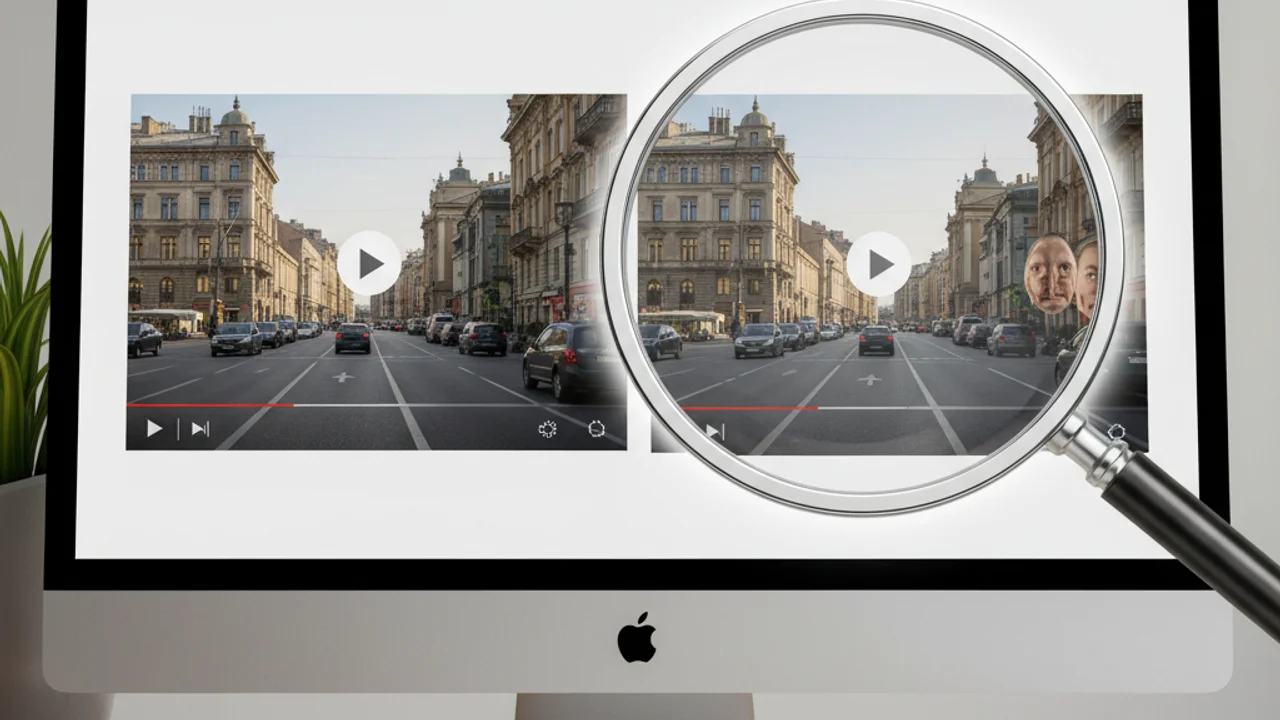
Here is an uncomfortable truth: you are probably worse at detecting deepfakes than you think you are. Multiple academic studies have confirmed that when presented with high-quality deepfake videos alongside authentic footage, the average person identifies the fake correctly only about half the time. That is essentially a coin flip. Even people who consider themselves tech-savvy or media-literate tend to significantly overestimate their own detection abilities.
This matters because deepfakes are no longer a theoretical concern. They are actively used in financial fraud, political manipulation, and personal harassment campaigns that affect real people every day. Understanding why deepfakes fool us, what our perceptual blind spots are, and how technology can bridge the gap between human limitations and the sophistication of synthetic media is essential knowledge for navigating the digital landscape in 2026.
The Human Detection Gap
Researchers at several major universities have conducted controlled experiments presenting participants with mixtures of real and deepfake videos and asking them to classify each. The results are remarkably consistent across studies: for high-quality deepfakes, identification accuracy hovers around 50 to 60 percent for untrained observers. This means that a significant portion of the population will trust a well-made deepfake as genuine roughly half the time they encounter one.
The detection gap widens further under real-world conditions. Laboratory studies typically present participants in a quiet, focused environment with explicit instructions to look for fakes. In everyday life, people encounter video content while scrolling through social media feeds, multitasking, or watching on small mobile screens. Attention is divided, viewing time is brief, and there is no explicit prompt to evaluate authenticity. Under these conditions, even the limited detection ability observed in laboratories likely overestimates real-world performance.
This gap is exactly what criminals exploit. As documented in our coverage of celebrity deepfake scam campaigns , attackers rely on the fact that most viewers will accept a convincing-looking video at face value, especially when it features a familiar, trusted face and is served through a seemingly legitimate platform.
Why Our Brains Fail at Detecting Deepfakes
The human visual system evolved to recognize faces, read emotional expressions, and interpret social cues. It is extraordinarily good at these tasks. What it is not designed for is detecting subtle pixel-level inconsistencies across thousands of video frames. When we see a face that looks like a face, moves like a face, and is attached to a voice that matches our expectations, our brain's face recognition system activates and essentially declares "this is a real person" before our analytical faculties have a chance to intervene.
This is compounded by a phenomenon psychologists call "inattentional blindness." When we are focused on what someone is saying, their message, or their emotional expression, we become remarkably blind to visual anomalies in the periphery or in aspects of the image we are not actively attending to. A slight blur along the jawline, an inconsistent shadow, or a momentary texture glitch can pass entirely unnoticed when our attention is captured by the content of the speech.
Confirmation bias plays a role as well. If a video confirms something we already believe or expect, we are far less likely to scrutinize its authenticity. A political deepfake of a candidate we already distrust saying something objectionable feels intuitively "right," making us less likely to question whether the footage is genuine.
The Most Common Mistakes People Make
When people attempt to identify deepfakes, they tend to rely on a few intuitive but often unreliable heuristics. The most common mistake is judging by overall video quality. Many people assume that low-resolution or slightly blurry video is more likely to be fake, when in reality, low resolution actually helps hide deepfake artifacts. High-resolution, well-lit footage is typically where deepfake tells are most visible.
Another frequent error is over-reliance on the "uncanny valley" feeling. While some deepfakes do trigger an instinctive sense that something is off, the latest generation of synthetic media has largely crossed the uncanny valley for brief viewing. If you are waiting for a gut feeling of wrongness before becoming suspicious, you will miss the majority of modern deepfakes.
People also tend to trust video more when it comes from a familiar context. A video shared by a friend, appearing as an ad on a trusted platform, or embedded in a professional- looking news segment receives far less scrutiny than the same content encountered on an unfamiliar website. Scammers understand this deeply and specifically design distribution strategies to exploit contextual trust.
Which of the following is the LEAST reliable method for detecting a deepfake?
- Checking for inconsistencies in facial lighting and shadows
- Trusting your gut feeling that something looks "off"
- Examining lip-sync accuracy on specific consonant sounds
- Analyzing the video with an AI-powered detection tool
Answer: The 'uncanny valley' gut feeling is unreliable because modern deepfakes have largely crossed that threshold. Systematic analysis of specific visual signals or AI-powered detection tools are far more reliable approaches.
What Trained Experts Look For
Professional deepfake analysts use a systematic approach rather than relying on gut instinct. They examine specific regions of the face methodically: the eyes for blinking patterns and reflection consistency, the mouth for lip-sync accuracy on plosive consonants, the jawline and hairline for boundary artifacts, and the skin for texture consistency across different facial regions. This systematic approach is more reliable than holistic impression.
Temporal analysis is another expert technique. Rather than evaluating individual frames, analysts look at how the face changes across sequences of frames. Legitimate video shows consistent, physics-respecting motion. Deepfakes sometimes introduce micro-jitters, momentary inconsistencies in lighting or color that persist for just a frame or two, or unnatural transitions when the face moves between different angles. These temporal artifacts are often more revealing than any single-frame analysis, which is why the techniques in our deepfake detection guide emphasize watching videos at reduced speed and scrubbing frame by frame.
Test your detection skills, scan a video with Truvizy now
Where AI Detection Outperforms the Human Eye
AI-powered detection tools analyze video at a level of granularity that is physically impossible for the human visual system. Where a person sees "a face that looks normal," a detection algorithm simultaneously evaluates facial landmark consistency across every frame, micro-variations in skin texture at the sub-pixel level, the mathematical properties of image compression artifacts, frequency-domain patterns that differ between camera-captured and AI-generated imagery, and correlations between audio waveforms and lip movements measured in milliseconds.
This multi-signal approach is what makes AI detection so much more accurate than human judgment. A single signal might be ambiguous, but when dozens of independent signals are analyzed together, the statistical confidence in the assessment becomes very high. Modern multi-layer detection systems achieve accuracy rates well above 95 percent on current- generation deepfakes, a level of performance that no human observer can match regardless of training.
Building Your Own Detection Skills
While technology is the most reliable detection method, developing your own visual analysis skills is still valuable. It provides a first line of defense and helps you know when to escalate to a tool-based check. Start by training yourself to always ask three questions when you encounter video content that asks you to take action: Who created this, and can I verify the source? Does the video contain any of the known visual or audio artifacts of deepfakes? Is the content designed to provoke an immediate emotional reaction or urgent action?
Practice by deliberately seeking out known deepfake examples and real video, comparing them side by side, and noting the specific details that differ. Over time, you will develop a stronger intuition for the subtle quality differences between authentic and synthetic media. But always remember that intuition alone is not sufficient; it is a complement to technological verification, not a replacement.
Verify, Don't Guess: Using Detection Tools
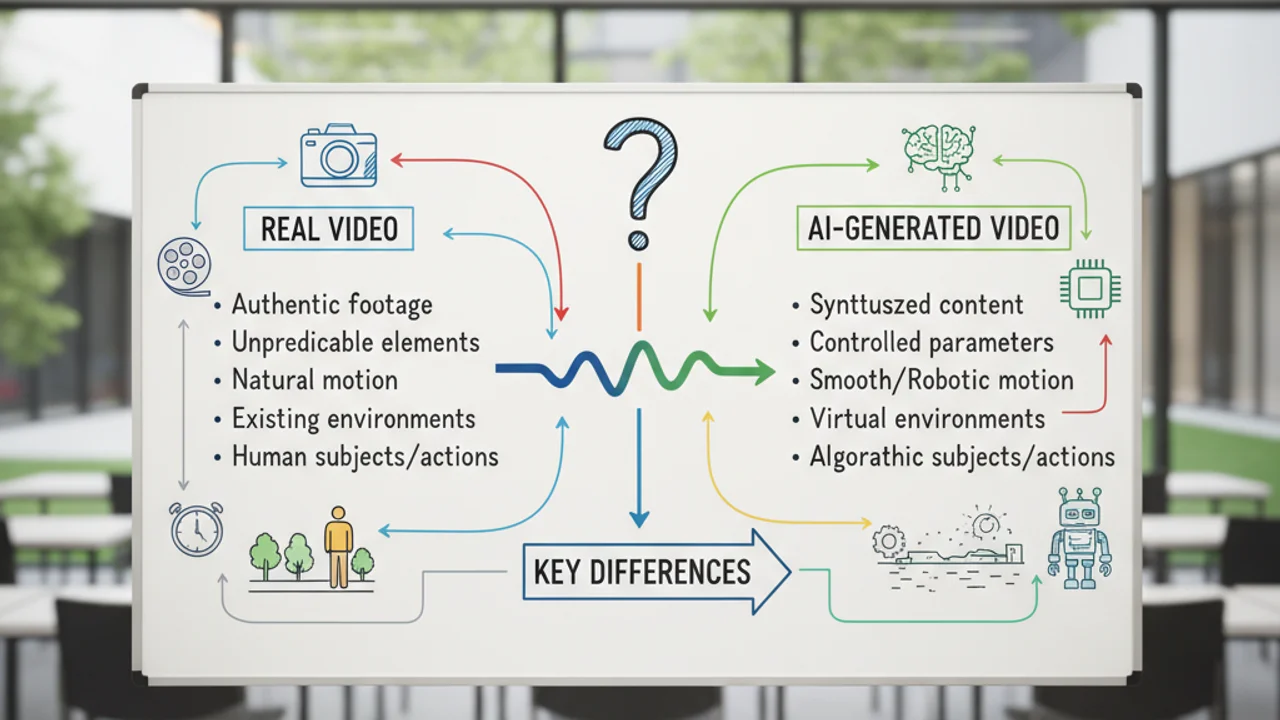
The single most important takeaway from understanding the human detection gap is this: do not rely on your own judgment alone to determine whether a video is real. When the stakes matter, whether that is a financial decision, a political judgment, or a personal safety concern, use a purpose-built detection tool to verify authenticity.
Truvizy's free video scanner makes this verification step fast and simple. Paste any video link or upload a file, and the platform performs a comprehensive multi-signal analysis in seconds. The result includes a clear trust score and a detailed breakdown showing exactly which signals were evaluated and what was found. This transparency means you are not just getting a pass/fail verdict; you are getting an explanation that helps you understand why the content was flagged or cleared.
For professionals who work with media content regularly, journalists, corporate communications teams, security analysts, and fact-checkers, Truvizy's premium plans provide higher-volume scanning, advanced forensic detail, and export capabilities suitable for documentation and reporting. The cost of a subscription is negligible compared to the potential cost of trusting a deepfake, whether that cost is measured in dollars, reputation, or democratic integrity.
Need professional-grade detection? Explore Truvizy plans
Key Takeaways
- Humans detect high-quality deepfakes at roughly coin-flip accuracy, your eyes are not enough
- Your brain\
- ,
- ,
In the contest between your eyes and modern AI generation, your eyes will lose more often than you are comfortable admitting. The smart move is to stop guessing and start verifying.
Related reading: How to Spot a Deepfake Video: Learn the systematic approach experts use to identify synthetic media
Related reading: AI Content Detection Explained: How multi-signal AI analysis outperforms the human eye at detecting deepfakes
Related reading: Free Scam Detection Tools: The best free tools for verifying video authenticity and detecting AI manipulation
Frequently Asked Questions
What percentage of people can spot deepfakes accurately?
Research consistently shows that untrained individuals correctly identify deepfakes only about 50-60% of the time for high-quality fakes, essentially performing at chance level. Even trained media professionals rarely exceed 75% accuracy without technological assistance.
Why are deepfakes so hard for humans to detect?
The human visual system is optimized for recognizing faces and interpreting social cues, not for detecting pixel-level inconsistencies. Our brains actively fill in gaps and smooth over minor imperfections, which is helpful for normal vision but counterproductive when evaluating synthetic media.
Are some types of deepfakes easier to spot than others?
Yes. Face-swap deepfakes where a face is transplanted onto a different body tend to leave more artifacts than fully generated synthetic faces. Low-resolution deepfakes and those with audio are generally harder to detect visually because compression hides artifacts.
Do deepfake detection skills improve with practice?
Studies show that focused training can improve human detection rates by 10-20 percentage points. However, even trained observers still perform significantly below AI-powered detection tools, particularly for the latest generation of deepfakes.
What is the best way to check if a video is real?
The most reliable approach combines human skepticism with AI-powered analysis. Question the source, context, and emotional framing of the video, then use a detection tool like Truvizy to analyze the technical signals that are invisible to the naked eye.