Social Security Scams: How Criminals Use Your SSN Against You
Learn how Social Security scams work, common tactics criminals use to steal your SSN, and practical steps to protect your Social Security number from fraud.
· By Truvizy Research Team · 8 min read
TL;DR
Social Security scams use impersonation, phishing, and data breaches to steal your SSN for identity theft, tax fraud, and financial exploitation. Knowing the common tactics, never sharing your SSN unnecessarily, and monitoring your records prevents most SSN-related fraud.
Your Social Security number is the master key to your identity in the United States. This nine-digit number, issued at birth and used throughout your entire life, connects your credit history, tax records, medical files, employment history, and government benefits. For criminals, obtaining your SSN is the holy grail of identity theft because it unlocks an extraordinary range of fraudulent opportunities. Social Security scams, the schemes designed to trick you into revealing this critical number, have become one of the most reported types of fraud in America.
The scale of the problem is enormous. The Social Security Administration's Office of the Inspector General receives hundreds of thousands of scam reports annually, and those represent only a fraction of actual attempts. Losses from SSN-related fraud run into the billions, affecting people of all ages and backgrounds. The most disturbing aspect is how effective these scams remain despite widespread awareness campaigns. Scammers continuously refine their tactics, leveraging technology and psychology to overcome skepticism and trigger the panicked response that leads victims to hand over their most sensitive information.
Why Your Social Security Number Is So Valuable
Unlike a credit card number, which can be changed and replaced, your Social Security number is permanent. It is deeply embedded in the systems that govern your financial, medical, and legal life. A criminal with your SSN can open credit accounts, file tax returns to collect refunds, obtain employment using your identity, access your medical benefits, and in some cases, assume your identity entirely.
The permanence of the SSN amplifies the damage. While a stolen credit card creates a temporary problem resolved by issuing a new number, a stolen SSN creates a persistent vulnerability that can surface years or even decades later. Criminals may stockpile SSNs and use them opportunistically, striking when the victim's guard is down or when a new fraud opportunity emerges.
On criminal marketplaces, a verified Social Security number sells for significantly more than credit card numbers or login credentials because of its versatility and permanence. A full identity package containing an SSN, name, date of birth, and address commands premium prices because it enables the widest range of fraud. Understanding this value explains why criminals invest so heavily in sophisticated scams designed to extract this single piece of information.
Common Social Security Scam Tactics
Social Security scams employ several consistent tactics, all built around impersonation and urgency. The most common approach involves criminals impersonating the Social Security Administration, claiming there is a problem with your account that requires immediate action. The supposed problems vary: your SSN has been suspended due to suspicious activity, your benefits are at risk, your number has been linked to criminal activity, or a new card needs to be issued.
Email and text message phishing campaigns mimic official SSA communications with convincing logos, formatting, and language. These messages direct you to fake websites that replicate the SSA's online portal, where entering your credentials and SSN delivers them directly to criminals. The sophistication of these fake sites has increased dramatically, with some even implementing HTTPS and displaying government-style branding that is difficult to distinguish from the real thing.
Mail-based scams, though less common in the digital age, still target victims through official-looking letters. These may claim to be from the SSA, IRS, or other government agencies, requesting that you verify your Social Security number by calling a phone number or visiting a website controlled by the scammers. The physical nature of mail lends an air of legitimacy that digital messages sometimes lack.
More recently, scammers have begun using AI-generated voice technology to create convincing automated and live calls that sound like official government representatives. This technology, combined with AI-powered content generation, makes social engineering attacks increasingly difficult to distinguish from legitimate communications.
Received a suspicious call or message about your Social Security? Verify it instantly with Truvizy.

Phone Call Scams Impersonating the SSA
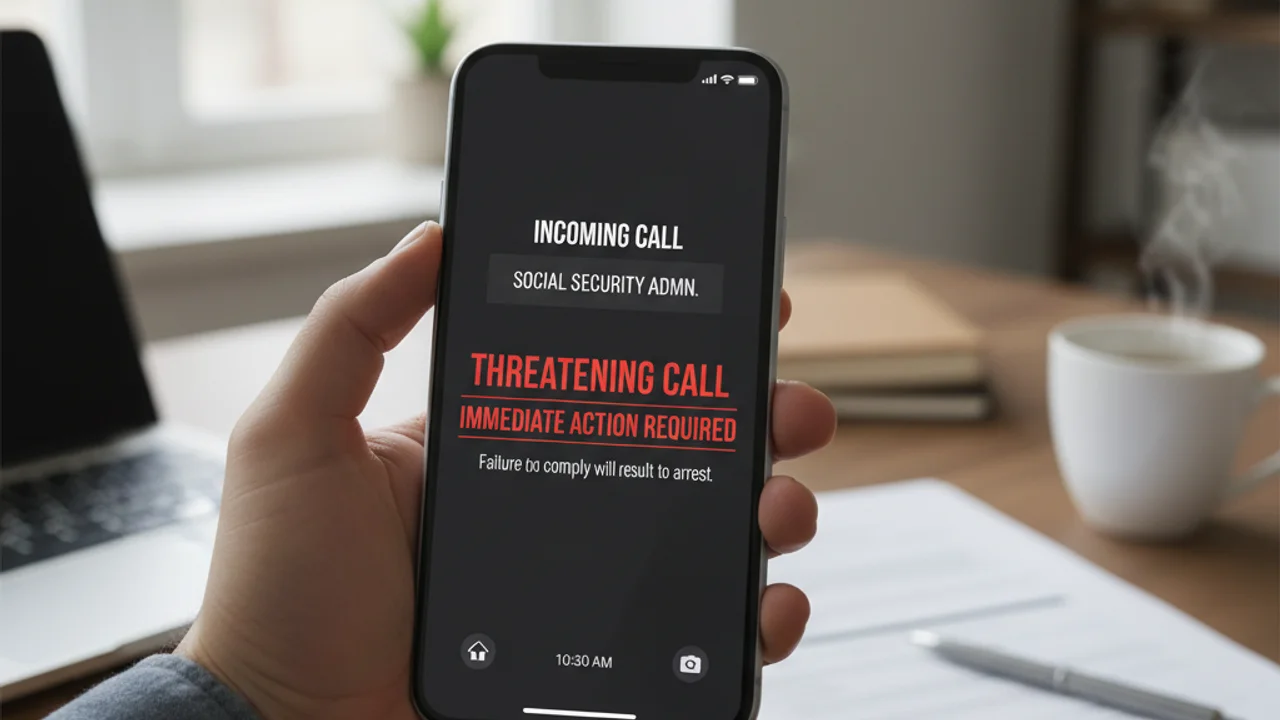
Phone calls remain the most common vector for Social Security scams. The caller, often using a spoofed phone number that appears to come from the SSA's actual number, claims to be a government official investigating a problem with your Social Security account. The scripts are carefully crafted to create fear and urgency.
A typical call follows a pattern. The caller identifies themselves as an SSA investigator and states that your Social Security number has been linked to suspicious activity, perhaps drug trafficking, money laundering, or identity fraud. They may provide a fake case number and reference specific personal details to appear credible. The threat escalates: your number will be suspended, your benefits will be cut off, warrants will be issued for your arrest, or your bank accounts will be frozen.
The resolution always requires you to take immediate action. You may be asked to verify your Social Security number, make a payment via gift cards or wire transfer to "protect" your account, or provide bank account information so your funds can be "secured" while the investigation proceeds. Every element is fabricated, but the combination of authority, specificity, and urgency is effective enough to generate millions in losses annually.
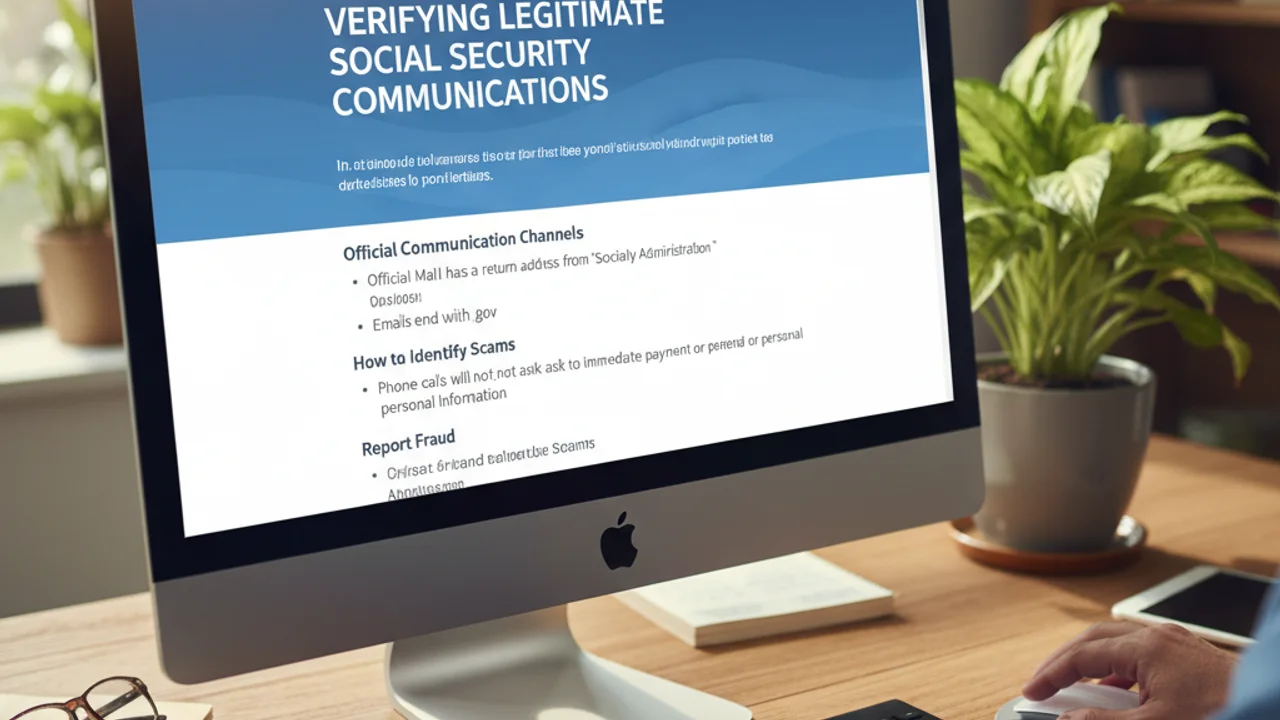
Remember the critical facts. The SSA will never threaten you with arrest over the phone. The SSA will never demand payment by gift card, wire transfer, or cryptocurrency. Your Social Security number cannot be "suspended." And if there were a genuine problem, the SSA would typically communicate through official mail, not unsolicited phone calls.
A caller says they're from the Social Security Administration and your SSN has been 'suspended.' What should you do?
- Verify your SSN so they can reactivate it
- Pay the fine they request via gift cards
- Hang up, the SSA cannot suspend your SSN and never demands phone payments
- Ask for their supervisor and give them your information instead
Answer: Social Security numbers cannot be 'suspended.' The SSA never threatens arrest, demands gift card payment, or requests your SSN over the phone. This is always a scam.
Consequences of SSN Theft
When a criminal obtains your Social Security number, the potential consequences span nearly every aspect of your financial and personal life. Financial identity theft is the most immediate risk: opening credit cards, personal loans, and lines of credit in your name. These accounts accumulate debt that appears on your credit report, damaging your credit score and creating collection actions against you.
Tax fraud using a stolen SSN is devastatingly effective. A criminal files a tax return early in the filing season using your Social Security number, claiming a refund. When you file your legitimate return, it is rejected because a return has already been filed. Resolving tax identity theft with the IRS is a notoriously slow process that can take over a year.
Employment fraud occurs when someone uses your SSN to gain employment. Their wages are reported to the IRS under your number, creating tax discrepancies and potentially affecting your Social Security benefits calculations. In some cases, criminal records from arrests made while the thief was using your identity can appear in background checks for your own employment and housing applications.
Medical identity theft uses your SSN and insurance information to obtain healthcare services. This is dangerous not only financially but medically, as the thief's medical records can become mixed with yours, potentially leading to incorrect treatments or diagnoses based on someone else's health history. For more on the full range of identity theft impacts and recovery steps, see our identity theft recovery guide.
Protecting Your Social Security Number
The most fundamental protection is minimizing how often and where you share your SSN. Question every request for it. Many businesses ask for your Social Security number as a matter of routine when it is not actually required. Doctor's offices, insurance agents, landlords, and employers may request it, but only certain entities legally require it. The IRS, employers for tax withholding purposes, financial institutions for certain accounts, and government benefit programs are among the few with legitimate need.
Never carry your Social Security card in your wallet. Store it in a secure location at home. If you need it for a specific purpose, take it out and return it immediately afterward. Memorize your number so you never need to carry a written copy. Shred any documents containing your SSN before discarding them.
Create your mySocialSecurity account at ssa.gov proactively. This prevents a criminal from creating one in your name and using it to redirect benefits, change your address, or access your personal information. Enable all available security features on the account.
Use Truvizy's scanning tool to verify suspicious emails, texts, and calls that claim to be from the SSA or other government agencies. Our AI-powered analysis detects the patterns used in government impersonation scams, helping you identify threats before you respond to them.
What to Do If Your SSN Is Compromised
If you know or suspect your Social Security number has been compromised, act immediately. Place a credit freeze at all three major credit bureaus to prevent new accounts from being opened. File an identity theft report with the FTC at IdentityTheft.gov. Report the SSN compromise to the Social Security Administration's Office of the Inspector General.
File for an IRS Identity Protection PIN, which prevents tax returns from being filed under your SSN without the PIN. This is especially critical during tax season but should be done year-round as the PIN is valid for the entire tax year.
Monitor your Social Security statement through your mySocialSecurity account for earnings reported under your number that you did not earn. Unauthorized employment reported under your SSN affects both your tax obligations and your future Social Security benefits. Review your credit reports from all three bureaus for any accounts or inquiries you do not recognize.
Key Takeaways
- Never share your SSN unless legally required, question every request.
- The SSA will never threaten arrest, demand gift card payments, or "suspend" your SSN.
- Create your mySocialSecurity account proactively to prevent criminals from doing so.
- If compromised: freeze credit, file FTC report, get an IRS Identity Protection PIN immediately.
Implement the comprehensive identity theft prevention steps in our dedicated guide. Because your SSN cannot be easily changed, long-term monitoring becomes essential. The combination of a credit freeze, IRS PIN, and ongoing vigilance creates a strong defensive posture even with a compromised SSN.
Protect your Social Security number and your family with AI-powered threat detection.
Invest in digital protection tools that help you detect and verify potential scam communications targeting your Social Security information. In an environment where SSN scams grow more sophisticated every year, having AI-powered detection at your fingertips provides a critical advantage against criminals who count on panic and urgency to overcome your defenses.
Related reading: Data Breach Response Guide: Steps to take when your data is exposed
Related reading: Password Security in 2026: Modern strategies for protecting your accounts
Related reading: Social Engineering Attacks: How scammers manipulate you into trusting them
Frequently Asked Questions
Will the Social Security Administration ever call me?
The SSA may contact you by phone in limited circumstances, such as about a pending disability or benefits claim. However, the SSA will never threaten you, demand immediate payment, ask for gift cards or wire transfers, or threaten arrest over the phone.
Can I get a new Social Security number if mine is stolen?
The SSA may assign a new SSN in extreme cases where you have done everything possible to resolve the issue and are still experiencing ongoing harm. However, a new SSN creates its own complications, including a new credit history, and is rarely granted.
How do criminals get Social Security numbers?
Through data breaches, phishing attacks, stolen mail, social engineering, purchasing from criminal marketplaces, identity document theft, and in some cases, guessing SSNs based on publicly available information like birth dates and locations.
What should I do if I accidentally gave my SSN to a scammer?
Immediately freeze your credit at all three bureaus, file an identity theft report with the FTC, report to the SSA Office of the Inspector General, monitor your credit and financial accounts closely, and consider filing for an IRS Identity Protection PIN.
Can someone use my SSN to steal my Social Security benefits?
Yes. Criminals can create a fraudulent mySocialSecurity account and redirect your benefits to their own bank account. Create your own mySocialSecurity account proactively to prevent someone else from doing so, and monitor it for unauthorized changes.