How to Verify If a Video Is Real: A Complete Fact-Checking Guide
Learn how to verify whether a video is authentic or manipulated. This step-by-step fact-checking guide covers reverse searches, metadata analysis, AI detection tools, and more.
· By Truvizy Research Team · 8 min read
TL;DR
Verifying a video requires a multi-step approach: check the source and account credibility, perform reverse image and frame searches, analyze metadata for inconsistencies, and use AI-powered detection tools for the signals your eyes cannot catch. Building this verification habit takes minutes and can save you from scams, misinformation, and fraud.
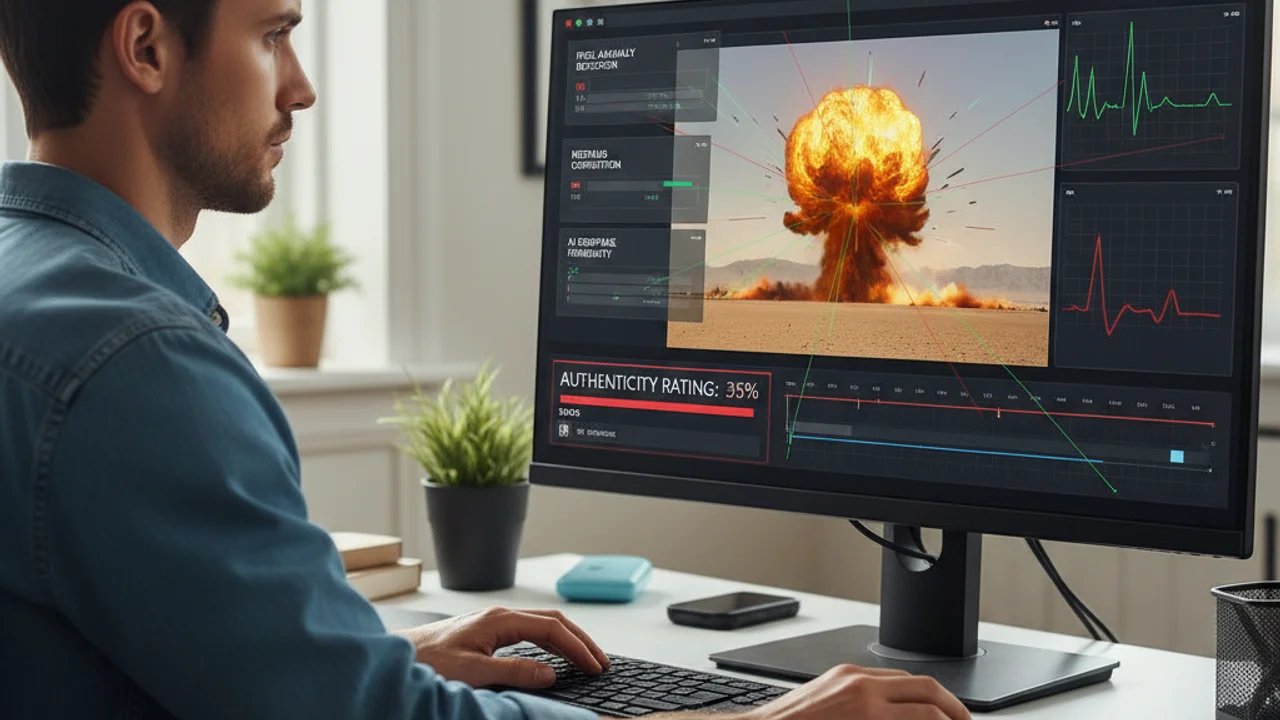
A video surfaces on your social media feed showing a public figure making a shocking statement. Within minutes, thousands of people are sharing it, outraged. But is it real? In 2026, that question has become one of the most important you can ask before reacting to anything you see online. Synthetic media, manipulated clips, and out-of-context footage are being weaponized to deceive, defraud, and manipulate public opinion at an unprecedented scale.
The challenge is not just deepfakes. Scammers routinely repackage legitimate footage with misleading captions, splice unrelated clips together, or use AI voice cloning to overlay fabricated audio onto real video. Every one of these techniques is designed to exploit your instinct to trust what you see with your own eyes. This guide walks you through a complete, repeatable fact-checking process that anyone can follow, whether you are a casual social media user or a professional researcher.
Key Takeaways
- Always check the source account and its credibility before trusting any video.
- Reverse image search individual frames to find the original context.
- Video metadata reveals camera details, dates, and editing history that expose fakes.
- AI-powered detection tools catch manipulation invisible to the human eye.
- Cross-reference claims with established news outlets and fact-checkers.
- Build a verification habit, pause before sharing emotionally charged content.
Why Video Verification Matters in 2026
The volume of manipulated video circulating online has grown exponentially over the past two years. Industry researchers estimate that AI-generated video content has increased by over 900 percent since early 2024, driven by accessible generation tools and real-time face-swapping technology. The consequences extend far beyond viral hoaxes. Fabricated video has been used to manipulate stock prices, interfere with elections, extort private individuals, and run elaborate social engineering scams that cost victims their savings.
Suspicious of a video you just saw? Scan it instantly for free.
Step 1: Check the Source and Account Credibility
Before analyzing the video itself, look at where it came from. Who posted it? Is the account verified, and does it have a history of credible content? A brand-new account with no followers posting a sensational clip is a strong warning sign. Check whether established news organizations or the person allegedly featured in the video have acknowledged or responded to the content.
Step 2: Reverse Image and Frame Search
One of the most powerful manual verification techniques is reverse searching individual frames from the video. Take a screenshot of a distinctive frame, then run it through Google Images, TinEye, or Yandex Images. This can reveal whether the footage has appeared before in a completely different context, which is a hallmark of out-of-context manipulation.
For example, footage of a natural disaster shared as breaking news might actually be from an event that happened years ago in a different country. Reverse search will often surface the original upload, complete with accurate dates and descriptions. If the earliest version of the footage tells a different story than the viral version, you have your answer.
Step 3: Analyze Video Metadata
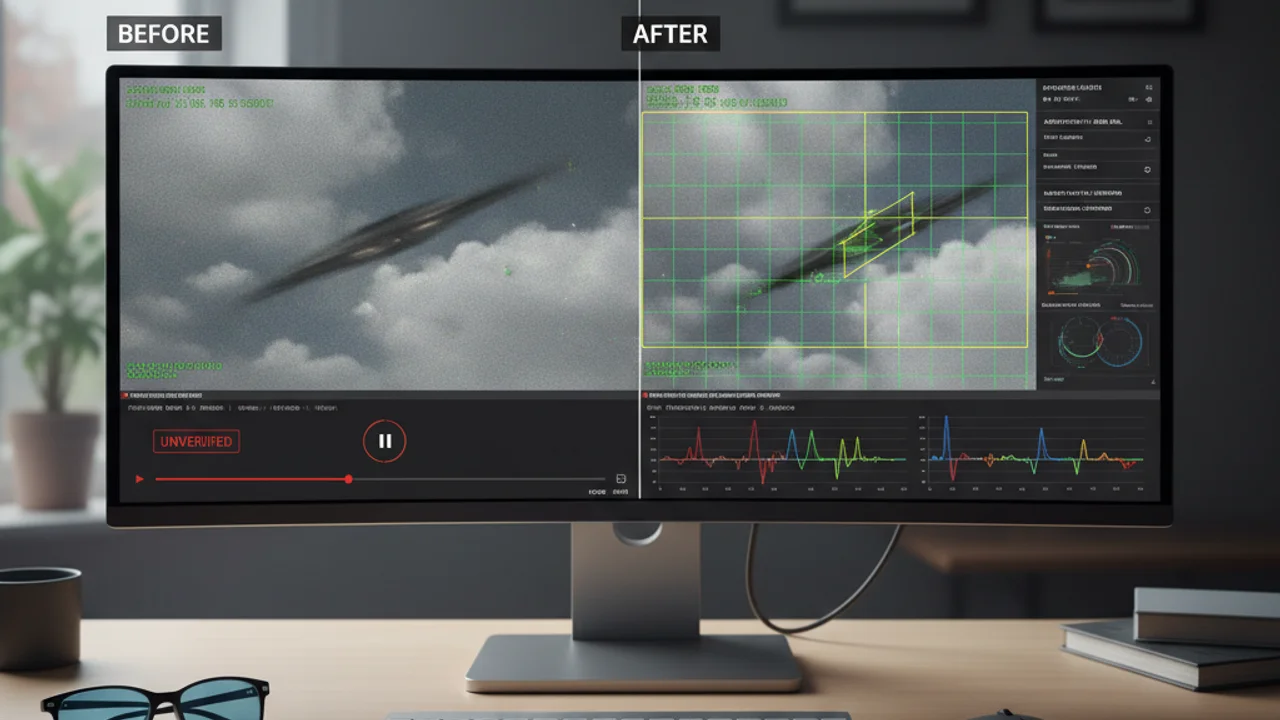
If you can download or access the original video file, its metadata can provide valuable clues. Authentic video recorded on a smartphone typically contains EXIF data such as the camera model, recording date and time, GPS coordinates, and codec information. Videos that have been generated by AI or heavily processed through editing software often have stripped, missing, or inconsistent metadata.
Step 4: Visual and Audio Inspection
With the source and metadata assessed, turn your attention to the content itself. The visual tells of manipulated video include unnatural lighting, warped edges around faces, inconsistent skin textures, and objects that clip through each other. For a detailed breakdown of these visual indicators, see our guide on how to spot deepfake videos .
Audio analysis is equally important. Listen for abrupt changes in background noise levels, room acoustics that shift mid-sentence, or words that sound slightly different in pitch or pacing compared to the rest of the speech. AI-generated voice clones have become highly convincing, but they often struggle with breathing patterns, emotional inflection, and the subtle ambient sounds that accompany real recorded speech.
Related reading: How to Spot a Deepfake Video: Detailed visual and audio indicators of AI-generated video content
Step 5: Use AI-Powered Detection Tools
Manual inspection is a critical skill, but it has clear limits. The most sophisticated manipulations are designed specifically to pass human visual inspection, and they often succeed. This is where AI-powered detection tools become essential. These tools analyze video at a depth and speed that humans simply cannot match, examining frame consistency, compression artifacts, provenance signals, and dozens of other technical indicators simultaneously.
Truvizy's free video scanning tool allows you to check any suspicious video in seconds. Paste a link from YouTube, TikTok, Instagram, or Facebook, and the platform runs a comprehensive multi-layer analysis that returns a clear trust score along with a breakdown of exactly what was detected. For users who need to verify content at scale, whether for journalistic work, corporate security, or community moderation, Truvizy's premium plans provide deeper forensic analysis and higher volume scanning.
Related reading: How Truvizy Detects Scams: Behind the scenes of multi-layer AI-powered analysis
Step 6: Cross-Reference With Trusted Sources
After completing your technical analysis, the final step is context verification. Search for the event or claim depicted in the video using established news outlets and fact-checking organizations. Sites like Snopes, PolitiFact, and AFP Fact Check frequently debunk viral video hoaxes, and their investigations can confirm or challenge your own findings.
Building a Verification Habit
The most effective defense against video manipulation is not any single technique but the habit of pausing before reacting. When you encounter a video that triggers a strong emotional response, whether outrage, fear, excitement, or sympathy, that emotional charge is precisely what makes it effective as a manipulation tool. Train yourself to recognize that emotional trigger as a cue to verify rather than share.
Start small. The next time you see a surprising video on social media, spend two minutes checking the source account and running a reverse frame search before engaging with it. Over time, this process becomes automatic. You can also make verification easier by bookmarking tools you use regularly and sharing your process with family and friends, especially older family members who may be more vulnerable to video-based scams.
In a media environment where anyone can create convincing fake video, the ability to verify what you see is no longer a niche skill for journalists and researchers. It is a core digital literacy competency that every internet user needs. The six steps in this guide give you a reliable, repeatable framework. Use them, share them, and help build a culture where verification comes before virality.
A viral video shows a celebrity endorsing a new product. What should be your FIRST step to verify it?
- Share it with friends to get their opinion
- Check the source account and its credibility
- Slow down the video to look for visual artifacts
- Run it through an AI detection tool immediately
Answer: Always start by checking the source. A brand-new account with no followers posting sensational content is a major red flag. Source verification is the fastest first filter before investing time in deeper analysis.
Build a verification habit for your whole family with shared protection.
Related reading: Identity Theft Prevention Guide: Protect yourself from the consequences of falling for video scams
Related reading: Best Free Scam Detection Tools in 2026: Build your complete free verification toolkit
Frequently Asked Questions
What is the fastest way to check if a video is real?
The fastest approach is to paste the video link into an AI-powered verification tool like Truvizy, which analyzes multiple signals in seconds. For manual checks, start by verifying the source account and searching for the same clip on reputable news outlets.
Can I verify a video just by looking at it carefully?
Visual inspection can catch some manipulations, such as lighting inconsistencies or warped edges, but modern AI-generated content is often indistinguishable to the human eye. Automated detection tools analyze frame-level data and metadata that humans simply cannot perceive.
What metadata should I look for in a video file?
Look for camera model, recording date, GPS coordinates, and compression history. Authentic smartphone videos usually contain rich EXIF data. AI-generated or heavily edited videos often have missing, stripped, or inconsistent metadata.
Are reverse video search tools reliable?
Reverse image and frame search tools are useful for finding the original source of a clip and identifying reposted or re-edited versions. They are one piece of the verification puzzle but should be combined with metadata and AI analysis for a complete assessment.
How do journalists verify video footage?
Professional journalists use a combination of provenance research, geolocation, chronolocation (matching shadows and weather to time and place), metadata analysis, and forensic tools. Many newsrooms now also incorporate AI-powered detection into their verification workflows.