Fake Reviews: How to Spot Them on Amazon, Google, and Yelp
Learn how to identify fake reviews on Amazon, Google, and Yelp with practical techniques for spotting manufactured ratings, review farms, and incentivized feedback.
· By Truvizy Research Team · 8 min read
TL;DR
Fake reviews distort purchasing decisions across all major platforms. By analyzing review patterns, language, timing, and reviewer profiles, you can distinguish genuine feedback from manufactured ratings and make better-informed choices.
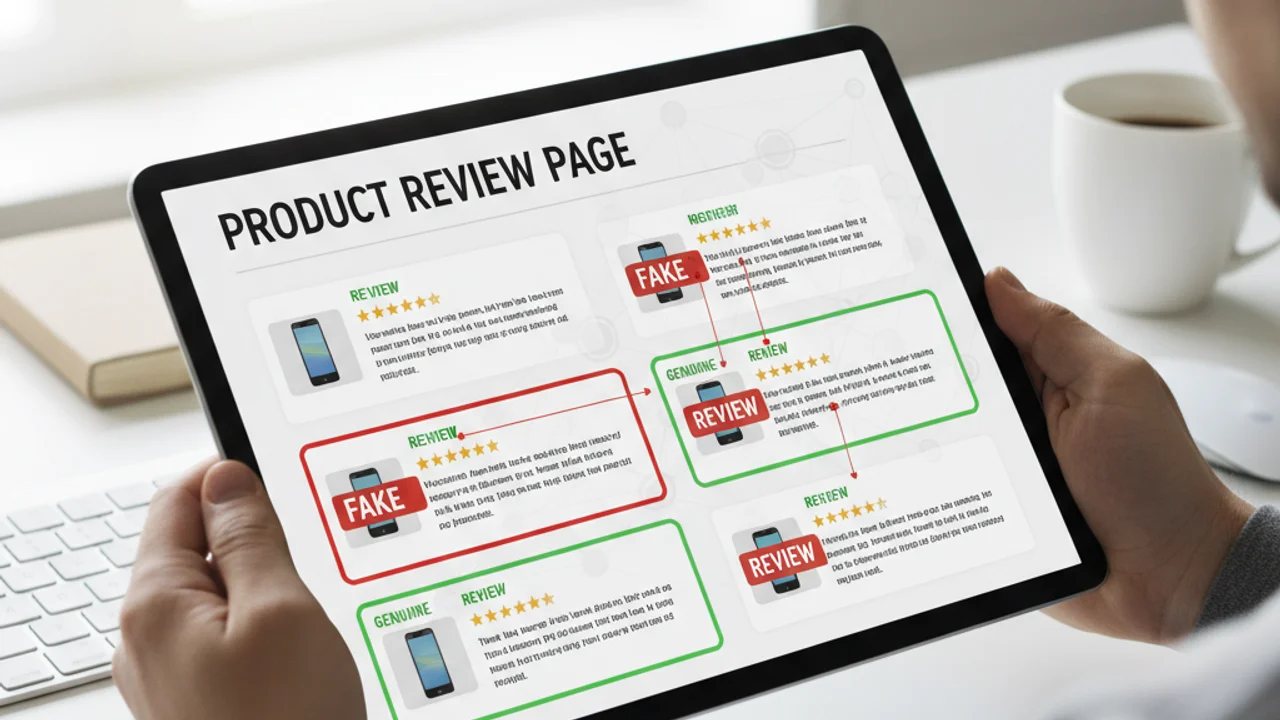
Online reviews have become the backbone of consumer decision-making. Before purchasing a product, booking a hotel, choosing a restaurant, or hiring a service, most of us check the reviews. We trust that these ratings represent genuine experiences from real customers. But the uncomfortable truth is that a significant portion of online reviews are fabricated, incentivized, or manipulated, and the problem is getting worse.
The fake review industry is now a global operation worth hundreds of millions of dollars. Review farms employing thousands of workers produce fake feedback at industrial scale. AI-powered tools generate convincing review text in seconds. Social media groups coordinate review campaigns for payment or free products. The result is a review ecosystem where the signal of genuine customer experience is increasingly drowned out by manufactured noise. Understanding how to cut through this noise is essential for anyone who shops or makes decisions based on online ratings.
The Fake Review Epidemic
The scale of review fraud is staggering. Research consistently estimates that between 30% and 40% of all online reviews involve some form of manipulation. On Amazon alone, analysis of millions of product listings reveals that entire product categories have average review authenticity rates below 50%. The problem is not limited to products: Google Maps reviews for local businesses, Yelp restaurant ratings, app store reviews, and travel platform feedback are all heavily targeted.
The economics drive the behavior. A product's star rating directly impacts its sales volume. On Amazon, the difference between a 3.5-star and a 4.5-star rating can mean a 200% increase in sales. For businesses operating on thin margins, the temptation to manipulate reviews is powerful. And for scam operations, fake reviews are not just helpful but essential: they are the primary mechanism for selling overpriced or low-quality products to unsuspecting consumers.
This manipulation creates a vicious cycle. As more reviews become fake, consumers lose trust in the review system entirely, which reduces the value of genuine reviews and further incentivizes manipulation. Breaking this cycle requires both platform enforcement and consumer awareness, with the latter being something you can control immediately.
Suspicious about a product listing? Scan it with Truvizy for instant analysis.
Types of Fake Reviews
Fake reviews come in several distinct varieties, each with different characteristics. Fully fabricated reviews are written by people who never purchased or used the product. These may come from paid review farms, bot networks, or freelance writers hired specifically to generate positive feedback. They tend to be either extremely generic or artificially detailed, and they often appear in clusters around product launch dates.
Incentivized reviews occupy a gray area. The reviewer actually receives and uses the product but is compensated with a free item, discount, or payment in exchange for a positive review. While the reviewer may genuinely like the product, the incentive creates a strong bias toward positive ratings, and platforms have largely banned this practice. These reviews tend to be more subtle than outright fakes because the reviewer does have firsthand experience.
Review swapping involves groups of sellers who agree to leave positive reviews on each other's products. These networks operate through private social media groups, messaging apps, and dedicated platforms, making them difficult for automated systems to detect because the reviewers appear to be genuine customers with varied review histories.
Competitive sabotage uses fake negative reviews to damage a competitor's ratings. This is particularly common in highly competitive product categories where a small rating difference translates to significant sales volume. Detecting negative review attacks requires looking at timing patterns and language that suggests the reviewer did not actually use the product. The same deceptive tactics fuel dropshipping scams where manufactured positive reviews disguise poor-quality products.
Spotting Fake Reviews on Amazon
Amazon is the most targeted platform for review manipulation, and it is also where detection techniques are most developed. Start by examining the review distribution. A genuine product typically has a natural distribution across all star levels, with some clustering at 4-5 stars for good products and 1-2 stars for poor ones. A product with overwhelmingly five-star reviews and almost nothing else should raise suspicion, as should a product with a bimodal distribution showing many fives and many ones but nothing in between, which suggests both purchased positive reviews and legitimate negative feedback.
Check review timing. A surge of five-star reviews appearing within a few days, especially early in a product's listing history, often indicates a coordinated review campaign. Genuine reviews accumulate gradually as real customers purchase and evaluate the product. A product that received 50 reviews in its first week but only 10 in the following month has an unnatural pattern.
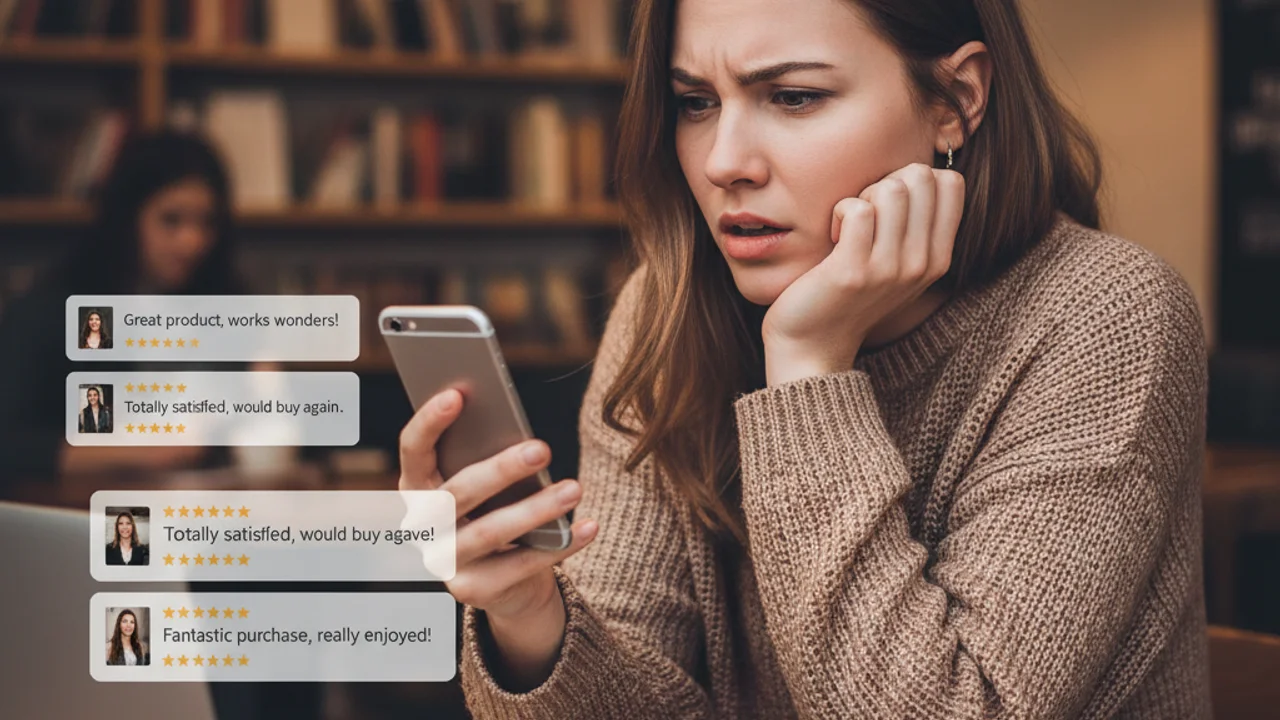
Read the review content carefully. Fake reviews often share telltale characteristics: they are either extremely brief ("Great product! Love it!") or excessively long and detailed in a way that reads like marketing copy rather than personal experience. They may focus on features listed in the product description rather than actual usage. They may use similar phrasing across multiple reviews, suggesting a template. And they rarely mention specific use cases, comparisons to alternatives, or the kinds of minor complaints that genuine users naturally include.
Examine reviewer profiles. Click on the reviewer's name to see their history. Red flags include reviewing many products in the same category within a short period, reviewing products from the same seller, having a review history that started recently with a burst of activity, or reviewing products that seem unrelated to a consistent lifestyle pattern.
Look for the "Verified Purchase" badge, but do not rely on it exclusively. While verified purchase reviews are generally more trustworthy, scam operations sometimes purchase their own products to generate verified reviews, especially when the product cost is low compared to the potential sales boost from improved ratings.
Which is the most reliable indicator that a product's reviews are genuine?
- All reviews are 5 stars with the Verified Purchase badge
- Natural distribution of 1-5 star reviews with specific usage details
- Many reviews posted within the first week of the product launch
- Reviews that praise the product using the same phrases from the listing
Answer: A natural distribution across all star levels, with reviews mentioning specific usage details and honest criticisms, is the strongest indicator of genuine feedback.
Fake Reviews on Google and Yelp
Google Maps and Google Business reviews present unique challenges because they cover local businesses where the stakes are personal. Fake positive reviews for businesses and fake negative reviews for competitors are both common. Key indicators include reviewers who have only reviewed one business, reviews that appear in batches, reviews with photos that appear to be stock images, and reviews that describe experiences inconsistent with the actual business.
Yelp has one of the most aggressive review filtering systems, automatically hiding reviews it suspects are fake or biased. This filtering is imperfect but catches a significant portion of manipulated reviews. The reviews hidden by Yelp's filter are still viewable at the bottom of a business's page, and examining which reviews were filtered can itself be informative about the presence of manipulation.
For both platforms, pay attention to the ratio of review count to business age and type. A small local restaurant with hundreds of glowing reviews is unusual. A new dental practice with dozens of five-star reviews within its first month is suspicious. Cross-reference reviews across platforms; genuine businesses tend to have consistent ratings across Google, Yelp, and other review sites, while manipulated ratings often appear on only one platform.
Understanding how scammers exploit Amazon's marketplace provides context for why review manipulation is so prevalent and how it fits into broader e-commerce fraud patterns.
Tools and Techniques for Detection
Beyond manual inspection, several tools can help you identify fake reviews. Review analysis extensions for web browsers can automatically grade the authenticity of Amazon product reviews using statistical analysis and language pattern detection. These tools process the full review set and highlight suspicious patterns that would take you hours to identify manually.
AI-powered analysis takes detection further by examining linguistic fingerprints, sentiment patterns, and behavioral indicators across thousands of reviews simultaneously. These systems can detect subtle patterns like identical sentence structures across reviews from different accounts, sentiment that does not match the star rating, and posting patterns that indicate coordinated campaigns.
Use Truvizy's scanning tool to analyze product listings and advertisements for signs of manipulation. Our multi-layer detection approach examines not just the reviews themselves but the broader context of the listing, seller history, and advertising patterns to give you a comprehensive trust assessment.

Stop wasting money on products with fake reviews, get AI-powered purchase protection.
Making Better Purchase Decisions
Effective review reading is a skill that improves with practice. Start by focusing on three and four-star reviews rather than fives and ones. Mid-range reviews tend to be the most genuine because they come from real customers who liked the product overall but have specific, honest criticisms. These reviews paint the most accurate picture of what you can expect.
Look for reviews that include photos or videos of the product in use. Visual evidence is harder to fake and gives you a realistic sense of the product's quality and appearance outside of the seller's professional photography. Reviews that show the product in a home setting, compare it to the listing photos, or demonstrate it in action are particularly valuable.
Cross-reference reviews across multiple platforms. If a product has glowing reviews on Amazon but poor reviews on independent review sites or forums, the Amazon reviews may be manipulated. Consumer forums, Reddit threads, and independent review blogs often provide the most honest assessments because they are harder for sellers to control.
Key Takeaways
- Focus on 3-4 star reviews for the most honest product assessments.
- Check review timing, bursts of 5-star reviews suggest organized campaigns.
- Cross-reference ratings across multiple platforms for consistency.
- Use AI-powered review analysis tools to catch manipulation patterns humans miss.
Consider investing in protection tools that provide real-time analysis of product listings and reviews. In a landscape where review manipulation is widespread, having an AI-powered second opinion before making purchase decisions saves both money and frustration over time.
The fake review problem will not disappear overnight. Platforms continue to invest in detection and enforcement, but the economic incentives for manipulation remain strong. Fake reviews are particularly dangerous during peak shopping periods when urgency overrides caution, as we detail in our guide to staying safe during holiday shopping seasons. Your best defense is a combination of healthy skepticism, practical detection techniques, and technology that augments your judgment. Every purchase decision you make based on verified information rather than manipulated reviews is a small victory against the fraud ecosystem.
Related reading: How to Spot Fake Online Stores: Identify fraudulent e-commerce sites before you buy
Related reading: Phishing Email Detection Guide: Recognize the warning signs of phishing attacks
Related reading: Identity Theft Prevention: 15 steps to protect your personal information
Frequently Asked Questions
What percentage of online reviews are fake?
Research estimates vary, but studies consistently find that 30% to 40% of online reviews across major platforms contain some degree of manipulation, ranging from fully fabricated reviews to incentivized reviews that violate platform policies.
Are fake positive reviews or fake negative reviews more common?
Fake positive reviews are far more common, as businesses pay for them to boost their ratings. However, fake negative reviews are used as a competitive attack strategy, where businesses pay for negative reviews on competitor listings.
Can AI detect fake reviews?
Yes. AI-powered tools analyze language patterns, posting behavior, reviewer histories, and statistical anomalies to identify fake reviews with high accuracy. These tools catch patterns that human readers would miss across thousands of reviews.
Is it illegal to post fake reviews?
In many jurisdictions, yes. The FTC considers fake reviews a form of deceptive advertising, and companies have faced significant fines for review manipulation. However, enforcement is challenging due to the volume and international nature of the problem.
Should I trust a product with a perfect 5-star rating?
Be cautious. Genuine products almost always have some negative reviews because different customers have different expectations and experiences. A perfect or near-perfect rating, especially with many reviews, is often a sign of review manipulation.